The Thought That Would Not Leave
Daniel washed his hands until they cracked — but that is not where his OCD began. It began with a thought.
One evening, holding his newborn daughter, a horrifying image flashed through his mind: what if he dropped her? What if he wanted to? He felt sick. He loved her more than anything, so where had that come from? He handed her quickly to his wife and did not trust himself to hold her alone for weeks. He started checking — locks, the stove, his own thoughts — replaying the day over and over, silently praying he was not a danger.
From the outside, no one would have called it OCD. There was no obvious ritual, no constant hand-washing. Just a quiet, exhausting war inside his own head.
This is the part of OCD that most people never hear about. The popular picture — tidy desks and scrubbed hands — is only a sliver of the truth. For many, OCD lives in unwanted thoughts, hidden mental rituals, and a desperate search for certainty. This article explains what OCD really is, the many forms it takes, why it keeps itself going, and how OCD treatment with a psychologist in Bella Vista — especially ERP — can help you get your life back.
What OCD Really Is — Beyond the Stereotype
Obsessive-compulsive disorder (OCD) is a recognised mental health condition that affects roughly 2 to 3 in every 100 people over their lifetime (Ruscio et al., 2010). It is not a personality quirk, and it is not about “liking things neat”. The casual phrase “I’m so OCD” — used when someone likes a tidy shelf — misses what the condition actually involves and can make it harder for people who are genuinely struggling to be taken seriously.
The current diagnostic manual, the DSM-5-TR, places OCD in its own chapter — the obsessive-compulsive and related disorders — and defines it by two core features: obsessions and/or compulsions that are time-consuming (for example, more than an hour a day) or that cause real distress or get in the way of daily life (American Psychiatric Association, 2022).
The key point is this: hand-washing is one possible compulsion, not the definition of OCD. Many people with OCD never wash excessively at all. Some have no visible rituals whatsoever. What unites every form of OCD is the cycle — a distressing thought, followed by an urge to neutralise it — not any single behaviour you can see from across a room.
Obsessions vs Compulsions
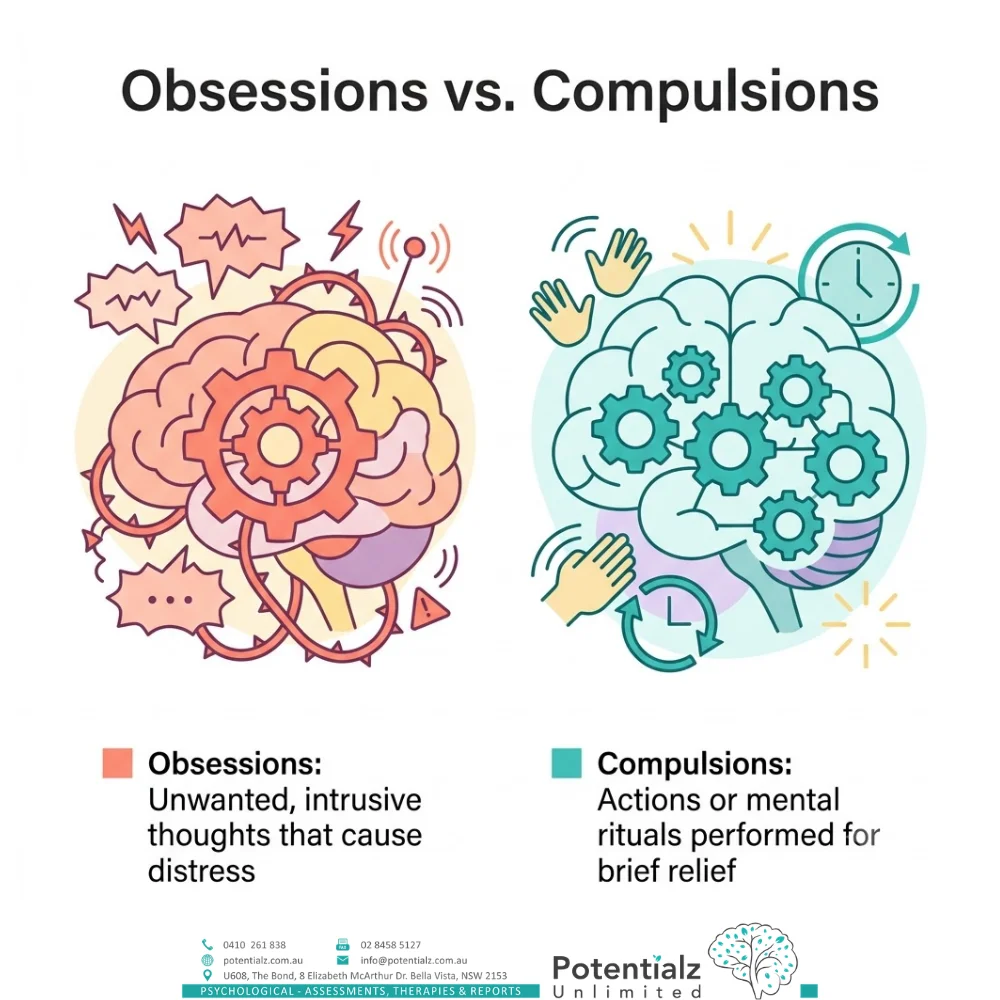
These two words get used loosely in everyday speech, but in OCD they mean something specific.
Obsessions are unwanted, intrusive thoughts, images, or urges that repeatedly push their way into the mind and cause distress. They are not enjoyable, and they are not things the person wants to think about. Examples include a sudden fear of contamination, a violent or taboo image, a doubt about whether the door is locked, or a fear of having offended God. Crucially, the person recognises these thoughts as their own, yet feels unable to switch them off.
Compulsions are the repetitive actions or mental acts a person feels driven to perform to reduce the distress an obsession causes, or to prevent some feared outcome. They can be physical — washing, checking, arranging, repeating — or mental — silently counting, praying, reviewing memories, or mentally “undoing” a bad thought.
Here is the trap: compulsions work, but only for a moment. They bring brief relief, which is exactly why they are so hard to give up — and exactly why they keep OCD alive.
The Many Faces of OCD — Including “Pure O”
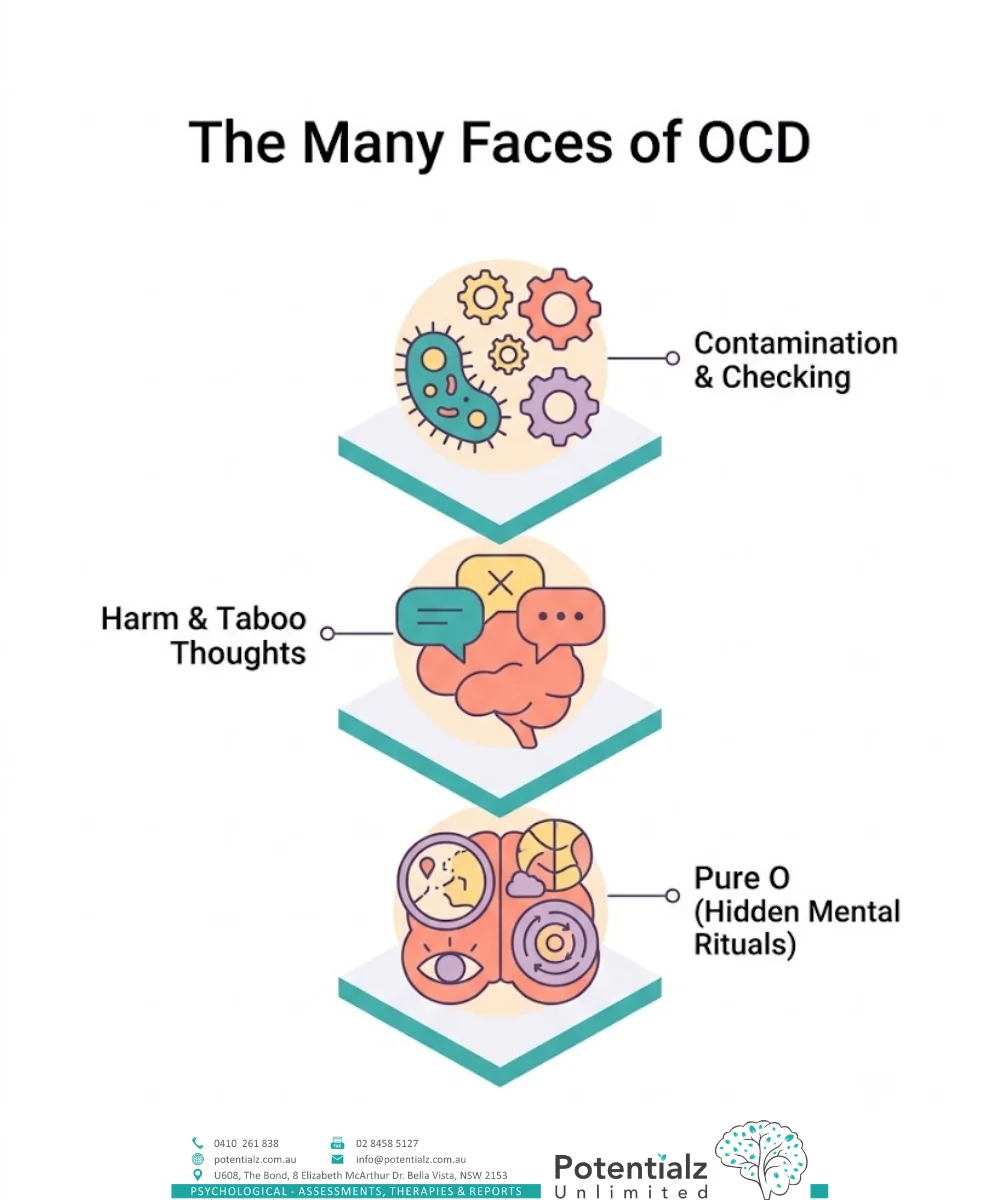
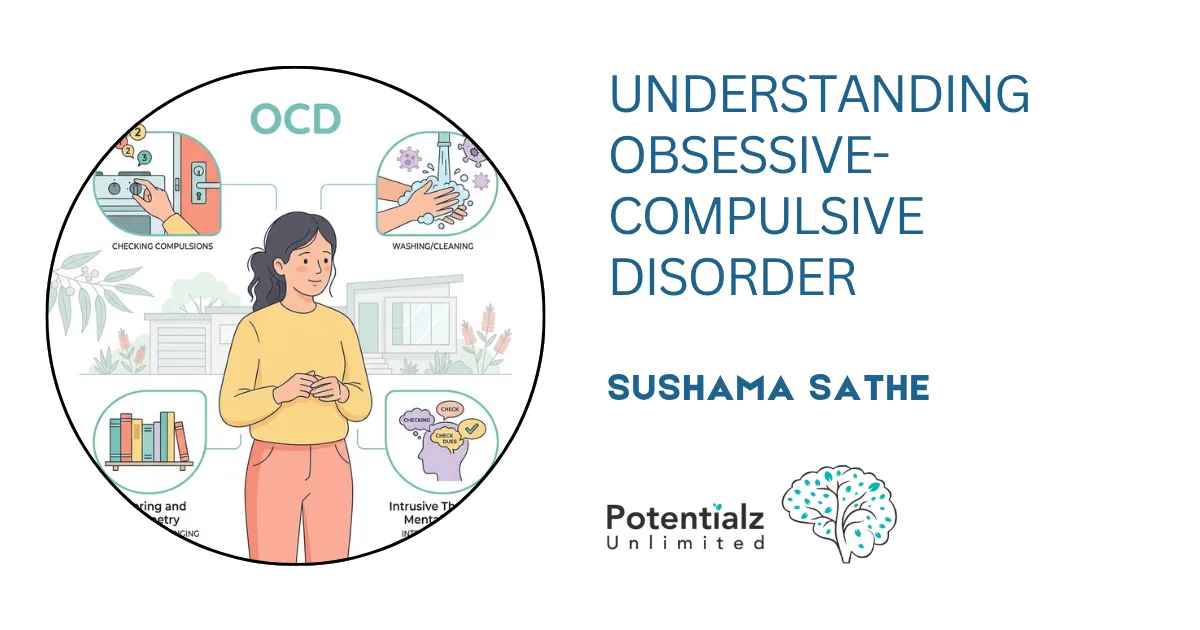
OCD wears many disguises. Recognising your own pattern is often the first relief, because it shows the problem is OCD, not a flaw in your character. Common themes include:
- Contamination. Fear of germs, dirt, chemicals, or illness, leading to washing, cleaning, or avoiding “unsafe” places.
- Checking. Repeatedly checking locks, the stove, appliances, or your own body, driven by a fear of harm or catastrophe.
- Symmetry and “just right”. A need for order, balance, or evenness, with intense discomfort until things feel exactly right.
- Taboo or intrusive thoughts. Unwanted thoughts about harm, violence, sex, or blasphemy that horrify the person precisely because they clash with their values.
- Harm OCD. A fear of harming oneself or others by accident or impulse, often with checking and avoidance.
- “Pure O”. Short for “purely obsessional”. Here the compulsions are mostly mental or hidden — silent reviewing, reassurance-seeking, mental checking — so there are no obvious rituals to see. Despite the name, compulsions are still present; they have simply gone underground.
- Scrupulosity. OCD focused on religion or morality — an unrelenting fear of having sinned, blasphemed, or done something morally wrong.
- Relationship OCD. Constant doubt about a partner, the relationship, or one’s own feelings — “Do I really love them? Are they the one?” — with endless analysing and reassurance-seeking.
A person can have one theme or several, and themes can shift over time. The content of the obsession matters far less than the underlying mechanism — which, encouragingly, is the same across every subtype. That is why the same treatment helps regardless of the theme.
The OCD Cycle — Why Reassurance and Avoidance Fuel It
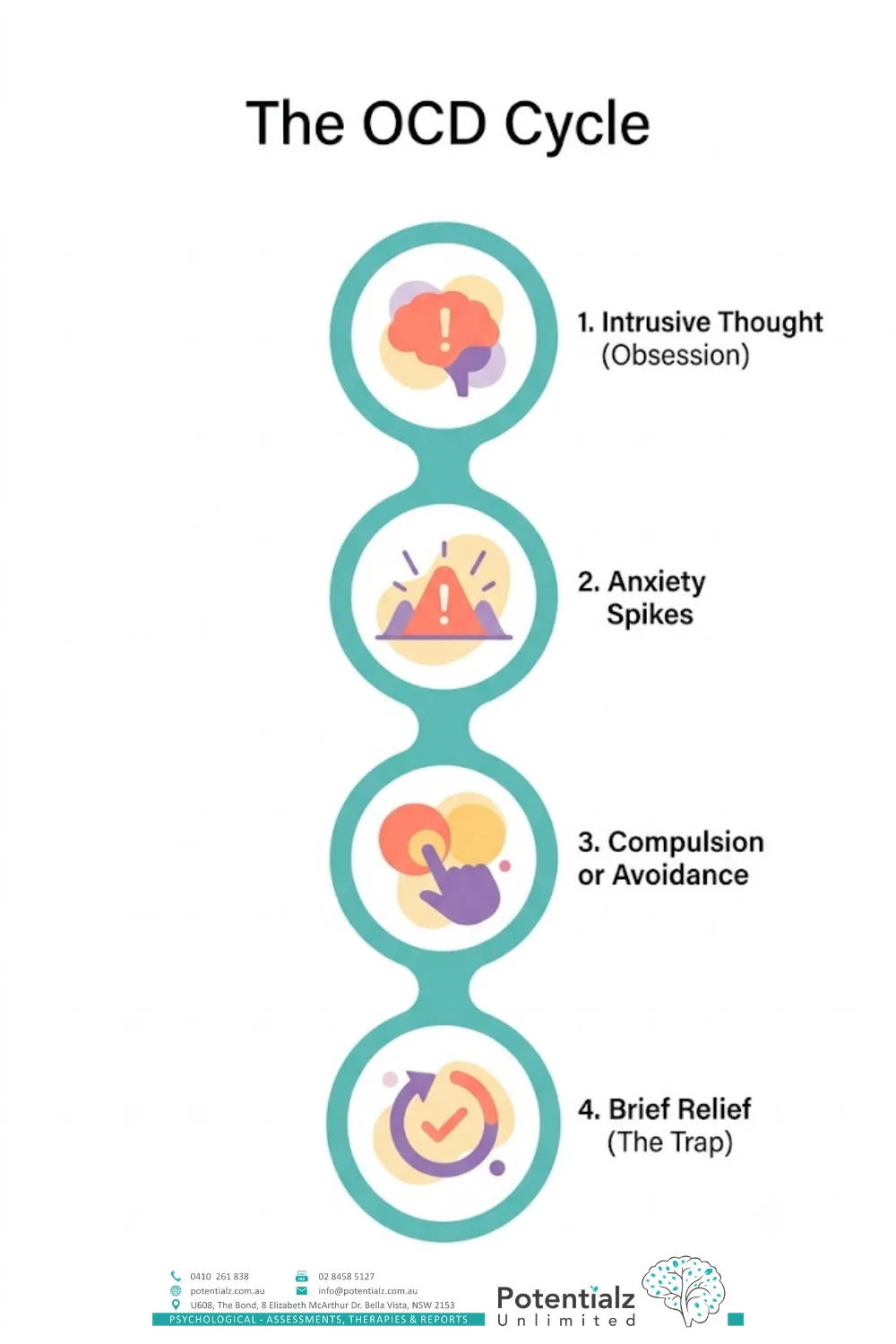
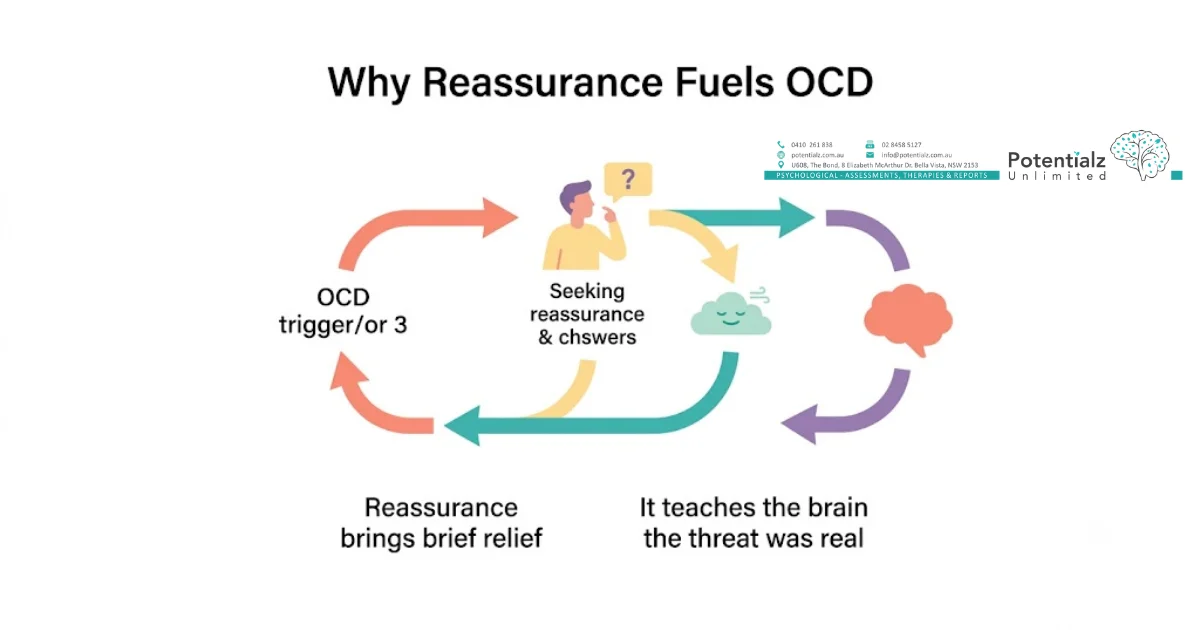
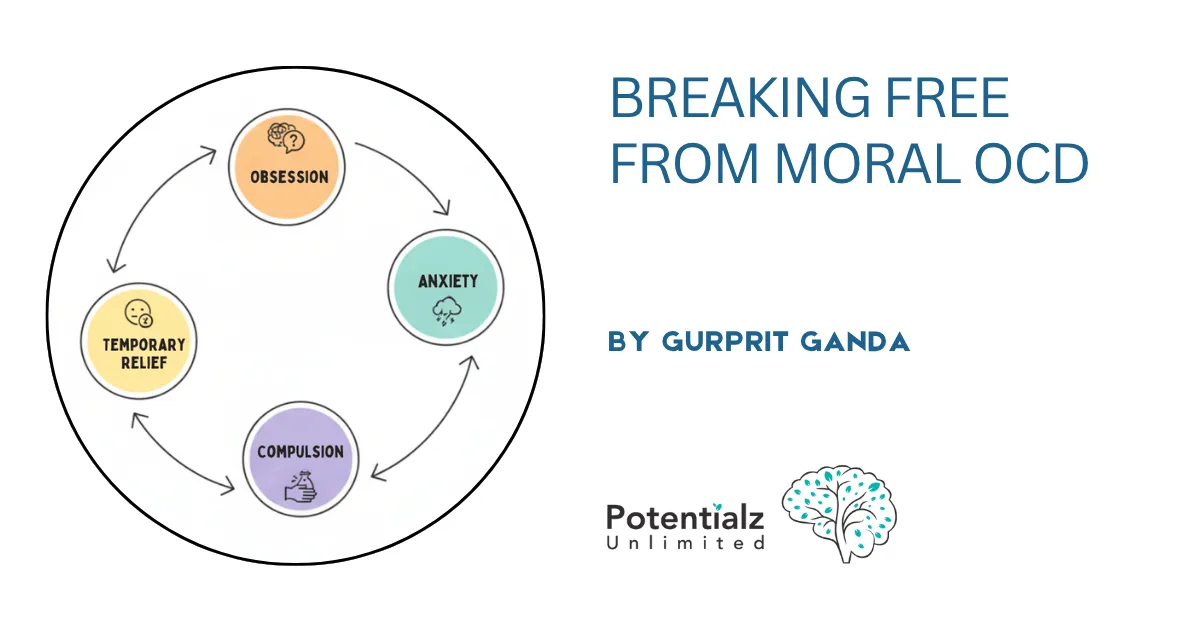
To beat OCD, it helps to see exactly how it traps you. The cycle has four steps:
- An intrusive thought (obsession). A trigger sparks an unwanted thought, image, or urge — “What if my hands are contaminated?” or “What if I lose control?”
- Anxiety spikes. The thought feels dangerous and urgent. The body’s alarm system fires, and the distress can feel unbearable.
- A compulsion or avoidance. To make the feeling stop, the person performs a ritual — washing, checking, mentally reviewing — or avoids the trigger altogether.
- Brief relief — then return. The anxiety drops for a short while. The brain quietly learns, “That ritual kept me safe.” So next time the thought appears, the urge to ritualise is even stronger. The loop tightens.
This is the heart of the problem. Every compulsion, every piece of reassurance, every avoided situation teaches the brain that the obsession was a genuine threat that had to be neutralised. Reassurance — from yourself, a partner, or repeated online searching — feels caring and sensible, yet it does the same job as any other compulsion: it stops the fear before it has a chance to fade on its own. Avoidance does this too. Stay away from the “dangerous” thing and you never learn that you would have been okay.
The takeaway is hopeful, not bleak: because OCD is kept alive by what we do in response to obsessions, changing that response is what sets people free. That is precisely what ERP is built to do.
What ERP Is and How It Works
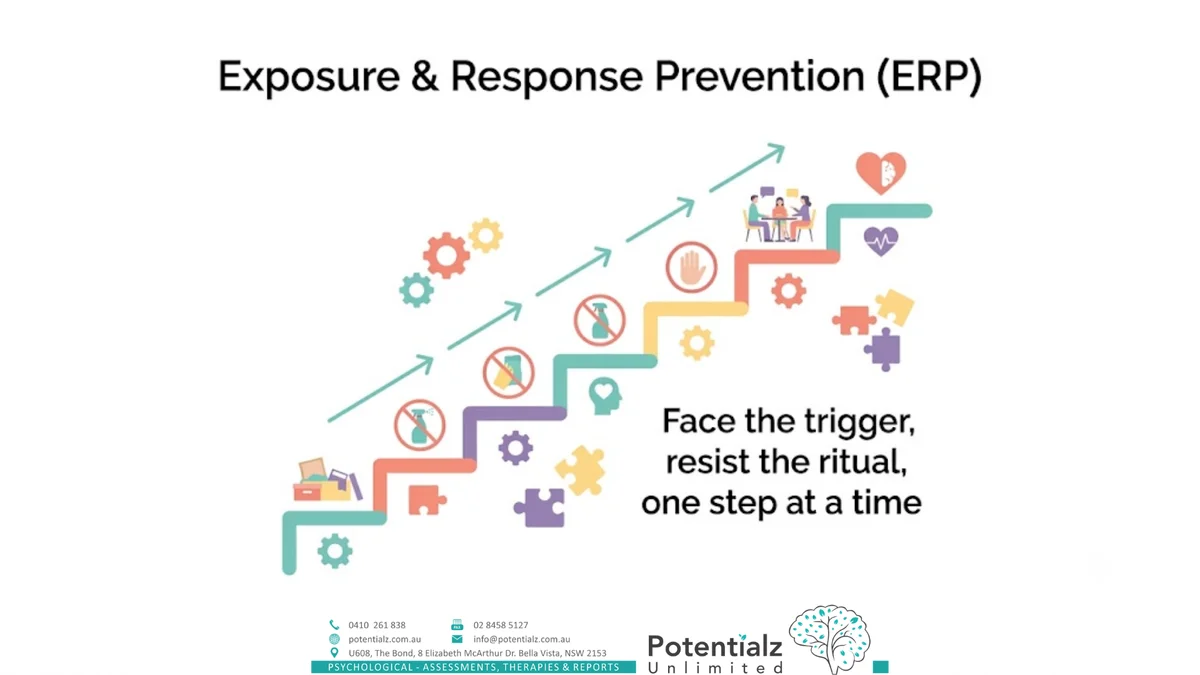
Exposure and response prevention (ERP) is a specific, structured form of cognitive behavioural therapy (CBT) designed for OCD. The name describes the two parts:
- Exposure. Gradually and deliberately facing the thoughts, images, objects, or situations that trigger your obsessions — starting with easier steps and building up at a pace you agree on.
- Response prevention. Choosing not to perform the usual compulsion, reassurance, or avoidance while you sit with the discomfort.
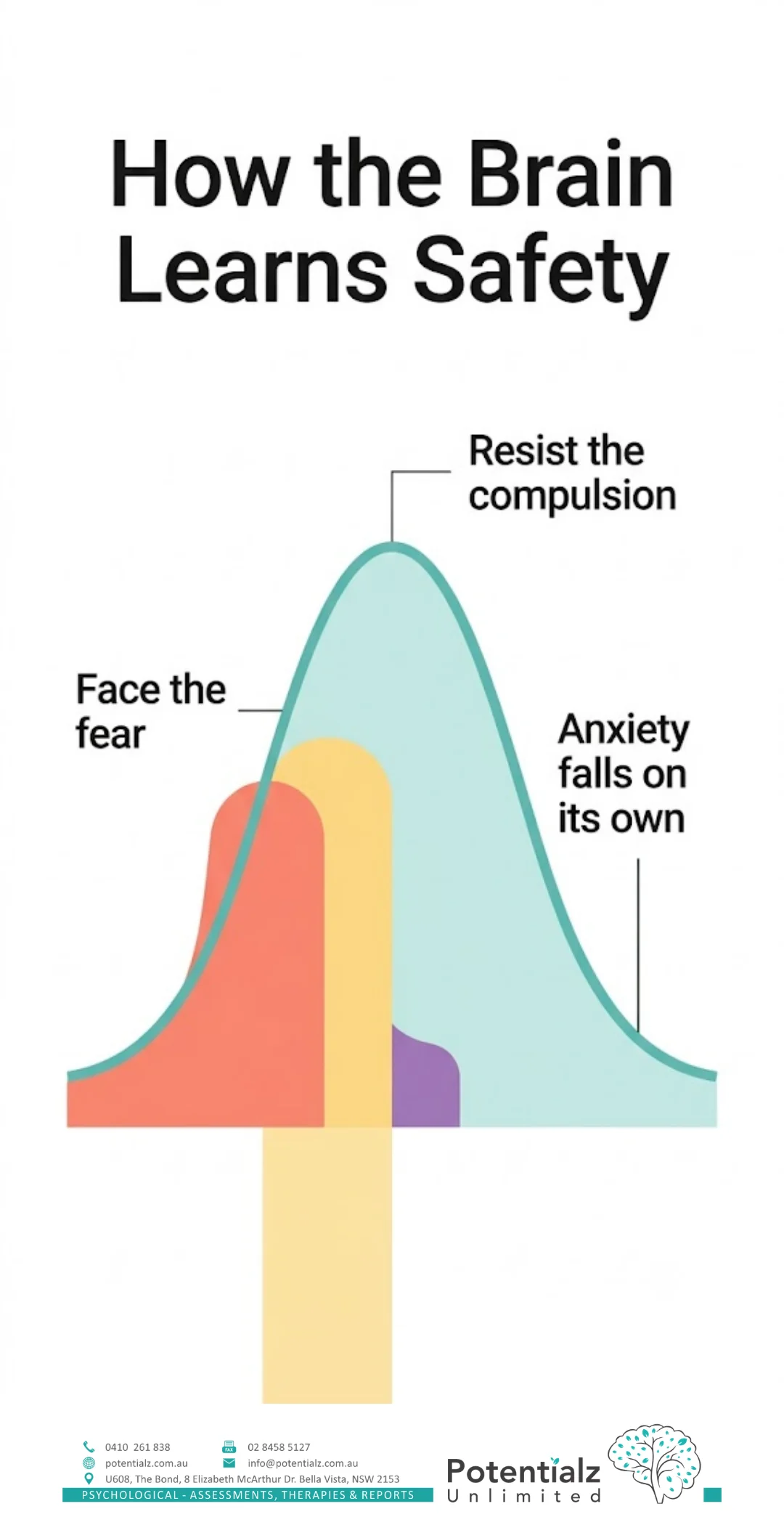
Here is why it works. When you face a feared trigger and resist the ritual, your anxiety rises — but it does not rise forever. With time, it peaks and then falls naturally, all on its own. Each time you let this happen, your brain gathers powerful new evidence: the feared catastrophe did not occur, and the anxiety passed without the compulsion. This is sometimes described as the nervous system “learning safety”. Repeated often enough, the obsession loses its grip, and the urge to ritualise fades.
ERP is collaborative and never about being thrown in the deep end. You and your psychologist build a “ladder” of triggers, from mildly uncomfortable to most distressing, and work up it together, step by step. You are always in control of the pace. Modern ERP also weaves in inhibitory learning ideas — focusing not on “getting anxiety to zero” but on learning that you can tolerate uncertainty and discomfort, and that the feared outcome simply does not come true.
Why ERP Is First-Line — and Where ACT and Mindfulness Fit
ERP is not just one option among many; it is the first-line psychological treatment for OCD, recommended by leading guidelines and supported by decades of research.
A landmark randomised, placebo-controlled trial found that intensive exposure and ritual prevention produced a response in 62% of participants — far above placebo (8%) — and performed at least as well as the medication clomipramine (Foa et al., 2005). A large systematic review and meta-analysis of CBT for OCD (the great majority of it ERP-based) found very large effects compared with waitlist and credible placebo conditions, confirming CBT as the only psychological treatment with strong, consistent evidence for OCD (Öst et al., 2015).
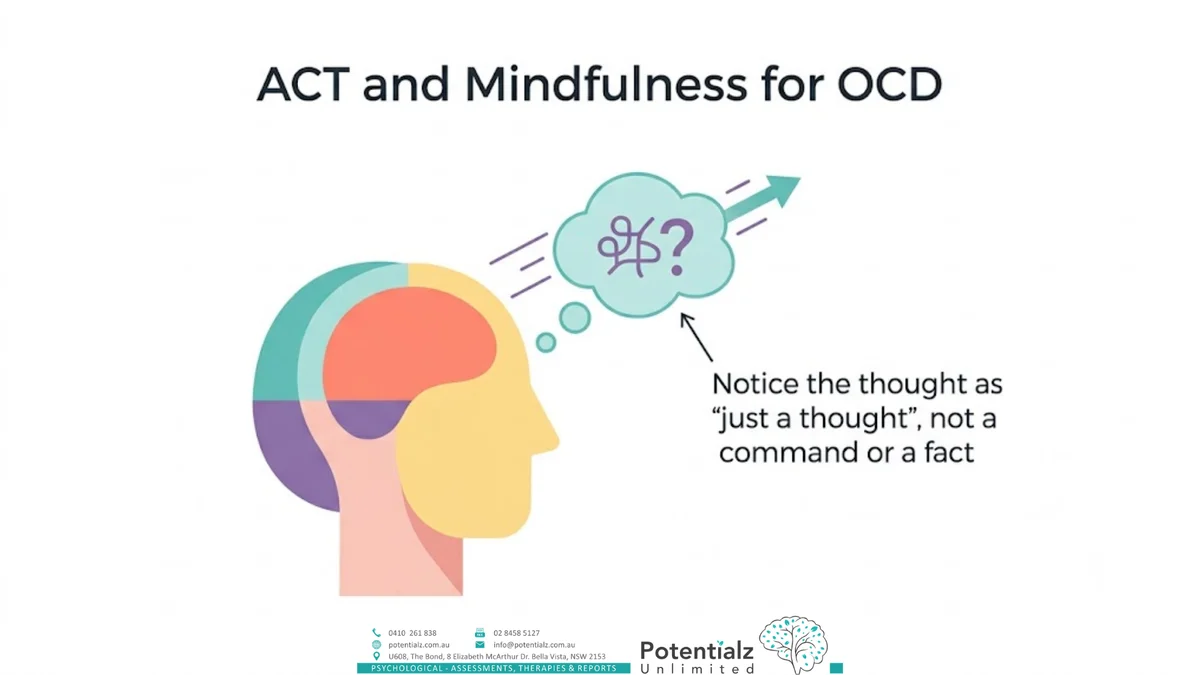
A second, complementary approach is acceptance and commitment therapy (ACT). Rather than trying to argue with or get rid of intrusive thoughts, ACT helps you change your relationship to them — making room for the thought without being ruled by it, and unhooking from the urge to act. A randomised clinical trial found ACT produced meaningful reductions in OCD severity, with benefits maintained at follow-up (Twohig et al., 2010). Mindfulness skills fit naturally here: learning to notice a thought as “just a thought” — a passing mental event, not a command or a fact — reduces its power.
In practice, these approaches blend well. ERP provides the core, evidence-based engine of change; ACT and mindfulness help you tolerate the discomfort exposure brings and stay connected to what matters to you. Dr Gurprit Ganda draws on all three, tailoring the mix to each person.
What Treatment Actually Looks Like
People often imagine OCD treatment as frightening or extreme. In reality, it is structured, paced, and collaborative. A typical course of OCD treatment includes:
- Assessment and psychoeducation. Together we map your specific obsessions, compulsions, and avoidances, and make sense of your personal cycle. Understanding why OCD works the way it does is itself a relief.
- Building your trigger ladder. We list feared situations and rank them from least to most distressing, so exposure can start gently.
- Graded exposure with response prevention. Step by step, you face triggers while resisting compulsions, in session and through agreed home practice. Progress builds on itself.
- Working with thoughts and uncertainty. We address the OCD “rules” — the demand for certainty, the inflated sense of responsibility — and practise letting uncertainty exist without rushing to neutralise it.
- Relapse prevention. Towards the end, we consolidate your skills so you can be your own therapist if OCD tries to creep back.
Treatment length varies, but many people notice meaningful change within a few months of consistent work. The aim is not to never have an intrusive thought again — everyone has odd thoughts — but to rob those thoughts of their power, so they come and go without hijacking your day.
A Note on Medication
For some people, medication is a helpful part of OCD treatment, often alongside ERP. The medications most used for OCD are a group of antidepressants called SSRIs (selective serotonin reuptake inhibitors). Research shows that combining ERP with medication can be useful, and that ERP holds up especially well over time (Foa et al., 2005).
Importantly, psychologists do not prescribe medication. Decisions about medication are made with your GP or a psychiatrist, who can discuss benefits, side effects, and what suits your situation. Many people do very well with ERP alone; others find a combination works best. A psychologist can work closely alongside your GP so that therapy and any medication pull in the same direction. If you would like to explore this, your GP is the right first port of call.
OCD Treatment in Bella Vista and the Hills District
Potentialz Unlimited is based in Bella Vista, NSW, and supports individuals and families across the Hills District — including Norwest, Castle Hill, Kellyville, Baulkham Hills, Rouse Hill, and Glenhaven.
Dr Gurprit Ganda is a Clinical Psychologist with more than 25 years of experience, trained in CBT (including ERP), ACT, and EMDR. She offers a warm, practical, judgement-free space where OCD — in all its forms, from contamination fears to “Pure O” intrusive thoughts — is taken seriously and treated with proven methods. If OCD has been quietly running your days, structured, evidence-based help is close to home. You can contact the clinic or book directly at live.potentialz.com.au.
When to Seek Help
It may be time to speak with a psychologist about OCD treatment if you notice that:
- Intrusive thoughts, images, or urges keep returning and cause you real distress.
- You feel driven to perform rituals — washing, checking, counting, praying, mentally reviewing, or seeking reassurance.
- These thoughts or behaviours take up a large part of your day, or feel hard to control.
- You avoid people, places, or activities to keep the thoughts at bay.
- OCD is affecting your sleep, mood, work, study, parenting, or relationships.
Remember: having a disturbing intrusive thought does not mean you want it or will act on it. Distressing, unwanted thoughts are a common feature of OCD, and they feel so awful precisely because they clash with who you are.
If your distress ever brings thoughts of not wanting to be here, please reach out for urgent support now: call Lifeline on 13 11 14, or in an emergency call 000.
OCD is common, deeply misunderstood, and very treatable. With ERP and the right support, the thoughts can lose their grip — and you can get back to a life that is bigger than the cycle.
References
American Psychiatric Association. (2022). Diagnostic and statistical manual of mental disorders (5th ed., text rev.). https://doi.org/10.1176/appi.books.9780890425787
Foa, E. B., Liebowitz, M. R., Kozak, M. J., Davies, S., Campeas, R., Franklin, M. E., Huppert, J. D., Kjernisted, K., Rowan, V., Schmidt, A. B., Simpson, H. B., & Tu, X. (2005). Randomized, placebo-controlled trial of exposure and ritual prevention, clomipramine, and their combination in the treatment of obsessive-compulsive disorder. American Journal of Psychiatry, 162(1), 151–161. https://doi.org/10.1176/appi.ajp.162.1.151
Öst, L.-G., Havnen, A., Hansen, B., & Kvale, G. (2015). Cognitive behavioral treatments of obsessive-compulsive disorder: A systematic review and meta-analysis of studies published 1993–2014. Clinical Psychology Review, 40, 156–169. https://doi.org/10.1016/j.cpr.2015.06.003
Ruscio, A. M., Stein, D. J., Chiu, W. T., & Kessler, R. C. (2010). The epidemiology of obsessive-compulsive disorder in the National Comorbidity Survey Replication. Molecular Psychiatry, 15(1), 53–63. https://doi.org/10.1038/mp.2008.94
Twohig, M. P., Hayes, S. C., Plumb, J. C., Pruitt, L. D., Collins, A. B., Hazlett-Stevens, H., & Woidneck, M. R. (2010). A randomized clinical trial of acceptance and commitment therapy versus progressive relaxation training for obsessive-compulsive disorder. Journal of Consulting and Clinical Psychology, 78(5), 705–716. https://doi.org/10.1037/a0020508
Knowledge Check Quiz
Test what you have just read. Choose your answer for each question, then submit to reveal the answers and your score.
Need Professional Support?
If you're experiencing mental health concerns, our team is here to help.