What Is Differential Diagnosis and Why Does It Matter for Autism?
When a child or adult shows signs that might be related to autism, professionals need to carefully work out exactly what is happening. This process is called differential diagnosis. Think of it like solving a puzzle where different pieces might look similar but fit into very different pictures.
Differential diagnosis means that doctors and psychologists carefully consider different possible explanations for the behaviours and challenges someone is experiencing. For autism spectrum disorder (ASD), this is especially important because many symptoms can overlap with other conditions.
 Family meeting with psychologist for autism differential diagnosis assessment
The Bottom Line Up Front
If you are concerned about autism for yourself or a family member, understanding differential diagnosis helps you:
- Get the most accurate diagnosis possible
- Access appropriate NDIS support faster
- Ensure your loved one receives treatments that truly help
- Avoid unnecessary interventions for conditions they don’t have
Understanding Autism Spectrum Disorder: What Are We Looking For?
The National Guideline for the assessment and diagnosis of autism in Australia provides clear and consistent recommendations for practitioners who conduct assessments, approved by the National Health and Medical Research Council (NHMRC).
Autism diagnosis requires persistent deficits in social communication and social interaction across multiple contexts, including deficits in social-emotional reciprocity, nonverbal communicative behaviors used for social interaction, and developing, maintaining and understanding relationships.
People with autism may also show:
- Repetitive movements or speech patterns
- Very focused or intense interests
- Need for sameness and routines
- Unusual responses to sensory experiences (sounds, lights, textures, tastes)
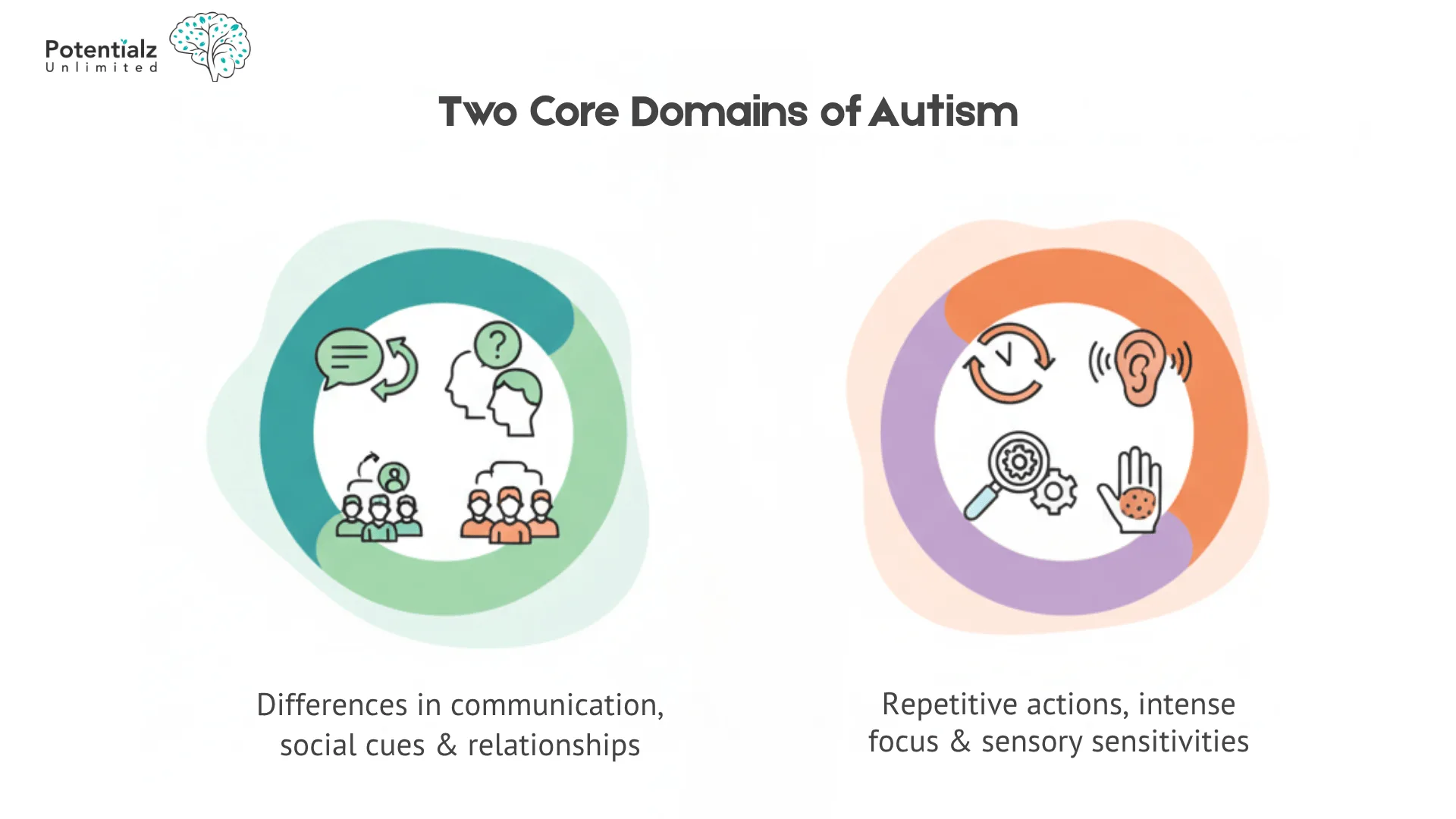 Infographic showing two core domains of autism spectrum disorder diagnosis
Autism Comes in Different Levels
The DSM-5 categorizes Autism Spectrum Disorder into 3 levels based on the amount of support needed: Level 1 requires support, Level 2 requires substantial support, and Level 3 requires very substantial support.
These levels help determine what kind of assistance someone might need in daily life.
Conditions That Can Look Like Autism: The Differential Diagnosis Process
One of the most challenging aspects of autism diagnosis is that several other conditions share similar characteristics. Let’s explore the main conditions that professionals need to consider.
1. Attention Deficit Hyperactivity Disorder (ADHD)
ADHD and ASD have significant symptom overlap, with co-occurrence rates as high as 40 percent. Both conditions involve problems with self-regulation, though children with ADHD typically have more issues with planning while those with ASD have more difficulties with attention to detail.
Key Differences:
- ADHD focus: Difficulty sustaining attention, impulsive decisions, hyperactive behaviour
- Autism focus: Social communication differences, need for sameness, intense focused interests
While DSM-IV did not allow both diagnoses together, DSM-5 lifted this restriction because many individuals with ASD present with additional ADHD symptoms that benefit from specific treatment.
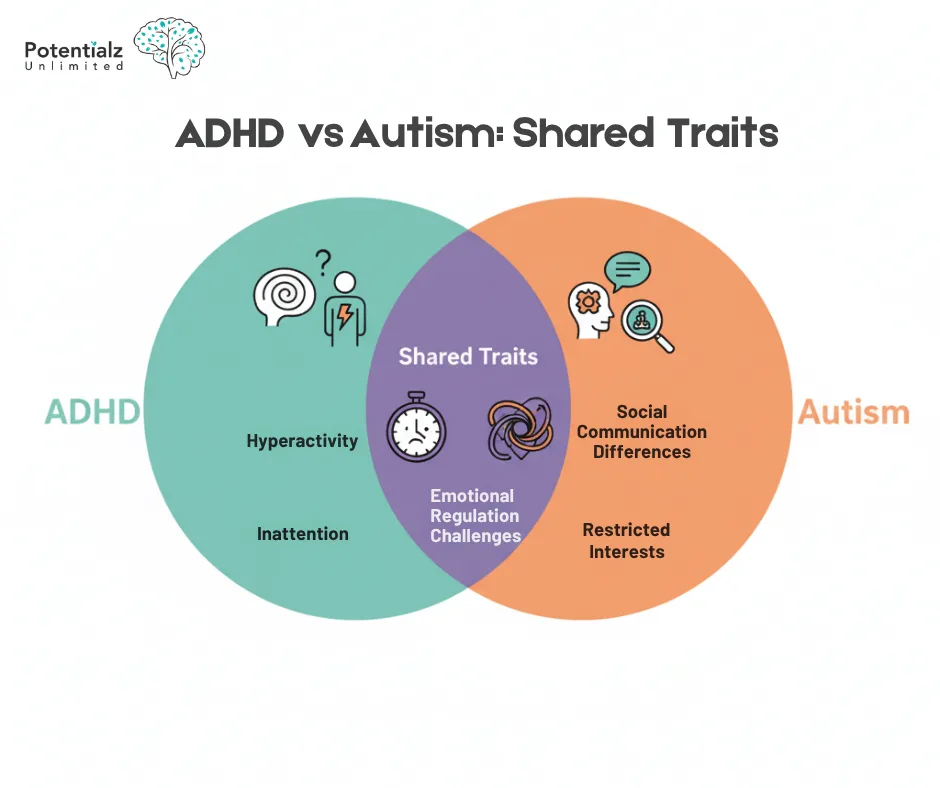 Venn diagram illustrating overlap between ADHD and autism differential diagnosis
2. Intellectual Disability
Intellectual disability and autism frequently co-occur; to make both diagnoses, social communication should be below that expected for general developmental level.
Someone might have:
- Intellectual disability alone
- Autism alone
- Both conditions together
The key is to determine whether social and communication challenges are greater than would be expected based on someone’s overall developmental level.
3. Social Communication Disorder
This is a newer diagnostic category that describes difficulties with social use of language without the restricted interests and repetitive behaviours seen in autism.
Social (pragmatic) communication disorder is diagnosed when there are deficits in social communication but no restricted repetitive behaviors, interests, or activities are present.
4. Anxiety Disorders
Many children and adults with anxiety may avoid social situations, seem “different” around others, or develop specific routines to manage their worries. However, the type of social dysfunction in anxiety differs from autism—anxiety-related avoidance is fear-based, while autism involves fundamental differences in understanding social cues and communication.
5. Language Disorders
Pure language disorders affect how someone understands or uses language but don’t include the social interaction differences or restricted interests seen in autism.
6. Sensory Processing Disorder
Motor stereotypies (repetitive movements) are commonly observed in both autistic and non-autistic youth and can also appear in children with anxiety, OCD, ADHD, and tic disorders.
Some children have sensory sensitivities without autism. The difference lies in whether these sensory issues occur alongside the core autism features of social communication differences and restricted interests.
 Child psychologist conducting autism assessment using evidence-based tools
How Professionals Make an Accurate Autism Diagnosis in Australia
The National Guideline was developed through extensive consultation with more than 1,200 organisations and people across Australia, including autistic adults, family members, clinicians and policy makers.
The Assessment Process Includes:
- Developmental History: Understanding early development, current challenges, and family history
- Behavioral Observations: Watching how someone interacts, communicates, and responds to different situations
- Standardized Assessments: Using validated tools designed specifically for autism assessment
- Medical Evaluation: Ruling out hearing problems, vision issues, or other medical conditions
- Cognitive Assessment: Understanding thinking skills and learning patterns
- Consideration of Other Conditions: Carefully evaluating whether symptoms might be better explained by another condition
Early diagnosis and intervention are associated with better outcomes for autistic individuals and their families.
What This Means for NDIS Eligibility
Understanding how your diagnosis relates to NDIS access is crucial for Australian families.
NDIS Access Criteria for Autism
Level 2 and Level 3 autism diagnoses are more likely to create automatic eligibility for NDIS, while Level 1 diagnoses require additional evidence showing how autism affects day-to-day functioning.
For NDIS eligibility, you need to show:
- The disability is permanent
- It significantly affects your ability to participate in everyday activities
- You need supports that relate to your disability
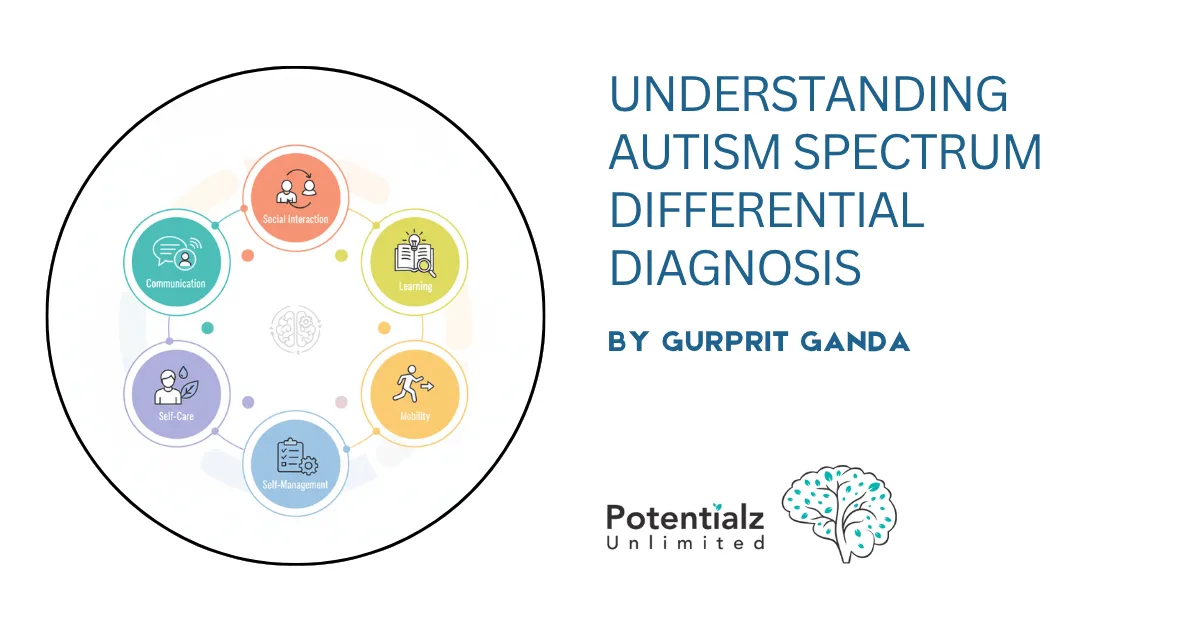
Applicants with Level 1 autism diagnosis need to demonstrate reduced ability in functional areas including communication, social interaction, mobility, learning, self-management, and self-care.
Functional Capacity Assessment
The NDIA has worked with Autism CRC to develop functional assessment approaches that, combined with diagnosis, provide a more contemporary and evidence-based method for identifying support needs.
This means showing how autism affects:
- Communication: How you express needs and understand others
- Social interaction: Connecting with family, friends, and community
- Learning: Acquiring new skills and information
- Self-care: Managing personal hygiene, eating, dressing
- Self-management: Organizing tasks, managing emotions, making decisions
- Mobility: Moving around your environment safely
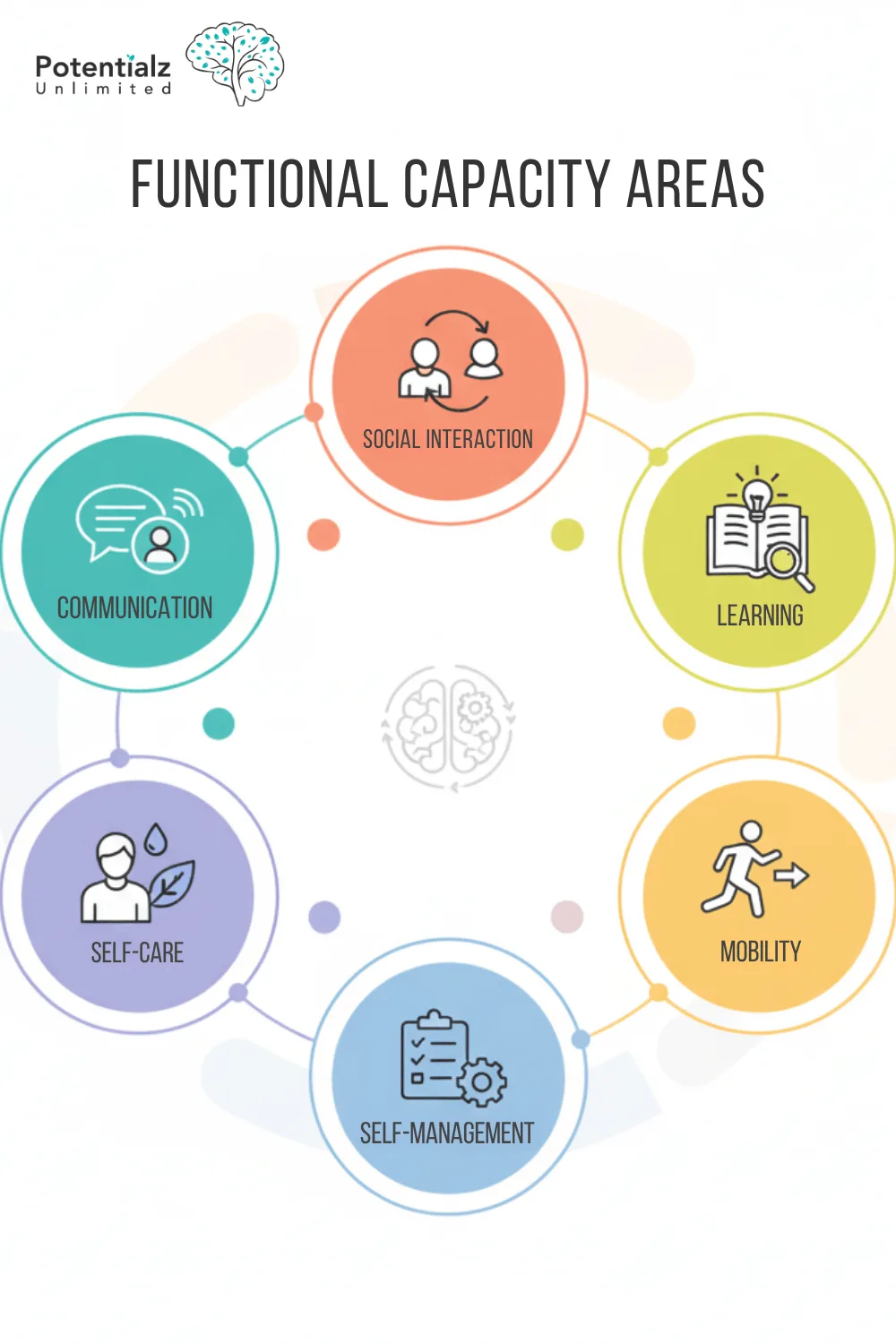 Functional capacity assessment areas for NDIS autism eligibility
Why Accurate Differential Diagnosis Matters for Your Family
Getting the right diagnosis isn’t just about labels—it’s about accessing the right support.
When Diagnosis Is Accurate:
For Individuals:
- Receive therapies that actually match their needs
- Access appropriate educational support
- Develop self-understanding and identity
- Connect with relevant peer communities
For Families:
- Access NDIS funding for suitable supports
- Understand how to best support their loved one
- Connect with appropriate support networks
- Plan for the future with better information
For Service Providers:
- Deliver evidence-based interventions
- Set appropriate goals
- Measure progress effectively
The Risks of Misdiagnosis
Diagnostic overshadowing can cause clinicians to overlook co-occurring disorders, attributing all symptoms to autism when other treatable conditions may be present.
This means someone might:
- Miss out on effective treatments for co-occurring conditions
- Receive interventions that don’t address their actual needs
- Experience frustration when supports don’t help
- Face delays in accessing appropriate NDIS supports
Accessing Autism Assessment in Bella Vista and Surrounding Areas
If you are concerned about autism for yourself or a family member, here’s how to move forward:
Step 1: Talk to Your GP
Your general practitioner can:
- Conduct initial screening
- Provide referrals to specialists
- Help coordinate your assessment team
Step 2: Gather Information
Collect information about:
- Developmental milestones
- Current challenges
- Strengths and interests
- Family history
- Reports from teachers or other professionals
Step 3: Comprehensive Assessment
The national guideline drives better diagnostic standards so people receive optimum and comprehensive assessment that directs them to the right supports.
Seek assessment from qualified professionals including:
- Psychologists
- Paediatricians
- Psychiatrists
- Speech pathologists
At Potentialz Psychology, our experienced team provides comprehensive autism assessments for adults following the National Guideline. We work with families throughout the Hills District, including Bella Vista, Norwest, Castle Hill, and Kellyville.
Step 4: Planning for NDIS Access
If autism is diagnosed, work with your assessing team to:
- Document functional impacts
- Gather evidence for NDIS application
- Understand your support needs
- Connect with local NDIS providers
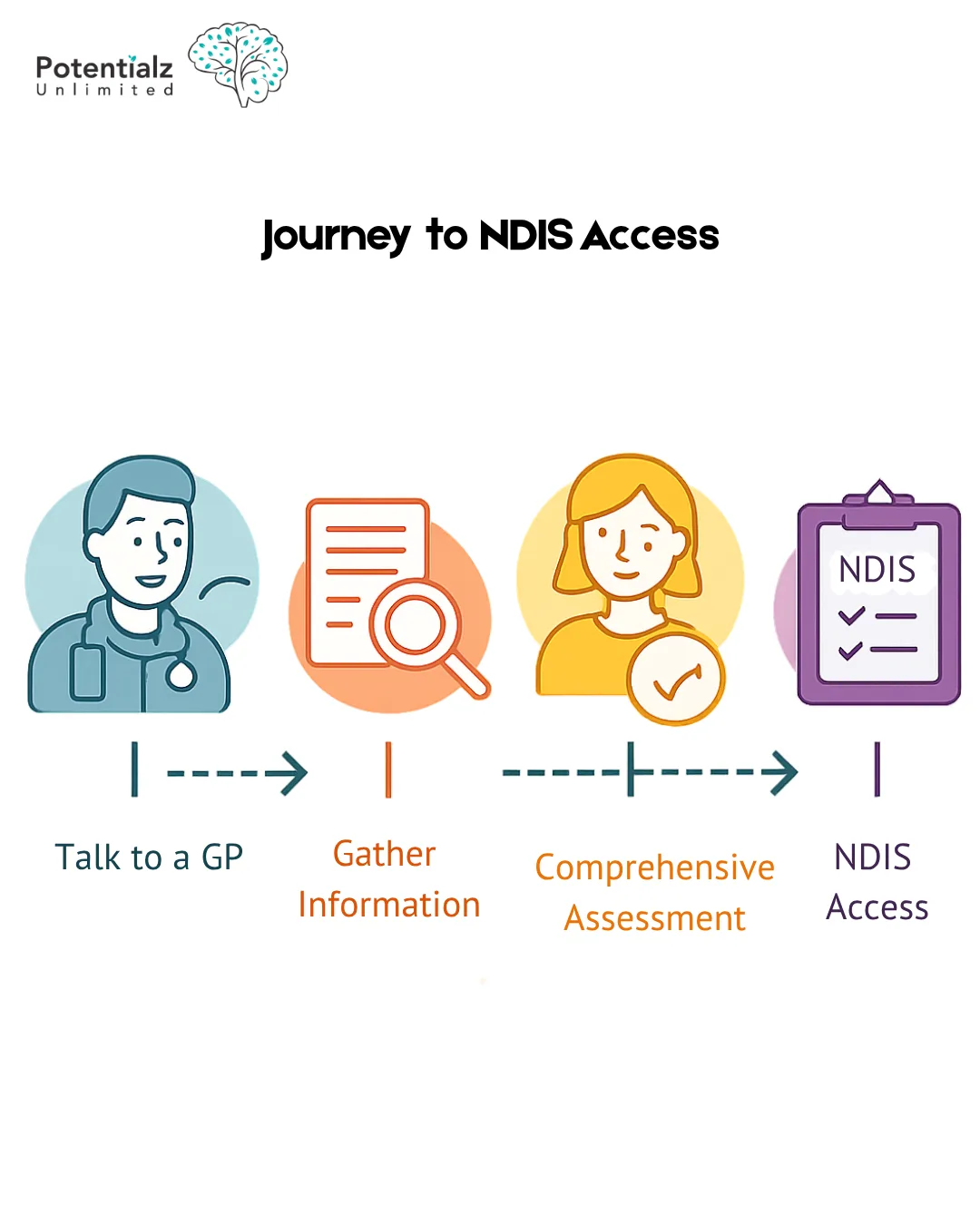 Flowchart showing pathway from autism concerns to NDIS access
Evidence-Based Interventions for Autism Spectrum Disorder
Once diagnosis is confirmed, several effective interventions are available.
For Children and Adolescents:
Based on the Australian Psychological Society’s evidence-based interventions review:
Strong Evidence:
- Cognitive Behaviour Therapy (CBT): Helps with anxiety and emotional regulation
- Family-Based Interventions: Supports the whole family system
- Psychoeducation: Helps families understand and support autism
Emerging Evidence:
- Play therapy
- Parent-Child Interaction Therapy (PCIT) for younger children
- Social skills training
For more information about therapeutic approaches for children, visit our child psychologist services page.
For Adults:
Many adults discover their autism diagnosis later in life. Support options include:
- Individual therapy for co-occurring anxiety or depression
- Social skills coaching
- Workplace accommodations
- Peer support groups
Supporting Co-Occurring Conditions
Most individuals diagnosed with ASD are also diagnosed with co-occurring conditions, with ADHD currently considered the most prevalent.
Common co-occurring conditions include:
- ADHD: See our guide on ADHD assessment and treatment
- Anxiety disorders: Learn about anxiety support
- Depression: Especially in adolescents and adults
- Sleep difficulties: Common across all ages
- Eating challenges: Including sensory-related food aversions
Each co-occurring condition deserves its own assessment and treatment plan. This is where the differential diagnosis process becomes crucial—identifying which symptoms relate to autism and which require additional intervention.
Practical Tips for Families Navigating the Diagnostic Process
Do:
✓ Keep detailed records of your concerns and observations
✓ Ask questions throughout the assessment process
✓ Seek second opinions if something doesn’t feel right
✓ Connect with autism support groups
✓ Focus on your loved one’s strengths, not just challenges
✓ Be patient—comprehensive assessment takes time
Don’t:
✗ Rush to conclusions before full assessment
✗ Compare your child to others with autism (everyone is unique)
✗ Dismiss your concerns if others say “they seem fine”
✗ Expect instant answers—diagnosis is a careful process
✗ Forget to care for yourself during this journey
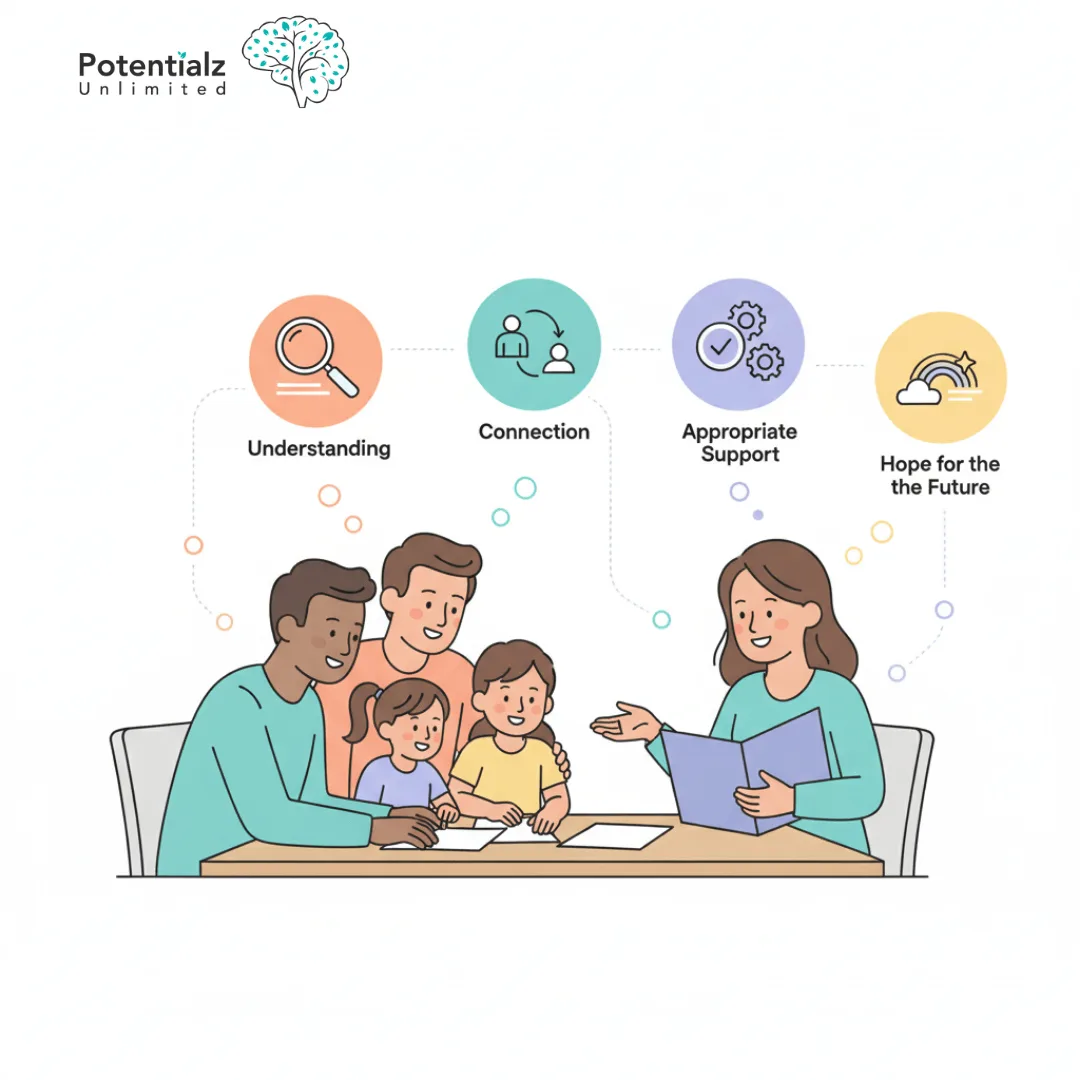 Supportive family meeting about autism diagnosis and treatment planning
Moving Forward with Hope and Understanding
Receiving an autism diagnosis—or discovering that challenges are related to a different condition—provides clarity and direction. Whether you are supporting a child, adolescent, or adult, accurate diagnosis opens doors to:
- Targeted interventions that truly help
- Understanding from family, educators, and employers
- Connection with others who share similar experiences
- Access to NDIS support when needed
- Self-acceptance and identity development
Remember that autism is not a deficit—it’s a different way of experiencing and interacting with the world. With proper services and supports, individuals with autism can thrive socially and economically.
Test Your Knowledge
Your Next Steps
If you are concerned about autism or other neurodevelopmental conditions, we are here to help. At Potentialz Psychology in Bella Vista, we provide:
- Comprehensive autism assessments following National Guidelines
- ADHD evaluations
- Cognitive assessments (IQ testing)
- Support with NDIS applications
- Evidence-based psychological therapies
- Family support and psychoeducation
Contact us today:
- Phone: 0410 261 838
- Location: Conveniently located in Bella Vista, NSW
- NDIS Provider: Yes—we support NDIS participants that are self-managed or plan managed.
- Medicare Rebates: Available for eligible clients with Mental Health Care Plans
Visit our NDIS psychologist page to learn more about how we can support you through the diagnostic and treatment process.
References
- American Psychiatric Association. (2022). Diagnostic and Statistical Manual of Mental Disorders (5th ed., text rev.). American Psychiatric Association Publishing. https://doi.org/10.1176/appi.books.9780890425787
- Australian Psychological Society. (2024). Evidence-based psychological interventions in the treatment of mental disorders: A literature review (5th ed.). Australian Psychological Society.
- Whitehouse, A. J. O., Evans, K., Eapen, V., & Wray, J. (2023). National Guideline for the assessment and diagnosis of Autism Spectrum Disorders in Australia (2nd ed.). Autism CRC. https://www.autismcrc.com.au/access/national-guideline
- Lord, C., Elsabbagh, M., Baird, G., & Veenstra-Vanderweele, J. (2018). Autism spectrum disorder. The Lancet, 392(10146), 508-520. https://doi.org/10.1016/S0140-6736(18)31129-2
- National Institute for Health and Care Excellence. (2021). Autism spectrum disorder in adults: diagnosis and management (NICE guideline CG142). https://www.nice.org.uk/guidance/cg142
- Rosen, T. E., Mazefsky, C. A., Vasa, R. A., & Lerner, M. D. (2018). Co-occurring psychiatric conditions in autism spectrum disorder. International Review of Psychiatry, 30(1), 40-61. https://doi.org/10.1080/09540261.2018.1450229
Need Professional Support?
If you're experiencing mental health concerns, our team is here to help.