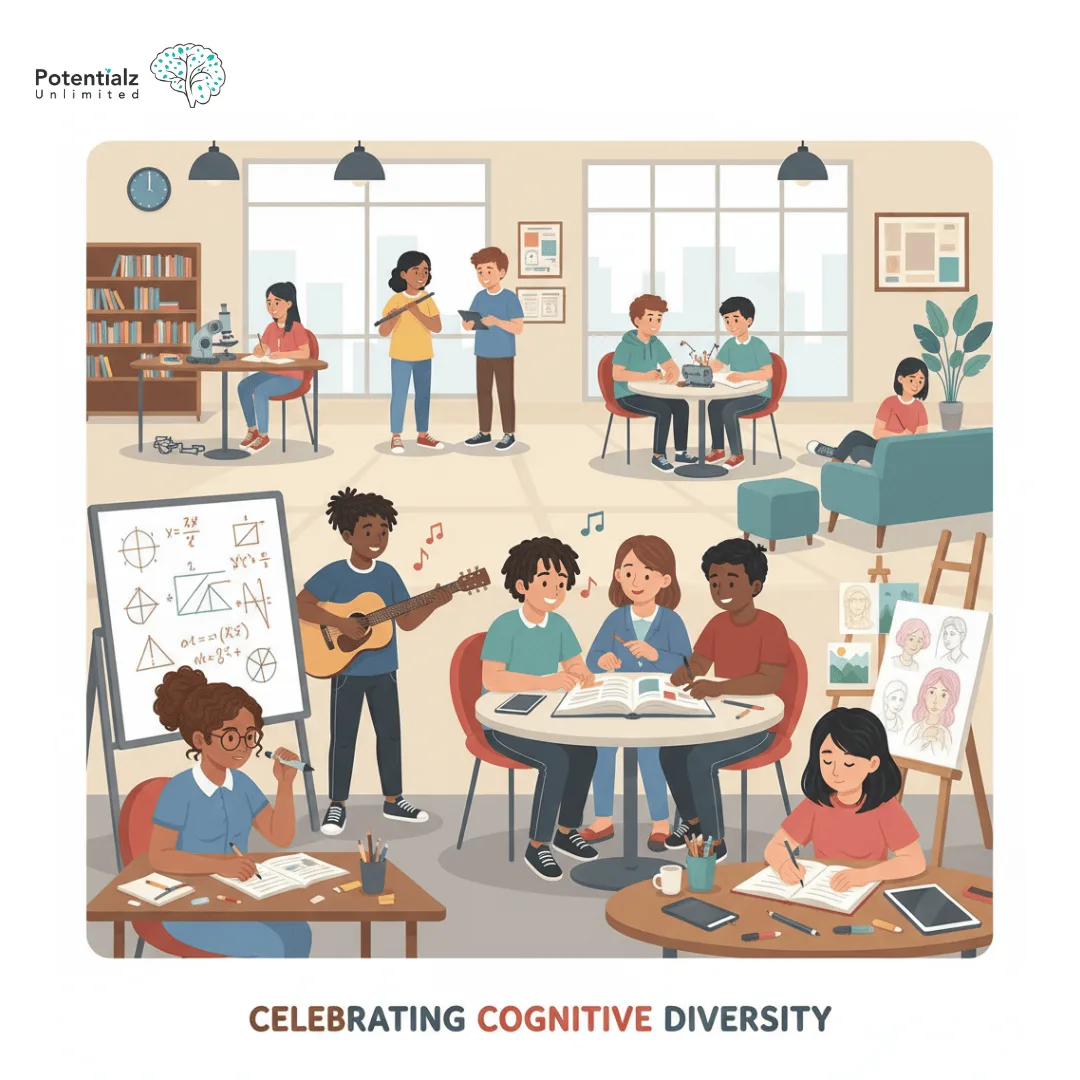
 The image portrays individuals engaging in various creative and scientific activities, showcasing a harmonious blend of talents and learning styles in a collaborative educational setting.
Introduction: What Does It Really Mean to Be Intelligent?
Have you ever wondered why some students excel in maths while others shine in creative writing? Or why your friend might struggle with traditional tests but seems to understand people better than anyone else? The concept of intelligence is much more complex and fascinating than you might think.
Intelligence involves the capacity to acquire and apply knowledge, think abstractly, and adapt to novel situations. However, measuring and understanding intelligence has been a topic of intense research and debate in psychology for over a century.
Multiple types of Intelligence.mp4
What Is Intelligence? Breaking Down the Basics
Intelligence isn’t just one thing - it’s like a toolkit with many different tools. Scientists define intelligence as your ability to learn, understand, reason, and solve problems in different situations. But here’s where it gets interesting: intelligence assessment isn’t just about how quickly you can solve maths problems or memorise facts.
Gardner’s research into the field of learning regarding bodily kinesthetic intelligence has resulted in the use of activities that require physical movement and exertion, with students exhibiting a high level of physical intelligence reporting to benefit from ‘learning through movement’ in the classroom environment.
The Building Blocks of Intelligence
Think of intelligence like a smartphone - it has different apps for different functions:
- Processing Speed: How quickly your brain handles information
- Working Memory: Your mental workspace for solving problems
- Verbal Skills: Understanding and using language effectively
- Visual-Spatial Abilities: Understanding patterns, shapes, and spatial relationships
- Reasoning: Making logical connections and solving new problems
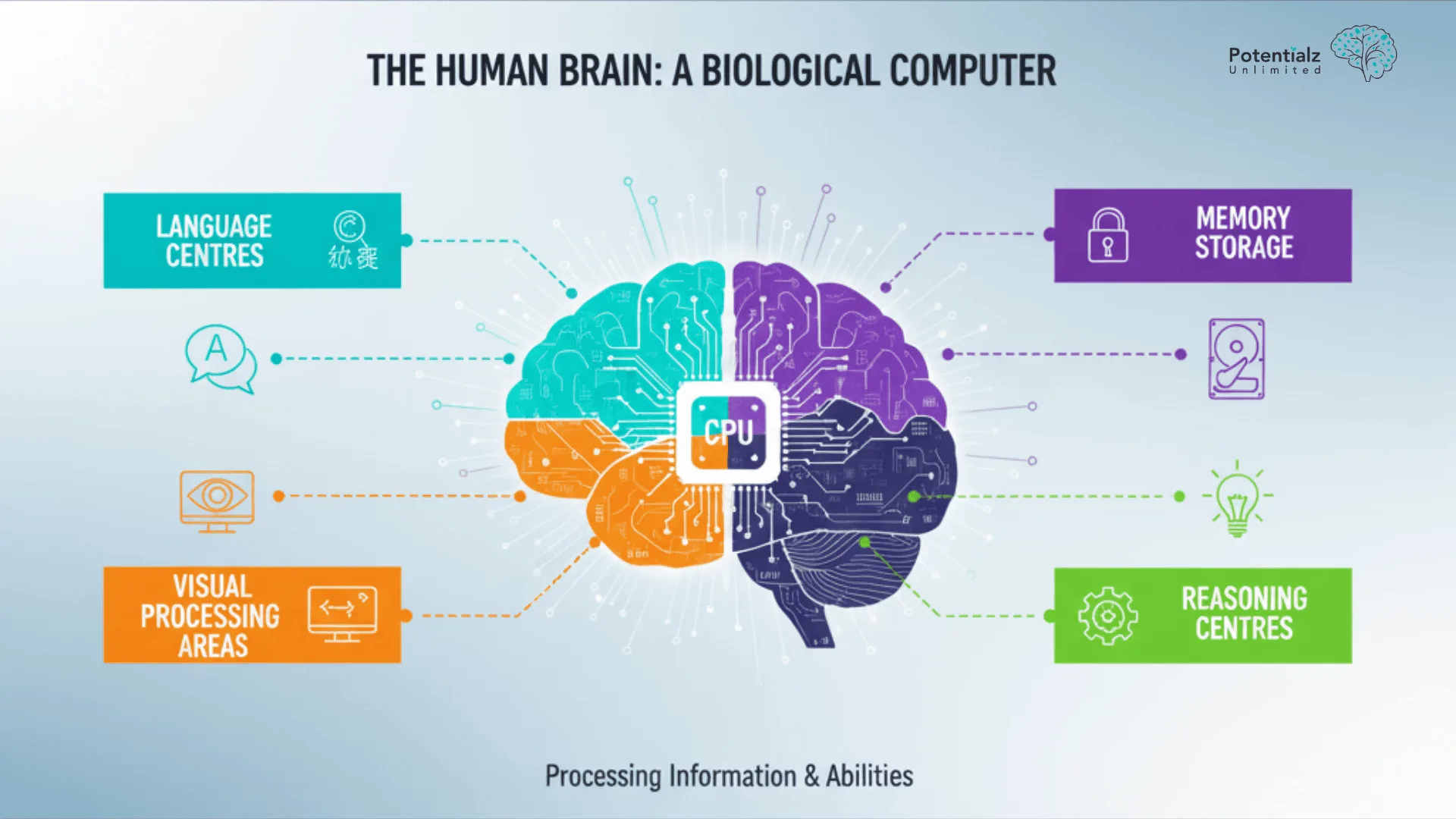 Illustration comparing the human brain to a biological computer, highlighting its various functional areas such as language centers, memory storage, visual processing, and reasoning centers, each illustrated with circuit-like patterns.
The Evolution of Intelligence Testing: From Paper to Digital
Intelligence testing has come a long way since the early 1900s. The original WAIS (Form I) was published in February 1955 by David Wechsler, Chief Psychologist at Bellevue Hospital (1932–1967) in NYC, as a revision of the Wechsler–Bellevue Intelligence Scale released in 1939.
Why the WAIS Test Matters
The WAIS intelligence test (Wechsler Adult Intelligence Scale) is currently the most widely used intelligence test for older teenagers and adults worldwide. It is currently in its fifth edition (WAIS-5), released in 2024 by Pearson. It is the most widely used IQ test, for both adults and older adolescents, in the world.
Wechsler Adult Intelligence Scale - 5 (WAIS-5): The Latest in Intelligence Testing
The newest version of the WAIS test, released in 2024, represents a major advancement in cognitive assessment. The WAIS-5 introduces several new subtests, particularly in the working memory domain, with Digit Span Sequencing and Running Digits now being the core subtests that compose the Working Memory Index.
What Makes WAIS-5 Special?
The WAIS-5 now measures five key areas of intelligence instead of the previous four:
- Verbal Comprehension: Understanding and using language
- Visual-Spatial Reasoning: Working with visual patterns and designs
- Fluid Reasoning: Solving new problems logically
- Working Memory: Holding and manipulating information mentally
- Processing Speed: How quickly you can work with information
The Perceptual Reasoning Index has been split into Visual Spatial Ability (Block Design, Visual Puzzles) and Fluid Reasoning (Matrix Reasoning, Figure Weights).
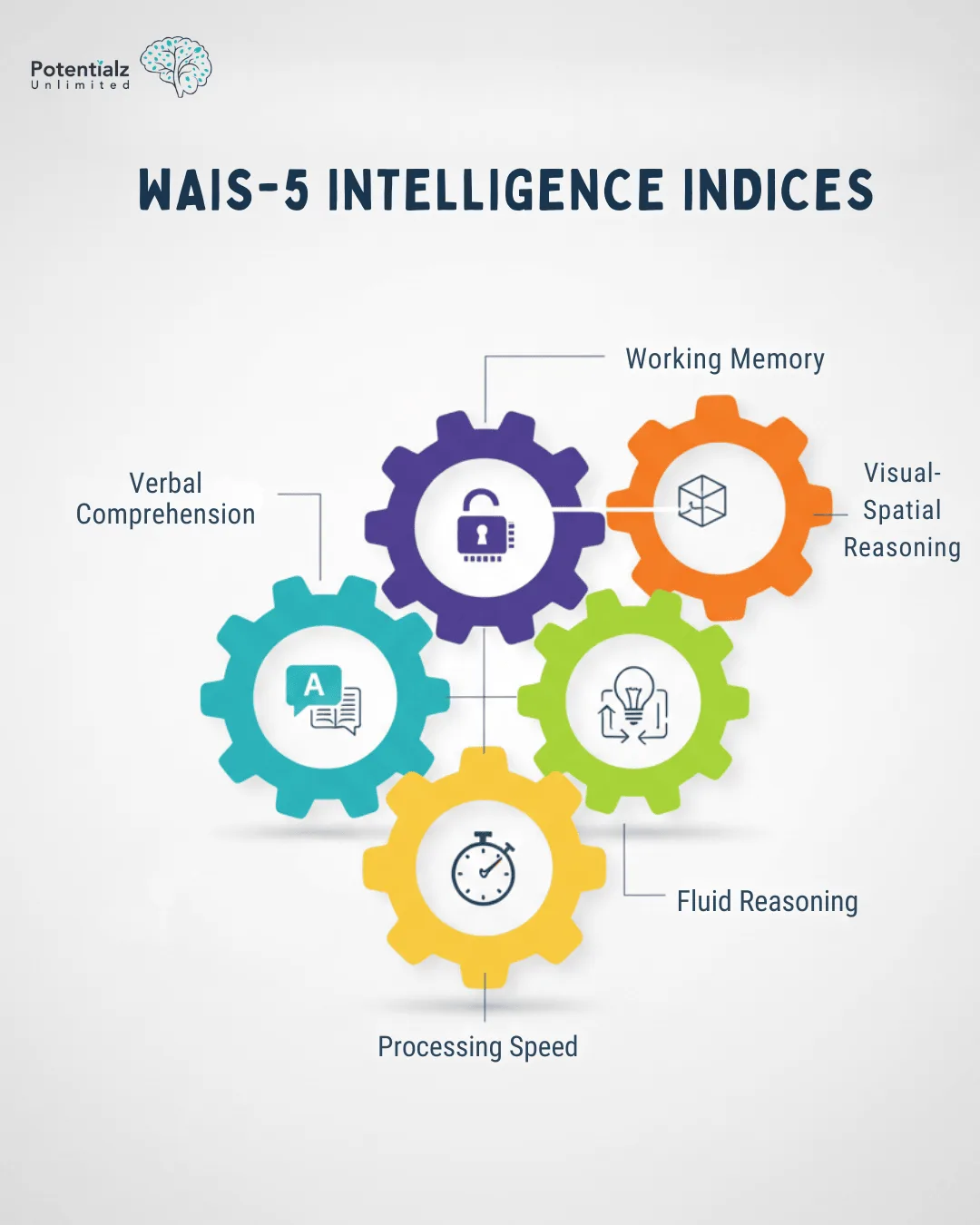 Overview of WAIS-5 Intelligence Indices highlighting key components: Verbal Comprehension, Working Memory, Visual-Spatial Reasoning, Fluid Reasoning, and Processing Speed, represented through interconnected gears.
Real-World Applications of WAIS Testing
The WAIS intelligence test isn’t just academic - it has practical applications:
- Educational Planning: Identifying learning strengths and challenges
- Career Guidance: Understanding cognitive strengths for career choices
- Clinical Assessment: Detecting cognitive changes or difficulties
- Legal Contexts: Assessing cognitive capacity in legal situations
Beyond Traditional Testing: Multiple Intelligences Theory
While the WAIS test is excellent for measuring certain types of intelligence, Harvard psychologist Howard Gardner revolutionised our understanding of intelligence with his Multiple Intelligences Theory. Gardner argued that intelligence is not a fixed trait but a dynamic ability that manifests in various forms.
The Eight Types of Intelligence
Gardner’s framework has profoundly influenced educational practices worldwide, encouraging educators to recognize and nurture diverse forms of intelligence beyond traditional academic skills. Here are the eight intelligences Gardner identified:
- Linguistic Intelligence: Mastery of language, writing, and communication
- Logical-Mathematical Intelligence: Number patterns, logical reasoning, and scientific thinking
- Spatial Intelligence: Visual processing, mental imagery, and artistic abilities
- Musical Intelligence: Rhythm, melody, and musical patterns
- Bodily-Kinesthetic Intelligence: Physical coordination and body awareness
- Interpersonal Intelligence: Understanding others and social situations
- Intrapersonal Intelligence: Self-awareness and emotional understanding
- Naturalistic Intelligence: Recognition and classification of natural patterns
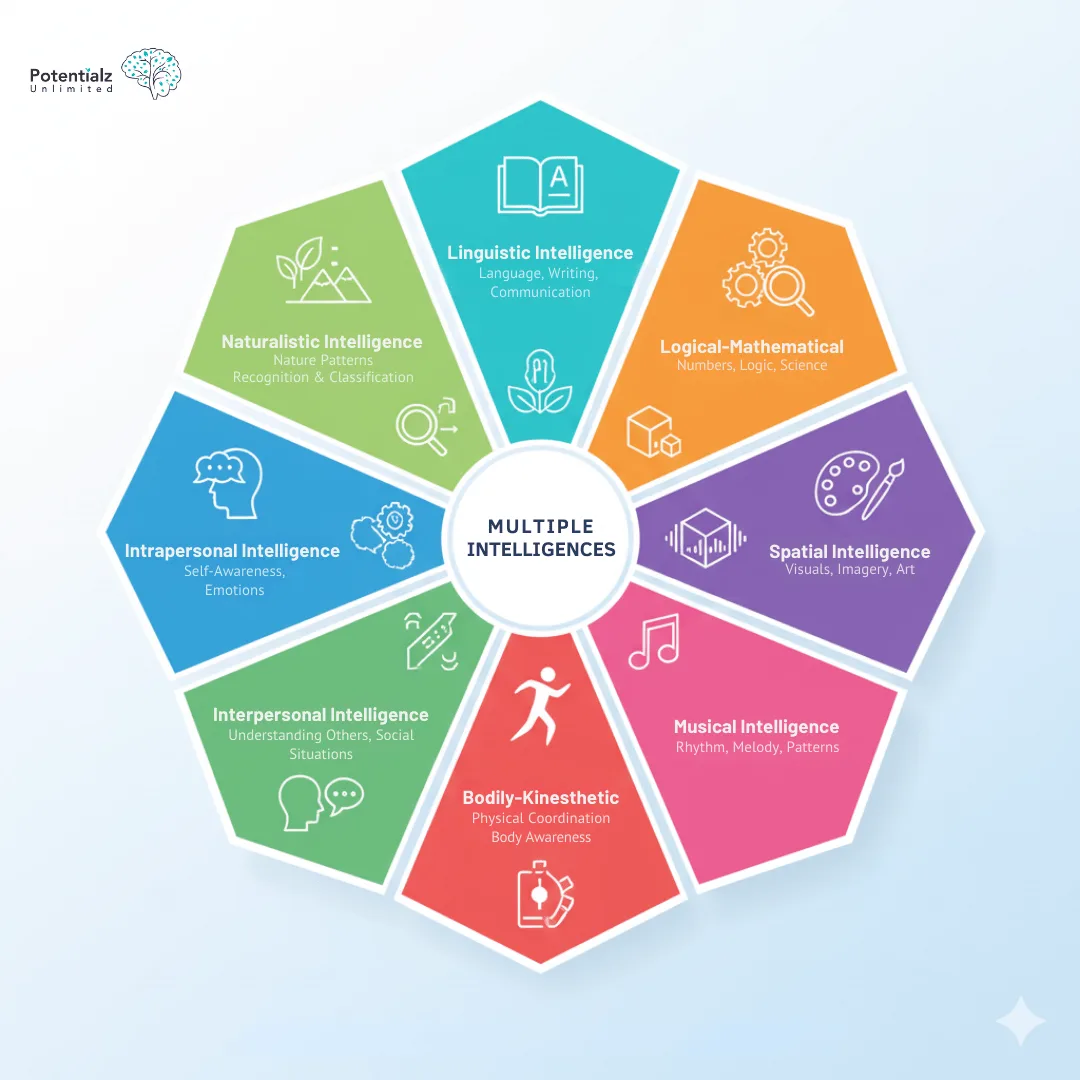 *Diagram illustrating Gardner’s theory of Multiple Intelligences, highlighting eight types: Linguistic, Logical-Mathematical, Spatial, Musical, Bodily-Kinesthetic, Interpersonal, Intrapersonal, and Naturalistic. *
Why Multiple Intelligences Matter for Students
Research by Mindy Kornhaber (2001) suggests that when teachers apply MI principles, they tend to diversify their pedagogy – offering more group work, creative projects, and individualized tasks. This means recognising your unique intelligence profile can help you:
- Choose study methods that work best for you
- Understand why certain subjects feel easier or harder
- Develop confidence in areas where you naturally excel
- Find careers that match your strengths
What the WAIS Test Measures (And What It Doesn’t)
While the WAIS intelligence test is comprehensive, it’s important to understand both its strengths and limitations.
WAIS Strengths:
- Highly reliable and scientifically validated
- Measures multiple cognitive abilities
- Provides detailed cognitive profile
- Useful for identifying learning differences
- Helps with educational and career planning
What WAIS Doesn’t Measure:
- Creativity, emotional intelligence, practical skills, and wisdom
- Musical or artistic talents
- Social and interpersonal skills
- Physical coordination and athletic abilities
- Motivation and persistence
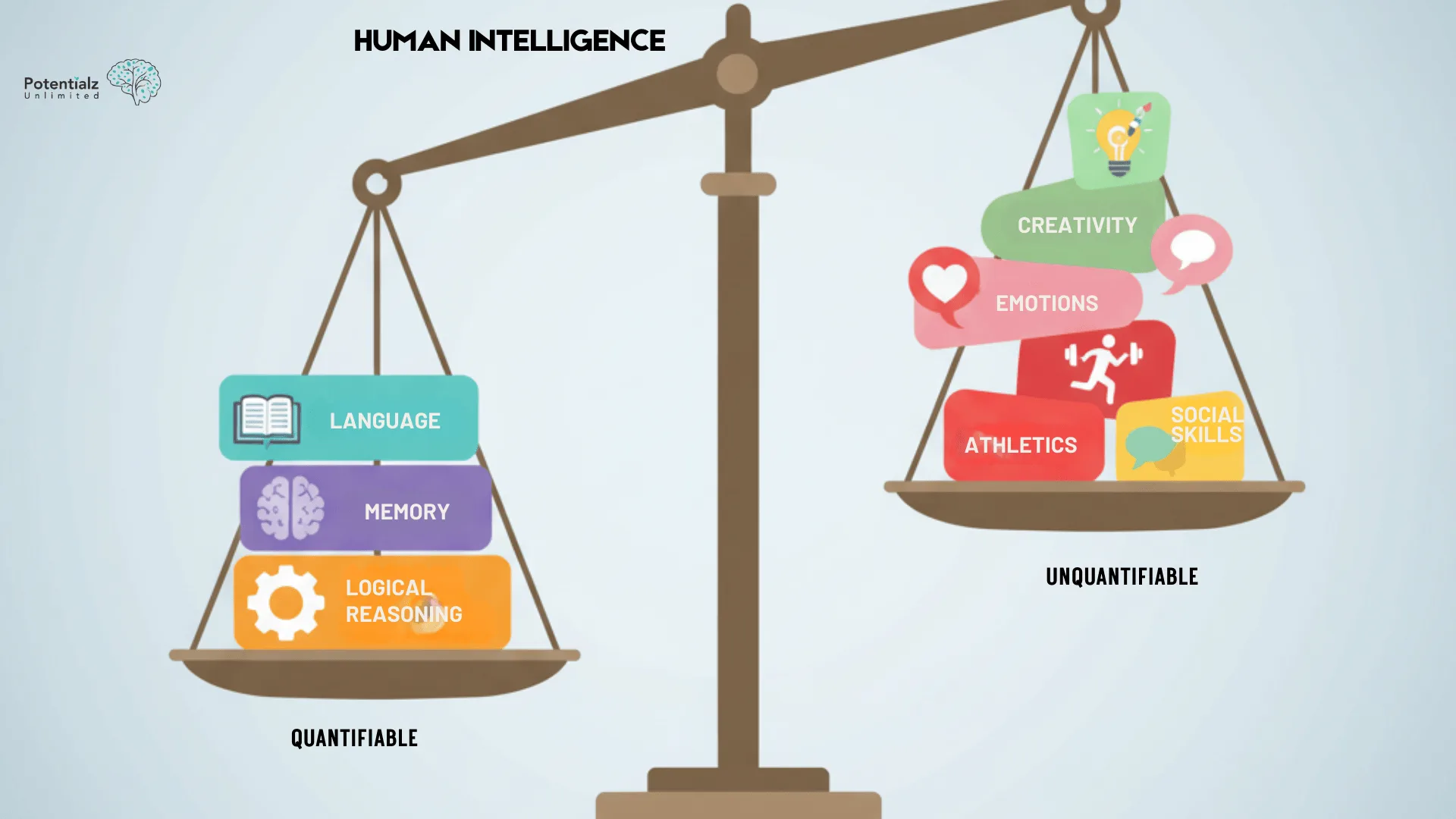 This image illustrates the balance of human intelligence, contrasting quantifiable elements like language, memory, and logical reasoning against unquantifiable aspects such as creativity, emotions, athletics, and social skills.
The Science Behind Intelligence: What Current Research Shows
Recent neuroscience research has provided fascinating insights into how intelligence works in the brain. Shearer (2020), for instance, reviewed evidence from over 500 functional neuroimaging studies and identified distinct brain network patterns that appear to correspond to each of Gardner’s proposed intelligences.
Brain Networks and Intelligence
Neuroscientific research has identified distinct neural networks associated with different intelligences. Language processing predominantly involves left hemisphere regions including Broca’s and Wernicke’s areas. Spatial intelligence engages right hemisphere and parietal regions. Musical intelligence activates both hemispheres, with specific areas for pitch, rhythm, and timbre processing.
Intelligence and Development
Your brain continues developing well into your twenties, which means your cognitive abilities can improve with practice and experience. Each intelligence follows its own developmental trajectory. Musical and mathematical intelligences often peak early, sometimes producing child prodigies.
Practical Applications: How Understanding Intelligence Helps You
Understanding your cognitive profile through intelligence assessment can be incredibly empowering for students.
Study Strategies Based on Your Strengths
If you’re strong in Linguistic Intelligence:
- Take detailed notes in your own words
- Explain concepts out loud or to friends
- Use memory techniques involving word associations
If you’re strong in Visual-Spatial Intelligence:
- Create mind maps and diagrams
- Use colour coding in your notes
- Visualise concepts and processes
If you’re strong in Logical-Mathematical Intelligence:
- Break problems into logical steps
- Look for patterns and relationships
- Use systematic approaches to studying
If you’re strong in Musical Intelligence:
- Create songs or rhythms to remember information
- Study with background music that helps you focus
- Use rhythm and melody to memorise facts
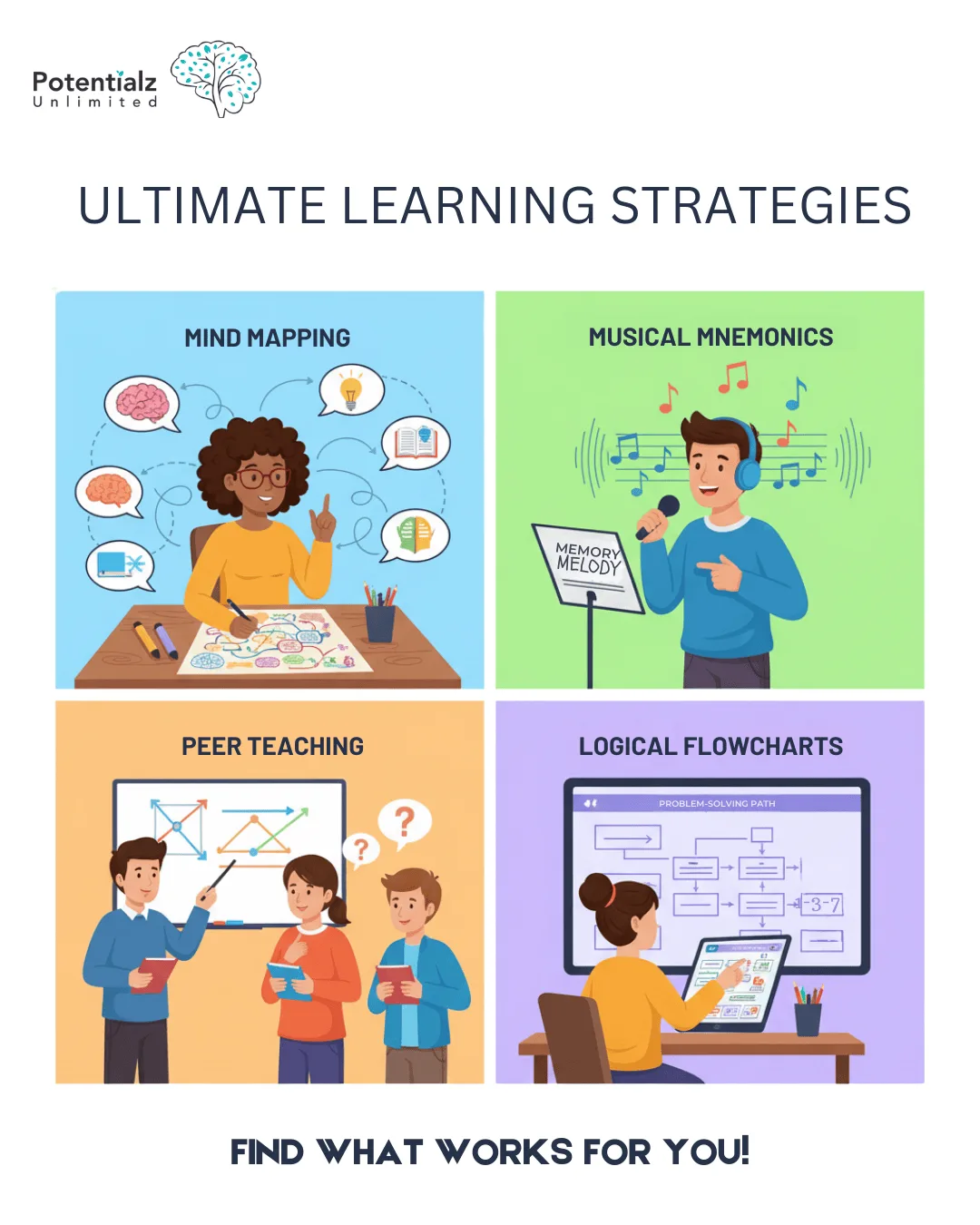 Explore diverse learning techniques, from mind mapping and musical mnemonics to peer teaching and logical flowcharts, and discover the method that enhances your understanding best!
Career Connections
Understanding your intelligence profile can help guide future career choices:
- Linguistic: Journalism, teaching, law, writing
- Logical-Mathematical: Engineering, research, finance, technology
- Spatial: Architecture, graphic design, surgery, aviation
- Musical: Music therapy, audio engineering, performance
- Bodily-Kinesthetic: Sports medicine, dance, surgery, crafts
- Interpersonal: Psychology, social work, sales, politics
- Intrapersonal: Philosophy, counselling, research, writing
- Naturalistic: Environmental science, veterinary medicine, farming
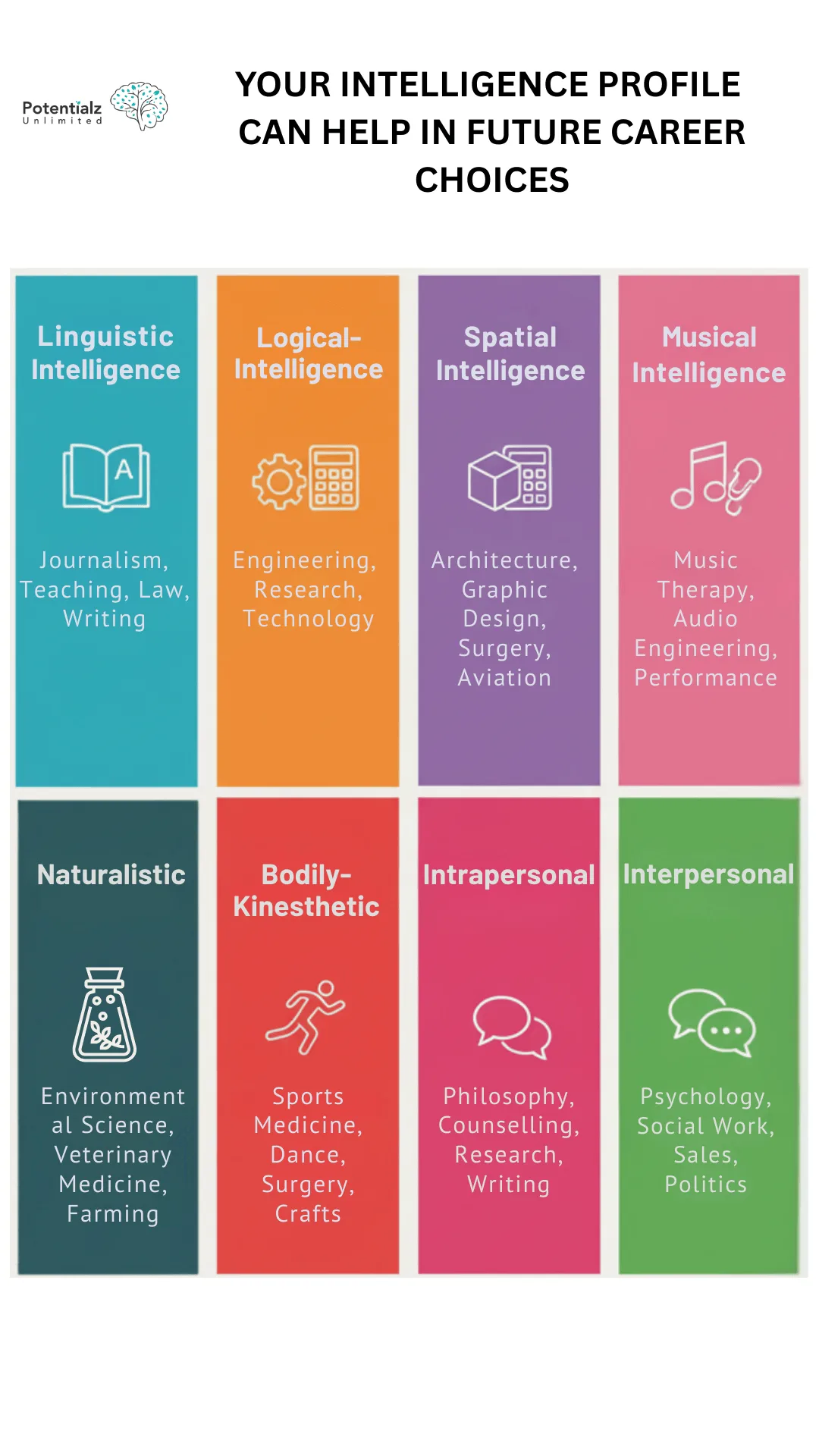 Explore your intelligence profile to guide your future career path, aligning your strengths with fields like journalism, engineering, architecture, music therapy, environmental science, sports medicine, philosophy, and psychology.
Common Myths About Intelligence Testing
Let’s bust some common misconceptions about intelligence assessment:
Myth 1: “IQ tests measure your worth as a person”
Reality: Intelligence tests measure specific cognitive abilities, not your value, potential, or character.
Myth 2: “Intelligence is fixed and can’t change”
Reality: Many aspects of cognitive ability can improve with practice, education, and experience.
Myth 3: “There’s only one type of intelligence that matters”
Reality: Different situations require different types of intelligence, all of which are valuable.
Myth 4: “High IQ guarantees success”
Reality: Success depends on many factors including motivation, emotional intelligence, social skills, and opportunities.
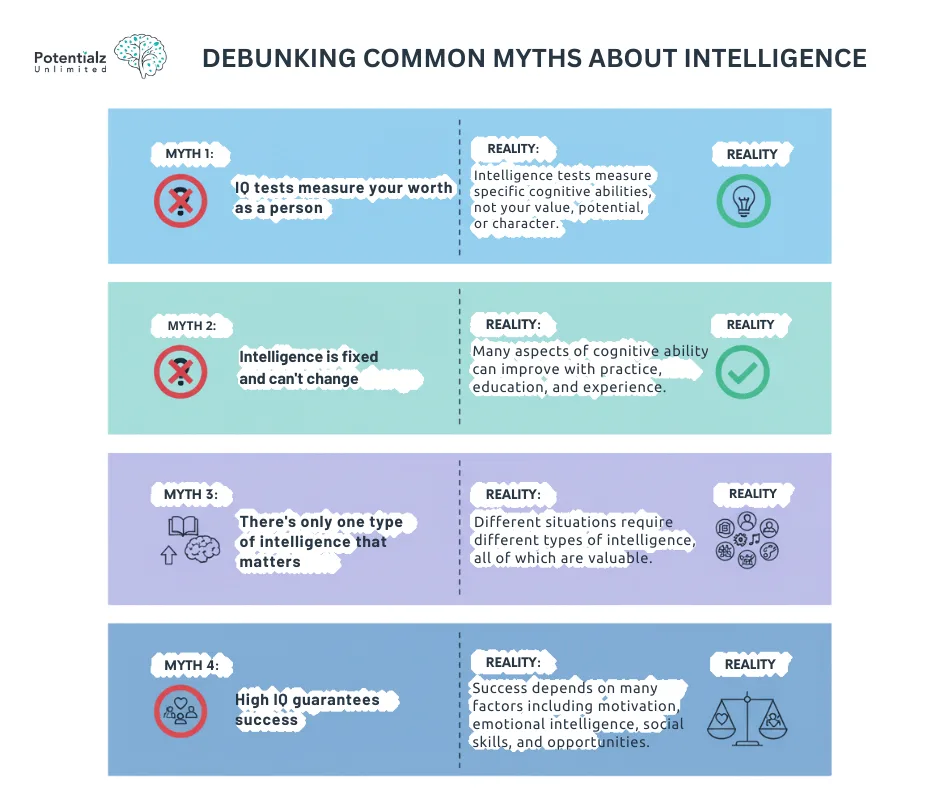 Debunking common myths about intelligence, this infographic clarifies misconceptions
Preparing for Intelligence Testing: Tips for Students
If you’re scheduled for WAIS intelligence test or similar cognitive assessment, here are some practical tips:
Before the Test:
- Get a good night’s sleep
- Eat a healthy breakfast
- Arrive relaxed and on time
- Bring glasses or hearing aids if needed
- Ask questions if you’re unsure about instructions
During the Test:
- Do your best on each task
- Don’t worry if some tasks seem difficult
- Take breaks when offered
- Stay positive and focused
- Remember that different people excel at different tasks
After the Test:
- Discuss results with a qualified professional
- Focus on understanding your cognitive profile
- Use insights to improve study strategies
- Remember that tests show abilities, not limitations
Alternatives to Traditional Intelligence Testing
While the WAIS is the gold standard, other assessments can provide valuable insights:
- Stanford-Binet Intelligence Scales: Alternative comprehensive assessment
- Woodcock-Johnson Tests: Focuses on cognitive abilities and achievement
- Multiple Intelligence assessments: Based on Gardner’s theory
- Performance-based evaluations: Real-world problem-solving tasks
Conclusion: Embracing Your Unique Intelligence Profile
Understanding intelligence - whether through the WAIS intelligence test, multiple intelligences theory, or other forms of cognitive assessment - is about celebrating the diverse ways human minds work. Your intelligence profile is like a fingerprint: unique, valuable, and yours to develop.
Remember that intelligence isn’t about being “smart” or “not smart” - it’s about understanding how your brain works best and using that knowledge to achieve your goals. Whether you excel in traditional academic areas measured by the WAIS or shine in other areas like creativity, social understanding, or practical problem-solving, your unique combination of abilities is what makes you special.
The journey of understanding your intelligence is ongoing. As you grow and learn, your abilities will continue to develop. Use these insights not to limit yourself, but to explore new possibilities and approaches to learning and life.
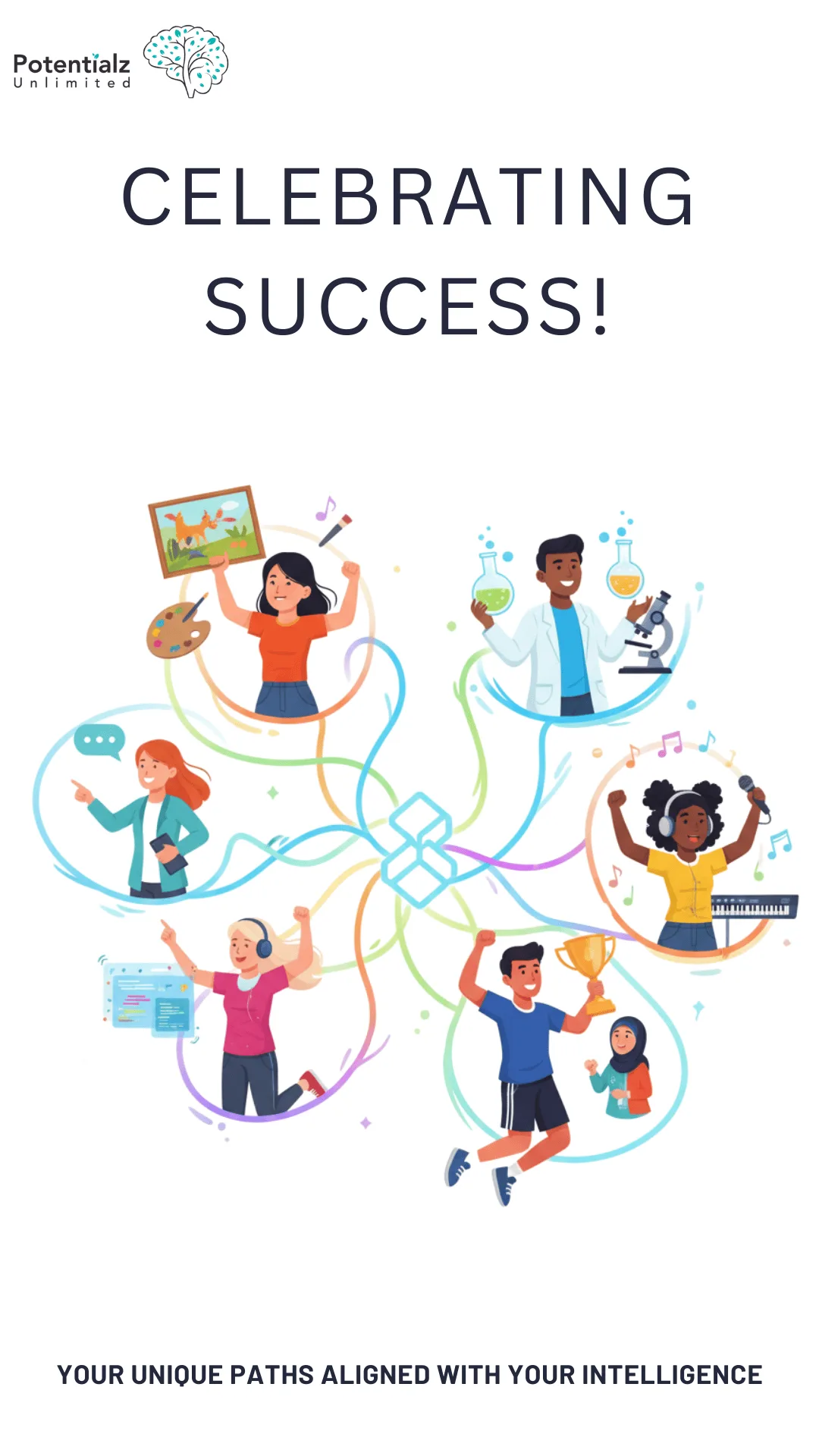 Exploring diverse talents and passions, this vibrant illustration highlights the joy of achieving success across various fields, from arts to science and sports, emphasizing the unique paths aligned with individual intelligence.
Test Your Knowledge
Other Relevant Posts :
Need Professional Support?
If you're experiencing mental health concerns, our team is here to help.