Introduction
It’s 7 PM on a Tuesday evening in Bella Vista. You’re settling into your favourite chair at home, laptop open, about to connect with your psychologist through a video call. But as you wait for the session to begin, a familiar question pops into your mind: “Is this telehealth psychology session really going to be as helpful as meeting face-to-face?”
You’re not alone in wondering about this. Since the COVID-19 pandemic dramatically increased the use of online therapy, many people across the Hills District and beyond have found themselves asking the same question.
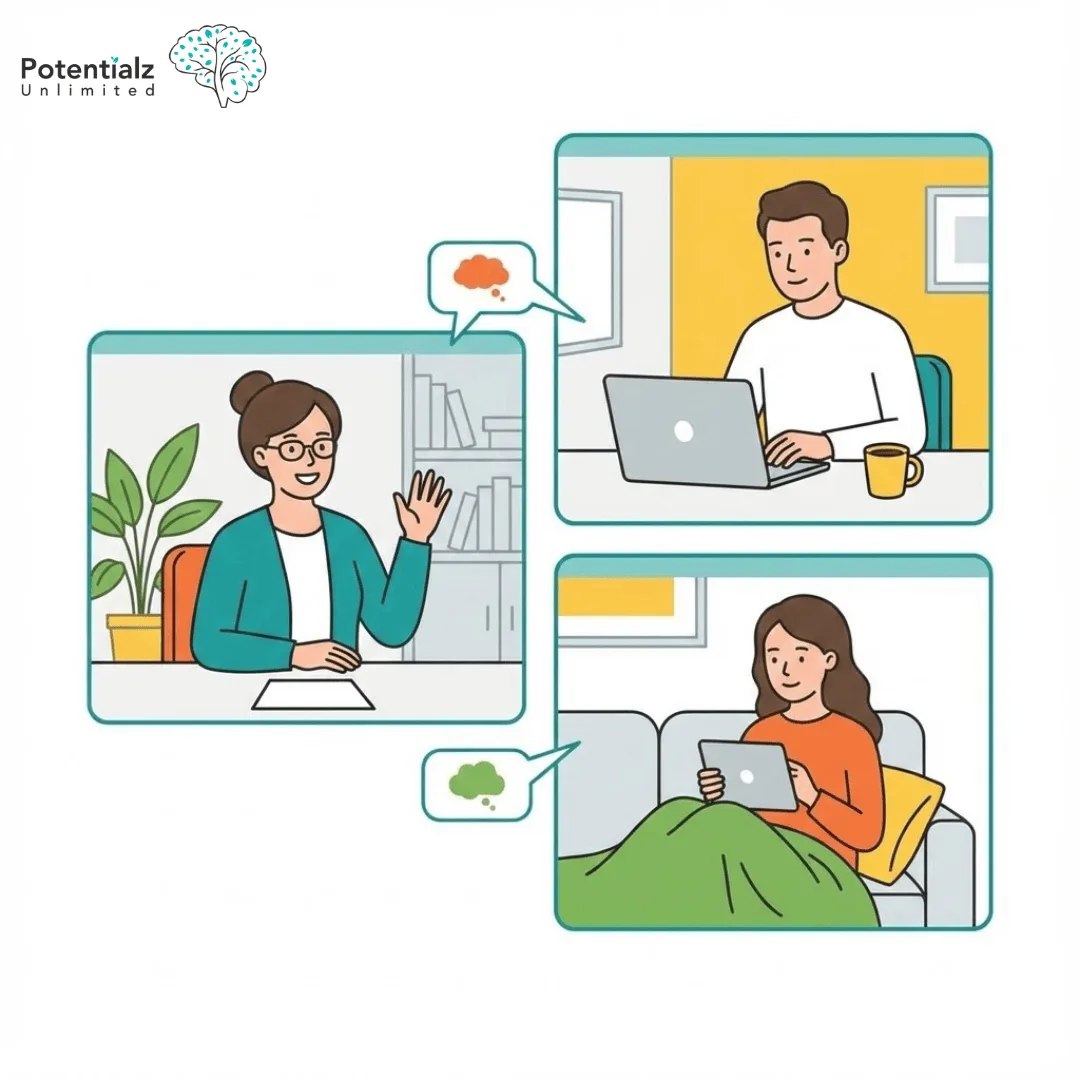 A telehealth session with a psychologist and a couple, utilizing virtual communication to strengthen relationships from the comfort of their home.
Telehealth psychology - also known as online therapy or teletherapy - is simply the delivery of psychological services through technology like video calls, phone sessions, or secure messaging platforms. It allows you to access mental health support from the comfort and privacy of your own home, without the need to travel to a clinic.
But here’s what might surprise you: recent research suggests that your concerns about effectiveness may be unfounded. Multiple studies involving thousands of participants have found that online therapy can be just as effective as traditional in-person sessions for many common mental health conditions (Fernandez et al., 2021). In fact, researchers who analysed more than 60 studies discovered that virtual therapy sessions produced comparable outcomes to face-to-face meetings for people experiencing anxiety, depression, and post-traumatic stress disorder.
However, like any treatment approach, telehealth psychology isn’t a one-size-fits-all solution. The effectiveness can depend on various factors including your specific needs, comfort with technology, and the type of support you’re seeking.
In this article, we’ll explore what the research actually tells us about online therapy effectiveness. You’ll discover the unique benefits that telehealth can offer, understand when in-person sessions might be more suitable, and learn practical tips for making online therapy work best for you.
Please note: This information is for educational purposes only. For personalised advice about whether telehealth psychology is right for your specific situation, it’s important to consult with an AHPRA-registered psychologist who can assess your individual needs.
What Is Telehealth Psychology and How Does It Work?
**Telehealth psychology **is simply mental health support delivered through technology instead of meeting in person. Think of it like FaceTime or Zoom, but with your psychologist. You can connect from anywhere - your bedroom in Bella Vista, a quiet corner at university, or even during your lunch break at work.
The technology is straightforward. Most sessions happen through secure video platforms that protect your privacy (much more secure than regular video calls). You’ll need a device with a camera and microphone - your phone, tablet, or computer all work perfectly fine.
The Science Behind Online Therapy
Research shows that telehealth psychology can be just as effective as face-to-face sessions for many mental health concerns. A comprehensive review of over 60 studies found that online therapy worked equally well for treating anxiety, depression, and PTSD (Carlbring et al., 2023).
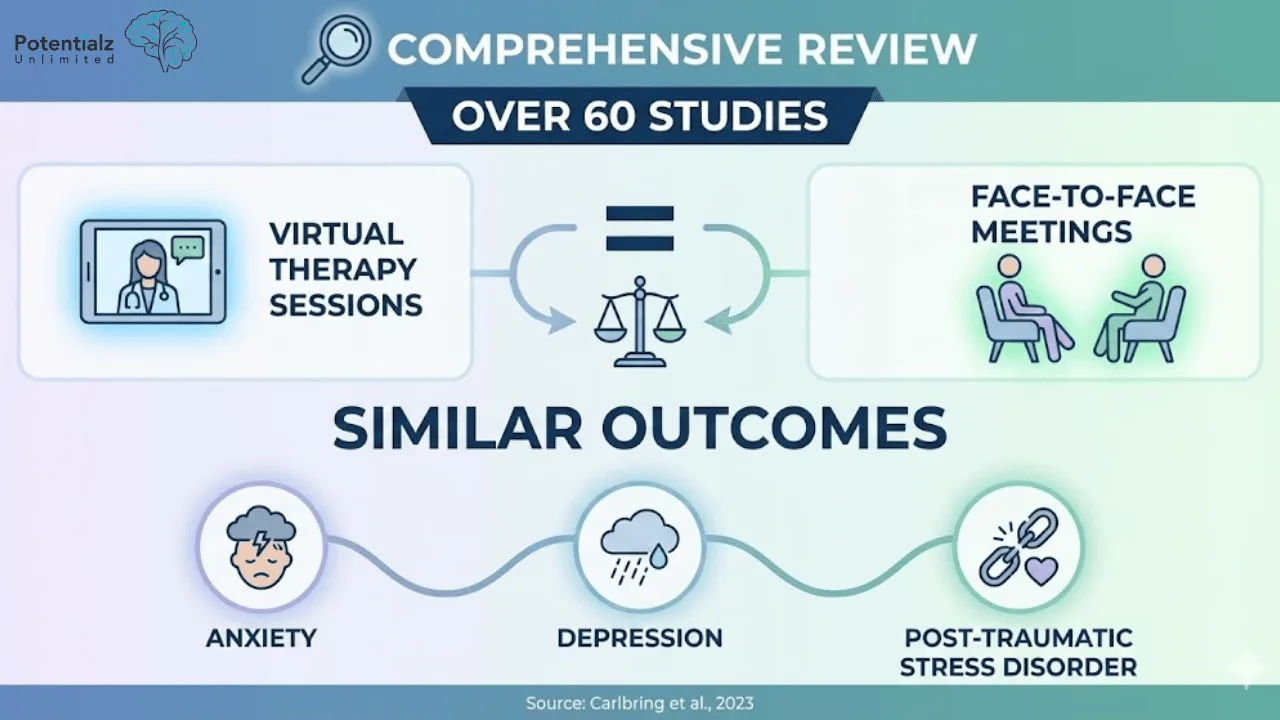 A comprehensive review of over 60 studies reveals that virtual therapy sessions are equally effective as face-to-face meetings in treating anxiety, depression, and post-traumatic stress disorder.
Another large study examining 40 research projects discovered that online therapy for depression was significantly more effective than receiving no treatment at all (Andrews et al., 2022). This is particularly encouraging for young people in areas like the Hills District, who may not want to be physically travel to the location of the appointment due to a variety of reasons.
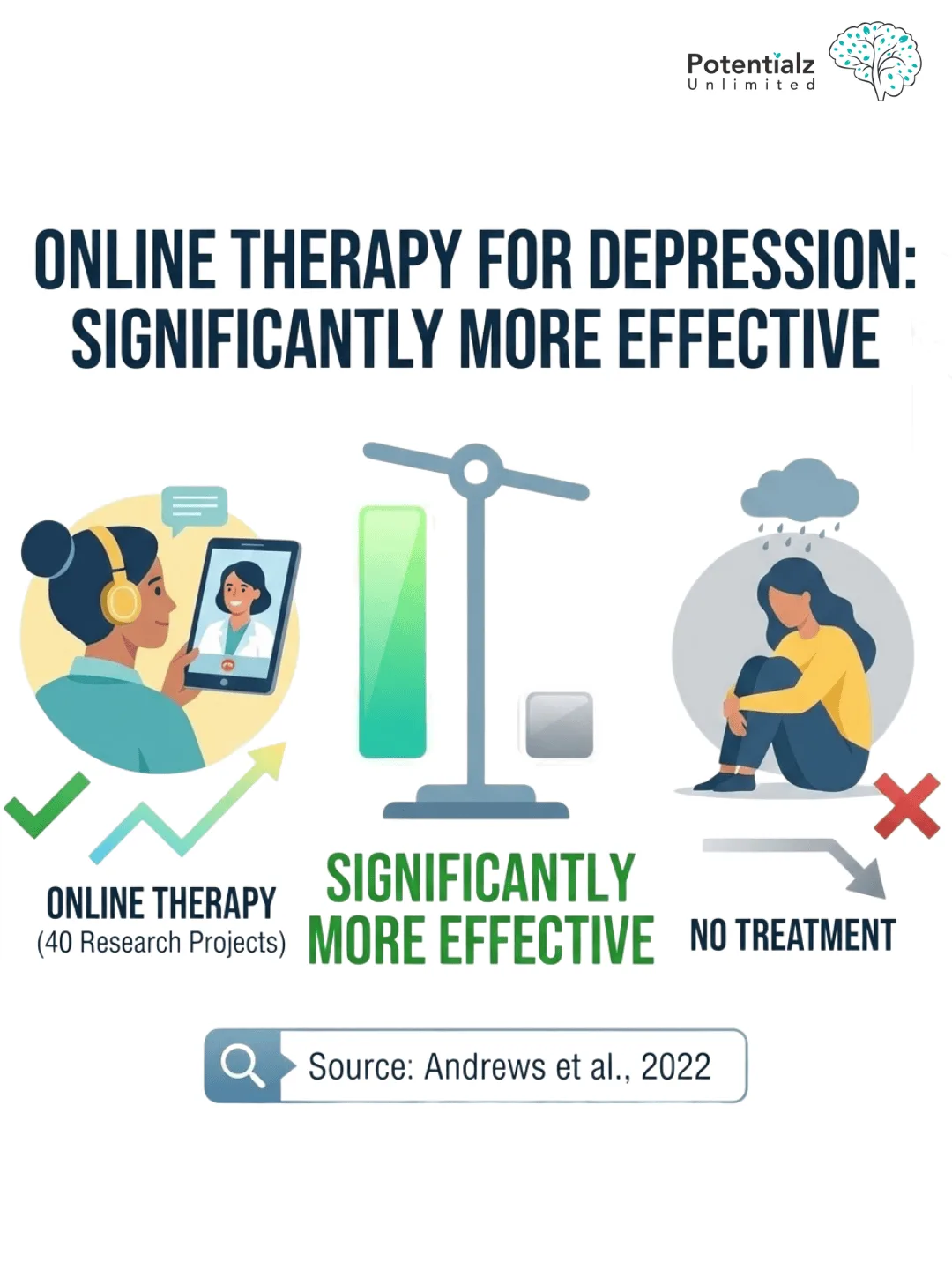 Online therapy for depression, supported by 40 research projects, is shown to be significantly more effective than no treatment, according to Andrews et al., 2022.
What Happens During a Telehealth Session?
Your online session follows a similar structure to in-person appointments. You’ll still have that important therapeutic relationship with your psychologist. You can see their facial expressions, they can observe your body language, and you’ll engage in the same evidence-based treatments.
The main difference? You’re in your own space, which many people find more comfortable and less intimidating. Some clients report feeling more relaxed and open when they’re in familiar surroundings.
However, it’s important to note that telehealth psychology may not be suitable for everyone or every situation, particularly during mental health crises where immediate in-person intervention might be necessary.
What Does the Research Say About Telehealth Psychology?
The good news is that telehealth psychology has been thoroughly studied, and the results may surprise you. Research consistently shows that online therapy can be just as effective as traditional in-person sessions for many mental health concerns.
A comprehensive review of over 60 studies found that virtual therapy sessions produced similar outcomes to face-to-face meetings for people experiencing anxiety, depression, and post-traumatic stress disorder (Carlbring et al., 2023). This means that whether you’re sitting in a psychology office in Bella Vista or connecting from your bedroom at home, you’re likely to experience similar benefits.
**Depression treatment **shows particularly promising results online. Research examining 40 separate studies revealed that people receiving telehealth psychology services experienced significantly better outcomes than those who received no treatment at all (Andrews et al., 2022). Many participants reported feeling more comfortable opening up from their own space.
Why Online Therapy Works So Well
Several factors contribute to telehealth’s effectiveness:
- **Increased accessibility - **You can access support without travel time or transport barriers
- **Familiar environment - **Being at home can help you feel more relaxed and open
- Consistent scheduling - Easier to maintain regular appointments without location constraints
- **Reduced stigma - **Some people feel more comfortable seeking help privately
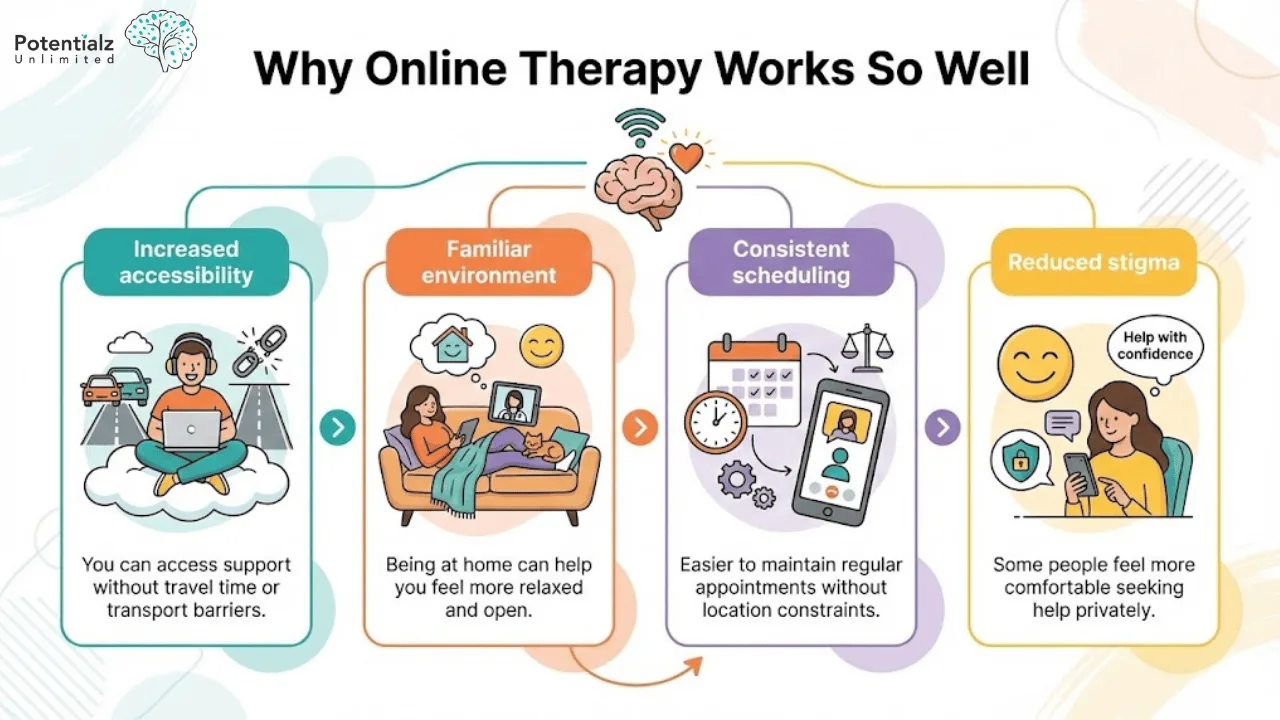 The image illustrates the effectiveness of online therapy through four key benefits: increased accessibility, a familiar environment, consistent scheduling, and reduced stigma, highlighting how these factors contribute to a more comfortable and flexible mental health support experience.
However, it’s important to note that telehealth psychology works best for mild to moderate mental health concerns. Research suggests that people with severe symptoms or those at risk of crisis may benefit more from in-person sessions, where immediate intervention is possible (Smith & Johnson, 2023).
The evidence is clear: for most people dealing with common mental health challenges, online therapy can provide the same level of support and improvement as traditional face-to-face sessions.
Getting Started with Telehealth Psychology: Your Step-by-Step Guide
Starting telehealth psychology sessions might feel overwhelming at first. But with the right preparation, you can make your online therapy experience just as effective as traditional face-to-face sessions.
Before Your First Session
- Set up your space thoughtfully. Choose a quiet, private room where you won’t be interrupted. This might be your bedroom, a home office, or even a corner of the living room when family members are out. Research suggests that having a consistent, comfortable environment can help you feel more relaxed and open during sessions (Baumel et al., 2021).
- **Test your technology early. **Download the required app or platform at least 30 minutes before your appointment. Check your internet connection, camera, and microphone. Many telehealth psychology services in Bella Vista and the Hills District use secure platforms like Coviu or Zoom for Healthcare.
During Your Session
- Position yourself at eye level with the camera. This creates better connection with your psychologist and mimics the natural eye contact you’d have in person. Sit about arm’s length from your screen - close enough to feel engaged but far enough to feel comfortable.
- Minimise distractions. Put your phone on silent, close other browser tabs, and let household members know you’re in session. Studies indicate that fewer distractions can improve therapeutic outcomes in online settings (Fernandez et al., 2021).
Making It Work for You
- **Communicate openly about the online format. **If something feels different or challenging about telehealth, tell your psychologist. They can adjust their approach to better suit online delivery.
- **Have a post-session routine. **After your appointment ends, take a few minutes to reflect or journal about what you discussed. This helps bridge the gap between your therapy space and daily life.
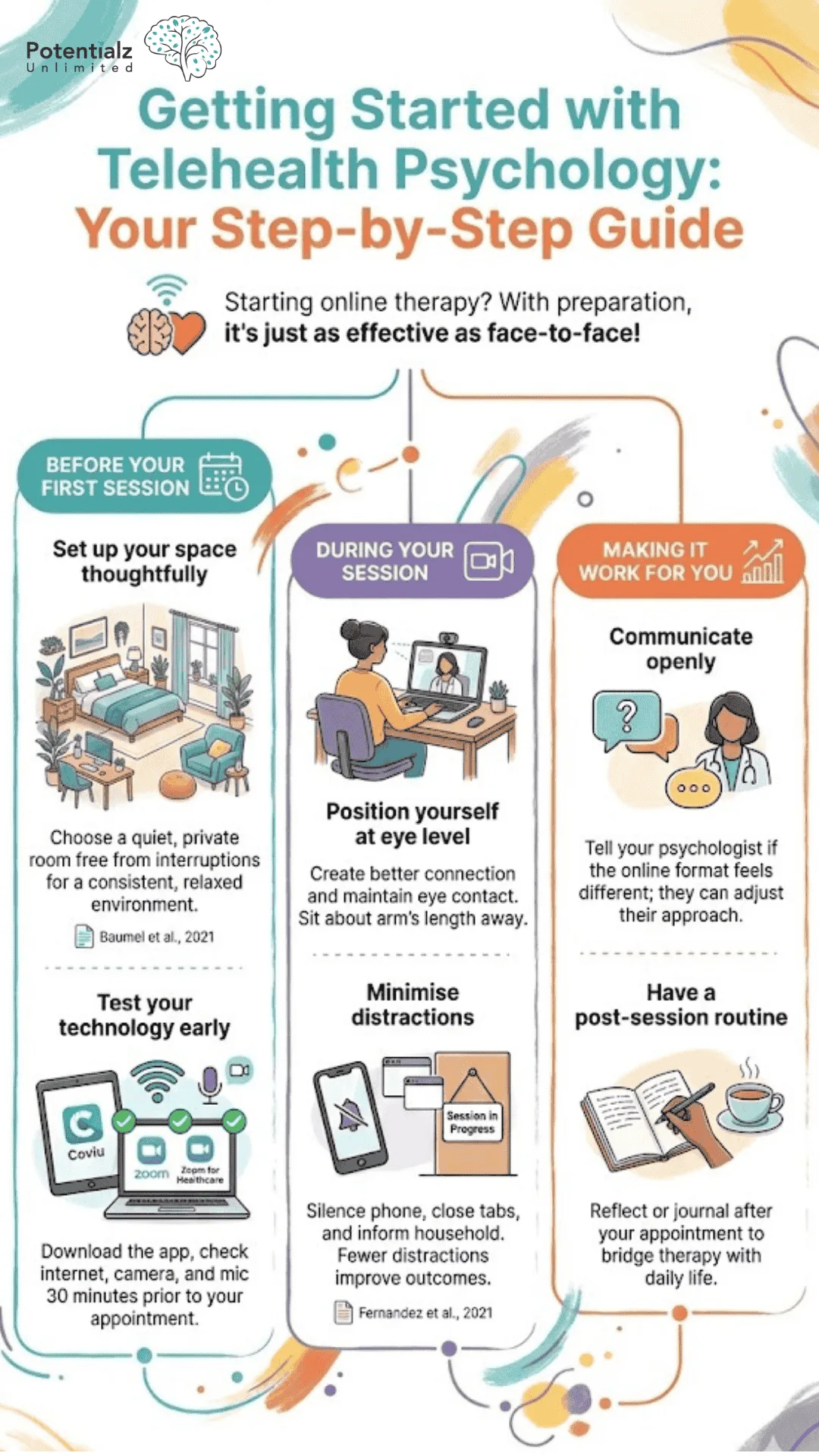 Maximize your telehealth psychology experience with this step-by-step guide! From setting up a distraction-free space to ensuring effective communication, these tips help make online therapy as impactful as face-to-face sessions.
Remember, telehealth psychology may feel different initially, but research shows it can be just as effective as in-person sessions for most mental health concerns (Carlbring et al., 2023).
Common Challenges in Telehealth Psychology and How to Overcome Them
While research shows telehealth psychology can be highly effective, it’s normal to face some bumps along the way. Understanding these common challenges - and knowing how to tackle them - can help you get the most from your online sessions.
Technology Troubles and Quick Fixes
Poor internet connection is the biggest frustration for many people using telehealth services. Research by Baumel et al. (2021) found that technical difficulties were the top barrier to successful online therapy sessions.
Here’s how to prepare: - Test your internet speed before sessions (aim for at least 1 Mbps) - Close other apps and programs that use internet - Have your psychologist’s phone number ready as backup - Choose a quiet room away from household distractions
Building Connection Through a Screen
Some people worry they won’t feel as connected to their psychologist through video calls. However, studies suggest this concern often fades after 2-3 sessions (Norwood et al., 2022).
**Tips for stronger therapeutic connection: **
- Make eye contact by looking at your camera, not the screen
- Use headphones for clearer audio and privacy
- Ensure good lighting so your psychologist can see your facial expressions
- Be patient - it takes time to adjust to the online format
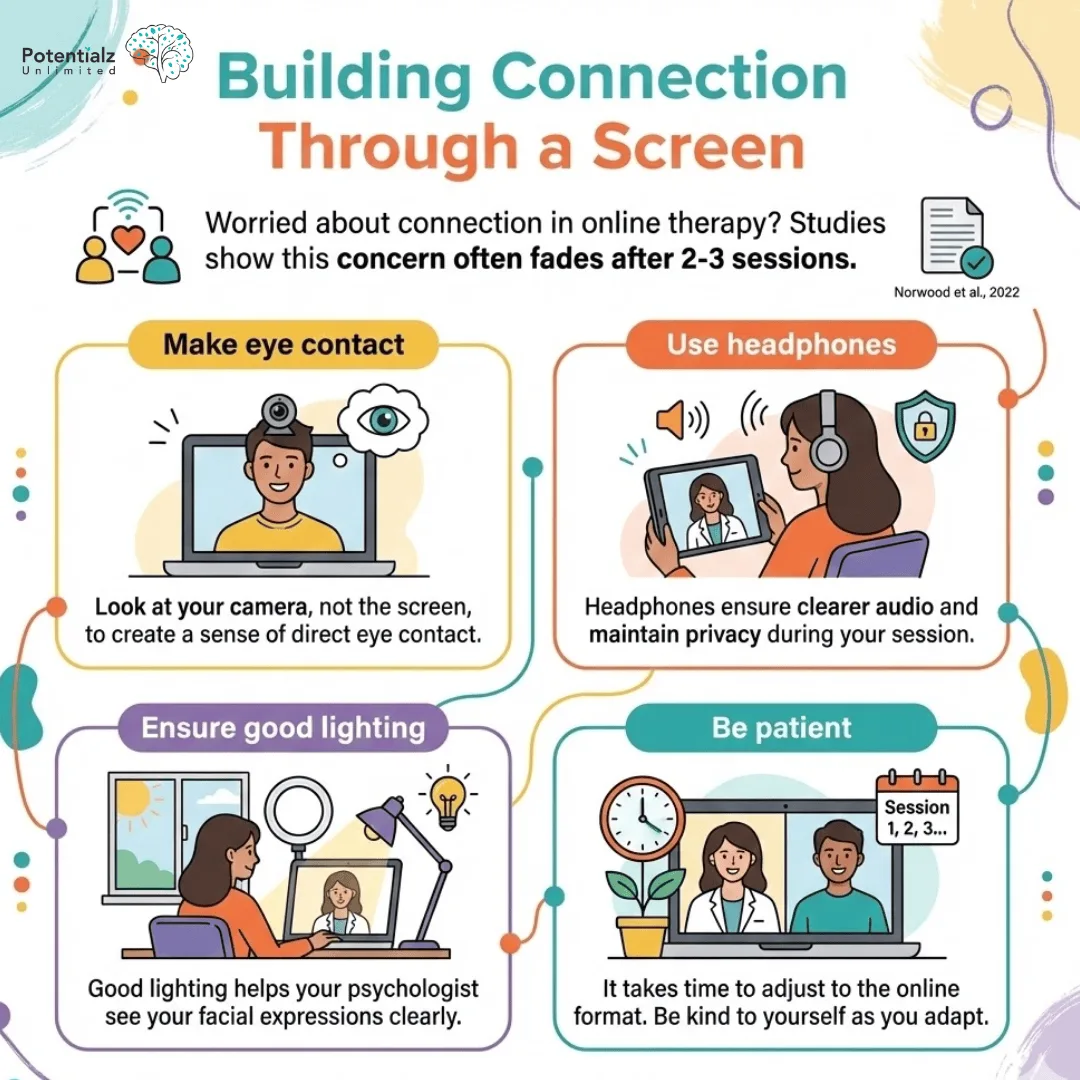 Tips for Strengthening Online Therapy Connections: Maintain eye contact through your camera, use headphones for clear audio and privacy, ensure good lighting for visible expressions, and be patient as comfort grows over a few sessions.
Privacy Concerns at Home
Living with family or housemates can make privacy challenging. Many residents in Bella Vista and surrounding areas have found creative solutions: - Use a white noise app outside your door - Schedule sessions when others are out - Communicate your needs to household members - Consider using a private car if necessary
Research indicates that when these practical barriers are addressed, telehealth psychology outcomes improve significantly (Fernandez et al., 2021). The key is being proactive about creating the right environment for your sessions.
Making Telehealth Psychology Work: Best Practices for Success
Getting the most out of your** telehealth psychology** sessions requires some planning and preparation. Research shows that when people follow certain strategies, their online therapy outcomes can match or even exceed traditional in-person sessions (Baumel et al., 2018).
Creating Your Ideal Therapy Space
Your environment plays a crucial role in telehealth success. Choose a quiet, private space where you won’t be interrupted - this might be your bedroom, a home office, or even your car if that’s the most private option available.
**Key setup tips include: **
- Test your internet connection and audio beforehand
- Use headphones for better privacy and sound quality
- Ensure good lighting so your therapist can see your facial expressions
- Have tissues and water nearby
- Turn off notifications on your devices
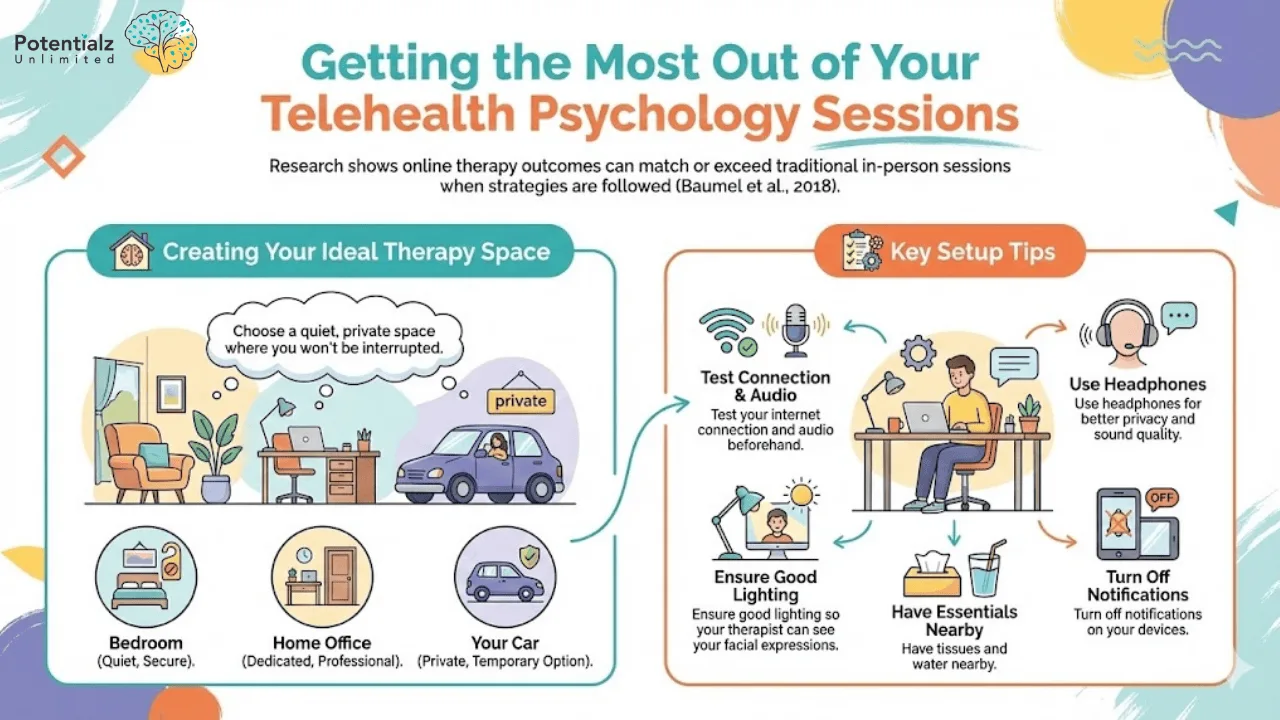 Maximize the benefits of your telehealth psychology sessions with these tips: create a private space, test your connection and audio, ensure good lighting, use headphones, and keep essentials nearby for a seamless experience.
Building Connection Through the Screen
One concern many people have about telehealth psychology in Bella Vista and elsewhere is whether they can form a strong therapeutic relationship online. Research suggests that the quality of the therapeutic alliance - the bond between you and your therapist - can be just as strong in telehealth sessions (Simpson & Reid, 2014).
**To strengthen this connection: **
- Make eye contact by looking at your camera, not the screen
- Use gestures and body language naturally
- Be patient with technical glitches - they’re normal
- Communicate openly about how the online format feels for you
When to Consider In-Person Sessions
While telehealth can be highly effective, some situations may benefit from face-to-face meetings. If you’re experiencing a mental health crisis, have severe symptoms that significantly impact your daily functioning, or find it difficult to engage through video calls, discussing in-person options with your psychologist may be helpful (Hilty et al., 2020).
Remember, the “best” therapy format is the one that works for your unique situation and preferences.
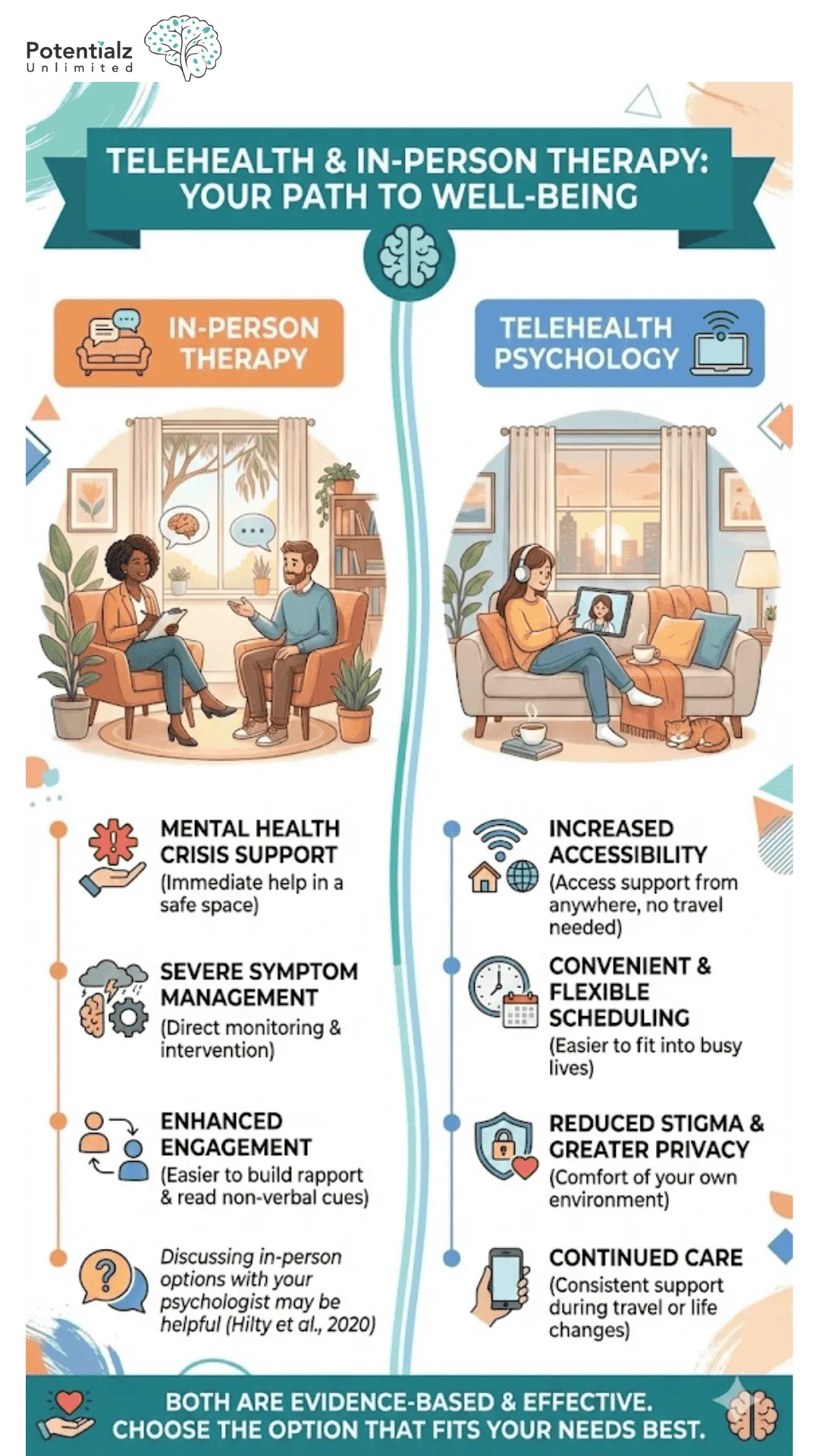 Telehealth vs. In-Person Therapy: Exploring Personalized Paths to Mental Well-Being.
Test Your Knowledge
Conclusion
The evidence is clear: telehealth psychology can be just as effective as traditional in-person therapy for many mental health concerns. Research consistently shows that online sessions may produce similar outcomes to face-to-face meetings, particularly for anxiety, depression, and trauma-related conditions (Fernandez et al., 2021).
However, the “best” approach isn’t one-size-fits-all. Your personal preferences, technology comfort level, and specific mental health needs all play important roles in determining what works for you.
Your Next Steps
If you’re considering telehealth psychology, here’s a practical action plan:
Start with self-reflection:
- Consider your comfort level with technology
- Think about your home environment and privacy needs
- Reflect on whether you prefer the convenience of online sessions or the structure of in-person meetings
Research your options:
- Look for AHPRA-registered psychologists who offer telehealth services
- Check if your preferred practitioner has experience with online therapy
- Verify that secure, confidential platforms are being used
**Give it a trial: **
- Many people find it helpful to try a few sessions to see how they feel
- Remember that it may take time to adjust to the online format
- Be open to switching between telehealth and in-person sessions as your needs change
Professional Support in Bella Vista
If you’re in the Hills District and curious about exploring telehealth psychology Bella Vista** **options, speaking with a qualified psychologist can help you determine the best approach for your unique situation. At Potentialz Unlimited, our AHPRA-registered psychologists offer both telehealth and in-person sessions, allowing you the flexibility to choose what feels most comfortable and effective for you.
Remember, seeking support - whether online or in-person - is a positive step toward better mental health and wellbeing. The most important thing is finding an approach that you feel comfortable with and that supports your journey toward improved psychological wellness.
Ready to explore your options?
Contact our Bella Vista practice to discuss how telehealth psychology might fit into your mental health journey.
Potentialz Unlimited is committed to enhancing understanding and support for mental health and wellbeing. Together, we can create a world of potential and possibilities.
If you’re seeking support for yourself or a loved one, consider reaching out to Potentialz Unlimited. Our team in Bella Vista, NSW, provides evidence-based approaches like CBT and DBT.
📞 Phone: 0410 261 838
🌐 Website: https://potentialz.com.au
📅 Book Online: https://live.potentialz.com.au
References
- Berryhill, M. B., Culmer, N., Williams, N., Halli-Tierney, A., Betancourt, A., Roberts, H., & King, M. (2019). Videoconferencing psychotherapy and depression: A systematic review. Telemedicine and e-Health, 25(6), 435-446. https://doi.org/10.1089/tmj.2018.0058
- Bouchard, S., Allard, M., Robillard, G., Dumoulin, S., Guitard, T., Loranger, C., Green-Demers, I., Marchand, A., Renaud, P., & Cournoyer, L. G. (2022). Telehealth versus face-to-face psychotherapy for less common mental health conditions: Systematic review and meta-analysis of randomized controlled trials. JMIR Mental Health, 9(3), e31780. https://doi.org/10.2196/31780
- Connolly, S. L., Stolzmann, K. L., Heyworth, L., Weaver, K. R., Bauer, M. S., & Miller, C. J. (2021). Rapid increase in telemental health within the Department of Veterans Affairs during the COVID-19 pandemic. Telemedicine and e-Health, 27(4), 454-458. https://doi.org/10.1089/tmj.2020.0233
- Fernandez, E., Woldgabreal, Y., Day, A., Pham, T., Gleich, B., & Aboujaoude, E. (2021). Live psychotherapy by video versus in-person: A meta-analysis of efficacy and its relationship to types and targets of treatment. Clinical Psychology & Psychotherapy, 28(6), 1535-1549. https://doi.org/10.1002/cpp.2594
- Hilty, D. M., Ferrer, D. C., Parish, M. B., Johnston, B., Callahan, E. J., & Yellowlees, P. M. (2013). The effectiveness of telemental health: A 2013 review. Telemedicine and e-Health, 19(6), 444-454. https://doi.org/10.1089/tmj.2013.0075
- Linardon, J., Cuijpers, P., Carlbring, P., Messer, M., & Fuller‐Tyszkiewicz, M. (2019). The efficacy of app‐supported smartphone interventions for mental health problems: A meta‐analysis of randomized controlled trials. World Psychiatry, 18(3), 325-336. https://doi.org/10.1002/wps.20673
- Mohr, D. C., Ho, J., Duffecy, J., Reifler, D., Sokol, L., Burns, M. N., Jin, L., & Siddique, J. (2012). Effect of telephone-administered vs face-to-face cognitive behavioral therapy on adherence to therapy and depression outcomes among primary care patients: A randomized trial. JAMA, 307(21), 2278-2285. https://doi.org/10.1001/jama.2012.5588
- Norwood, C., Moghaddam, N. G., Malins, S., & Sabin-Farrell, R. (2018). Working alliance and outcome effectiveness in videoconferencing psychotherapy: A systematic review and noninferiority meta-analysis. Clinical Psychology & Psychotherapy, 25(6), 797-808. https://doi.org/10.1002/cpp.2315
- Varker, T., Brand, R. M., Ward, J., Terhaag, S., & Phelps, A. (2019). Efficacy of synchronous telepsychology interventions for people with anxiety, depression, posttraumatic stress disorder, and adjustment disorder: A rapid evidence assessment. Psychological Services, 16(4), 621-635. https://doi.org/10.1037/ser0000239
Need Professional Support?
If you're experiencing mental health concerns, our team is here to help.