What Is Relationship OCD?
Have you ever questioned whether you really love your partner? Most people have moments of doubt in their relationships. But what happens when these doubts become constant, overwhelming, and impossible to ignore? This might be Relationship OCD, also known as R-OCD.
Relationship OCD is a type of obsessive-compulsive disorder where a person experiences unwanted, intrusive thoughts about their romantic relationship. These thoughts create intense anxiety and lead to repetitive behaviours aimed at reducing that anxiety (Doron et al., 2012). Unlike normal relationship concerns, R-OCD thoughts feel urgent, distressing, and never-ending.
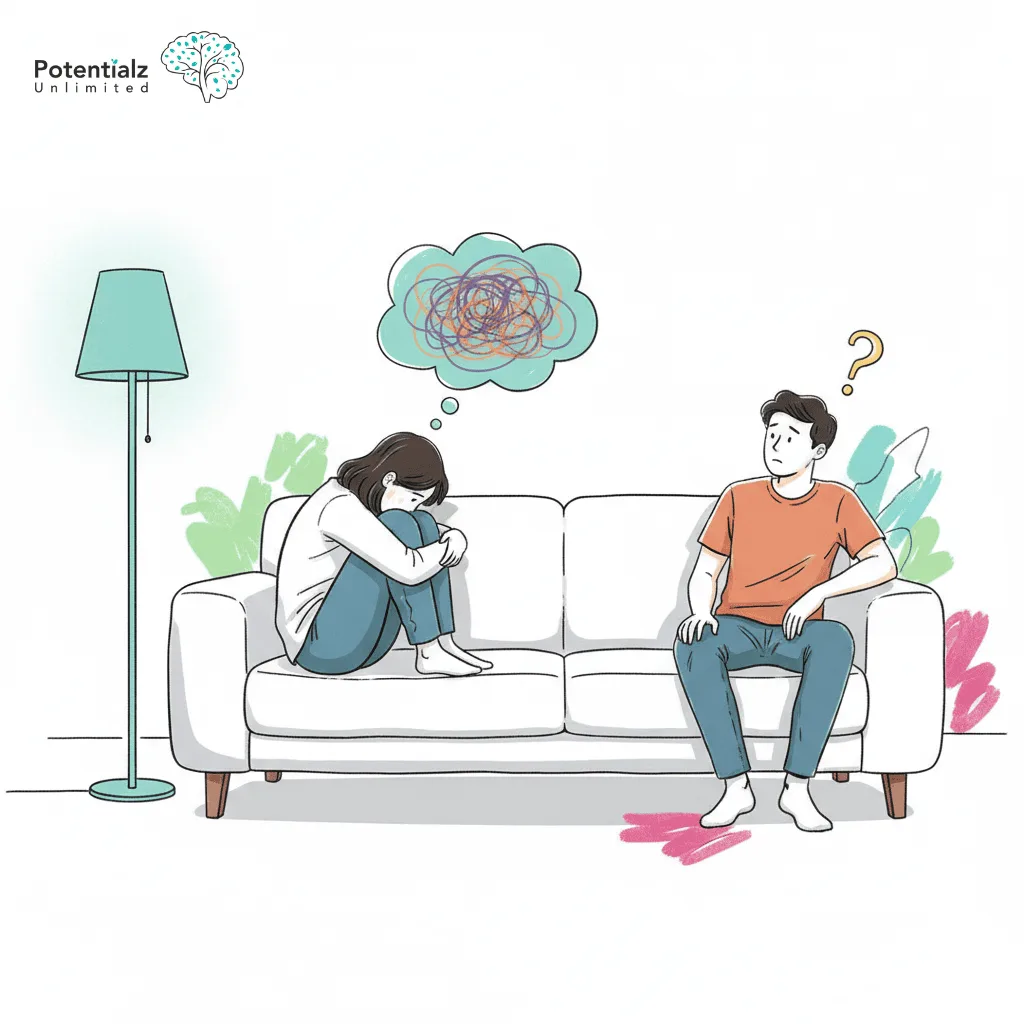 Navigating Relationship OCD: A woman struggles with anxiety as her partner tries to understand her inner turmoil.
People with relationship OCD often feel trapped in a cycle of doubt. They might constantly question whether their partner is “the one,” whether they truly love them, or whether their relationship is “good enough.” These doubts aren’t based on real problems in the relationship but come from the anxiety disorder itself.
According to the American Psychological Association, OCD affects approximately 2-3% of the population, and relationship-focused obsessions are among the most common themes (American Psychiatric Association, 2022). In Australia, many people in Sydney’s northwest suburbs, including Bella Vista, Castle Hill, and Baulkham Hills, seek help from an OCD psychologist in Bella Vista for these distressing symptoms.
Common Signs and Symptoms of Relationship OCD
Relationship OCD shows up differently for different people, but there are common patterns that mental health professionals look for.
Intrusive Thoughts (Obsessions)
The obsessions in R-OCD are unwanted thoughts that pop into your mind repeatedly. These might include:
- Constant doubts about whether you love your partner enough
- Worrying that you’re with the wrong person
- Comparing your relationship to others constantly
- Fears about your partner’s appearance or personality
- Thoughts about whether your attraction to your partner is “real”
- Concerns about whether the relationship feels “right”
These thoughts can appear hundreds of times per day, making it difficult to focus on work, study, or daily activities (Williams & Zahka, 2017).
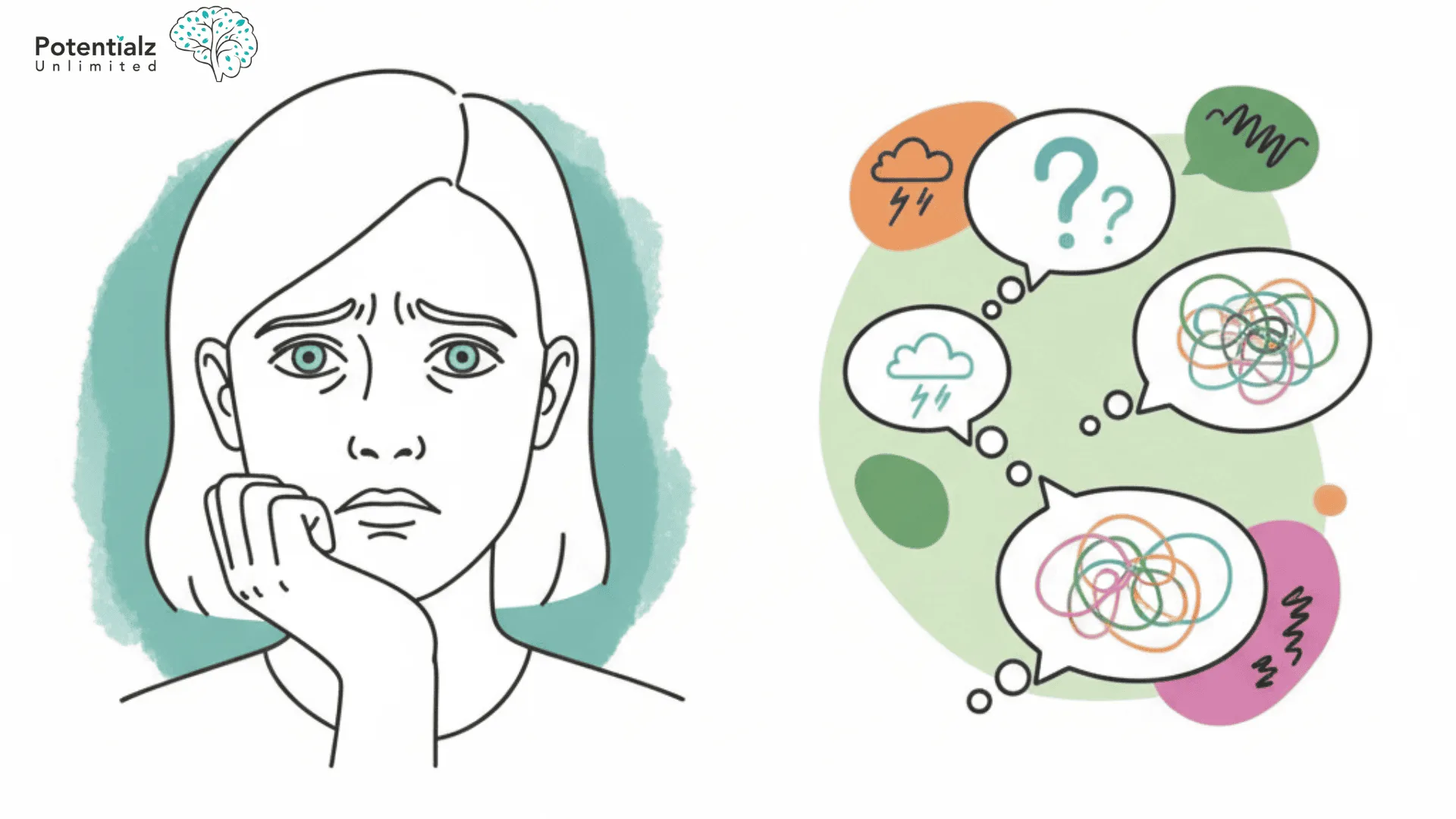 A worried individual surrounded by thought bubbles illustrating the storm of intrusive thoughts often associated with relationship OCD.
Compulsive Behaviours (Compulsions)
To cope with the anxiety from these thoughts, people with relationship OCD perform compulsions. These are repetitive behaviours or mental acts that temporarily reduce anxiety but actually make the problem worse over time. Common compulsions include:
- Constantly seeking reassurance from partners, friends, or family
- Checking feelings by monitoring physical responses to the partner
- Comparing the current relationship to past relationships
- Researching relationships online for hours
- Testing the relationship by creating scenarios
- Mentally reviewing past interactions to find “proof” of love
- Avoiding situations that trigger doubts
Research published in the Journal of Obsessive-Compulsive and Related Disorders found that reassurance-seeking is one of the most common compulsions in relationship OCD, but it provides only temporary relief (Doron et al., 2014).
How Relationship OCD Differs from Normal Relationship Doubts
Everyone has relationship doubts sometimes. So how do you know if what you’re experiencing is relationship OCD or just normal concerns?
Normal relationship doubts usually:
- Come and go naturally
- Are based on specific situations or behaviours
- Can be resolved through communication
- Don’t cause severe distress
- Allow you to function normally
Relationship OCD is different because:
- Doubts are constant and intrusive
- Thoughts feel urgent and overwhelming
- No amount of reassurance provides lasting relief
- The doubts significantly impact daily functioning
- You spend hours each day dealing with these thoughts
- The anxiety feels out of proportion to any real problems
As noted by Abramowitz et al. (2009) in their research on OCD subtypes, the key difference is that OCD-related thoughts are ego-dystonic, meaning they feel inconsistent with a person’s actual values and desires.
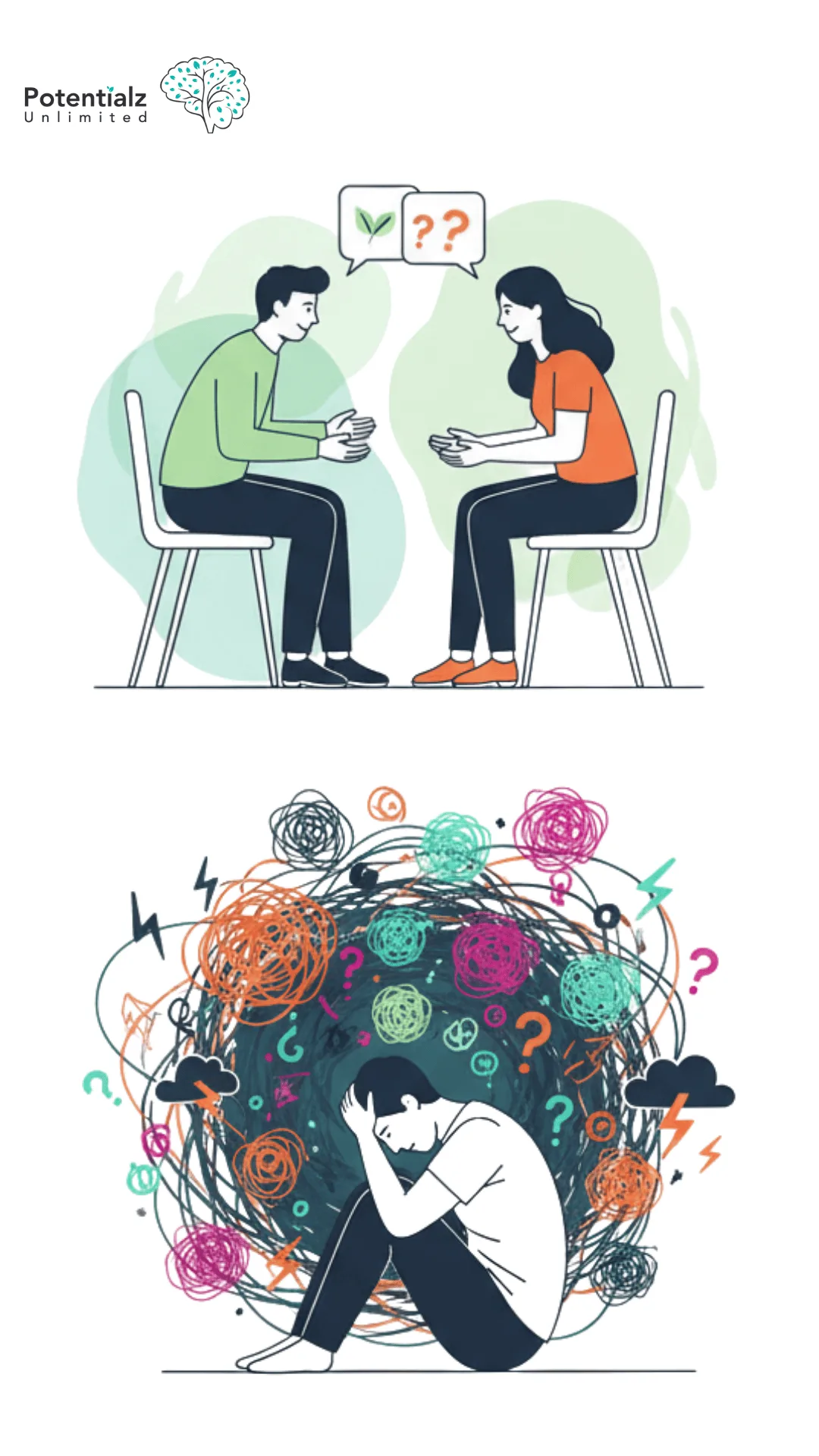 “Contrasting Normal Relationship Doubts with the Intensity of Relationship OCD: A Visual Exploration of Thought Patterns and Emotional Turmoil.”
Many people experiencing R-OCD also struggle with other forms of anxiety. If you’re dealing with persistent worry beyond your relationship, you might benefit from seeing an anxiety psychologist in Bella Vista who can help address multiple anxiety concerns.
The Impact on Individuals Living with Relationship OCD
Living with relationship OCD affects nearly every aspect of a person’s life. The constant anxiety and doubt take a serious toll on mental health and wellbeing.
Emotional and Mental Health Effects
People with R-OCD often experience:
- Chronic anxiety and stress: The constant questioning creates a state of high alert that exhausts the nervous system
- Depression: Many people develop depressive symptoms from the ongoing distress (Abramowitz & Jacoby, 2015)
- Low self-esteem: Doubting your feelings can make you question your ability to trust yourself
- Guilt and shame: Many people feel guilty about their doubts and worry they’re hurting their partner
- Emotional numbness: Some people become so focused on analysing their feelings that they can’t actually feel them
Studies show that OCD significantly impacts quality of life, with relationship obsessions causing particular distress because they affect intimate connections (Storch et al., 2007).
Impact on Daily Life
Beyond emotional effects, relationship OCD disrupts daily functioning:
- Difficulty concentrating: Intrusive thoughts make it hard to focus at work or study
- Sleep problems: Anxiety about the relationship keeps people awake at night
- Social withdrawal: Some people avoid friends and family to prevent triggering questions about their relationship
- Decreased productivity: Hours spent researching or seeking reassurance reduce time for other activities
- Physical symptoms: Chronic anxiety can cause headaches, muscle tension, stomach problems, and fatigue
For students, this might mean struggling to concentrate in class or complete homework. For adults, it could mean difficulty performing at work or managing household responsibilities. A clinical psychologist in Bella Vista can provide comprehensive assessment and treatment for these wide-ranging impacts.
How Relationship OCD Affects Romantic Relationships
Relationship OCD doesn’t just impact the person experiencing it—it significantly affects their partner and the relationship itself.
Effects on Partners
Partners of people with R-OCD often feel:
- Confused and hurt: They may not understand why their partner constantly needs reassurance
- Emotionally exhausted: Providing repeated reassurance becomes draining
- Inadequate: They might feel like they’re not enough or doing something wrong
- Frustrated: The same conversations happening repeatedly can be frustrating
- Anxious themselves: The partner may start feeling insecure about the relationship
Research by Doron et al. (2012) found that partners often experience their own emotional distress and may develop symptoms of anxiety or depression in response to their partner’s R-OCD.
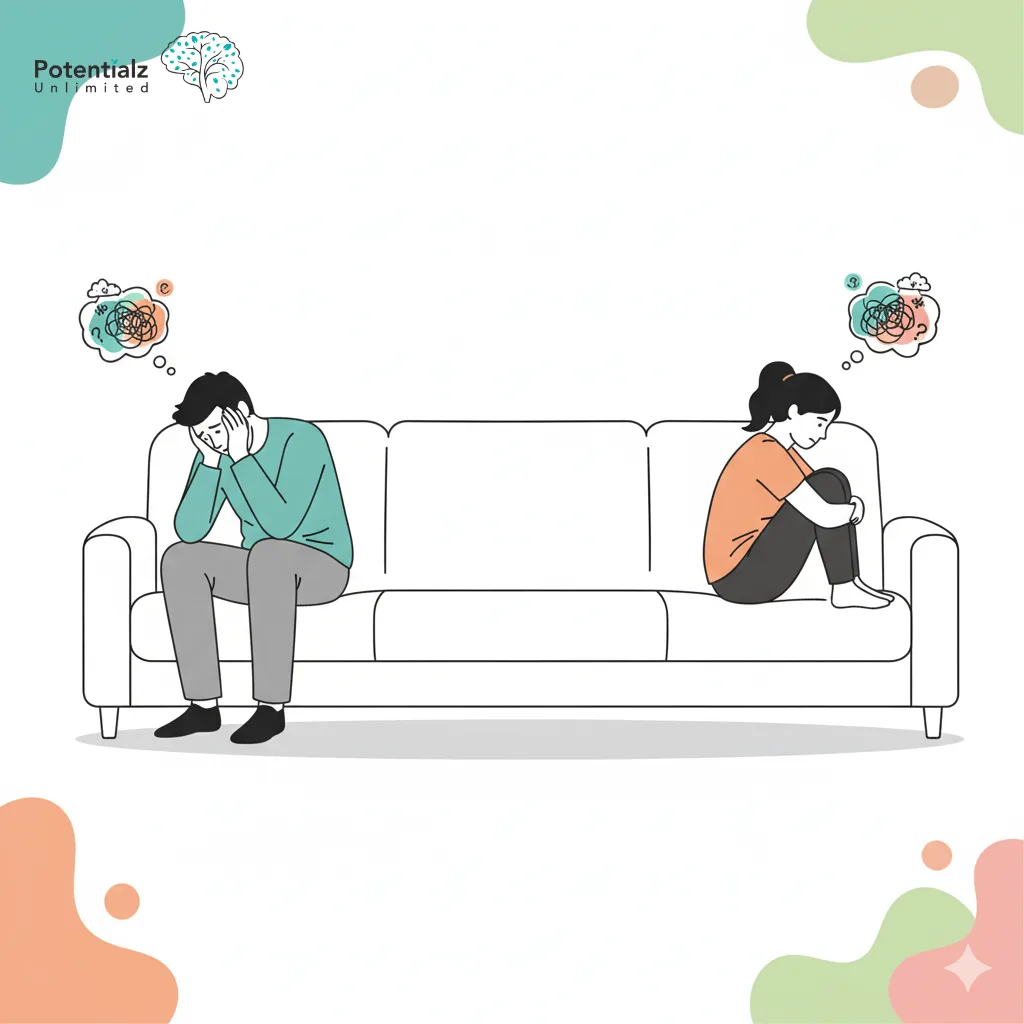 A couple sits on opposite ends of a couch, each lost in their own tangled thoughts, illustrating the mental struggle and communication barriers in relationship OCD.
Relationship Patterns That Develop
R-OCD can create unhealthy patterns in relationships:
- Reassurance-seeking cycles: The person asks for reassurance, feels better briefly, then needs reassurance again
- Avoidance of intimacy: Some people avoid physical or emotional closeness to prevent triggering doubts
- Communication breakdown: The relationship becomes focused on managing OCD rather than genuine connection
- Dependency: The person may become overly dependent on their partner for emotional regulation
- Relationship testing: Creating situations to “test” the relationship can damage trust
These patterns can eventually lead to relationship breakdown if the OCD remains untreated. However, with proper treatment from a qualified psychologist practicing couples therapy in Bella Vista, relationships can not only survive but become stronger. Many couples benefit from working together with a family and marriage therapist who understands both relationship dynamics and OCD.
The Impact on Families and Loved Ones
Relationship OCD extends beyond the couple to affect entire families.
Family Dynamics
Family members often experience:
- Confusion about the situation: They may not understand why the person seems unhappy in what appears to be a good relationship
- Stress from watching their loved one suffer: Seeing someone you care about in constant distress is painful
- Involvement in reassurance-seeking: The person may turn to parents, siblings, or friends for reassurance
- Changed family routines: Family activities may be avoided or modified to accommodate the OCD
- Tension between family members: Disagreements about how to help can create conflict
Parents of young adults with R-OCD often feel particularly helpless, wanting to support their child but unsure how to help without enabling the compulsions.
Social Connections
R-OCD can affect friendships and social life:
- Friends may feel uncomfortable with constant relationship discussions
- Social gatherings might be avoided due to anxiety
- Friendships can become strained if the person constantly seeks reassurance
- Social isolation may develop as the person withdraws
According to the Australian Psychological Society, maintaining social connections is crucial for mental health, making this impact particularly concerning (Australian Psychological Society, 2023).
Understanding the Causes of Relationship OCD
Like other forms of OCD, relationship OCD doesn’t have a single cause. Research suggests it develops from a combination of factors.
Biological Factors
- Brain chemistry: Imbalances in neurotransmitters, particularly serotonin, play a role in OCD (Pauls et al., 2014)
- Genetics: OCD tends to run in families, suggesting a genetic component
- Brain structure: Research shows differences in brain structure and function in people with OCD
Psychological Factors
- Attachment style: People with anxious or avoidant attachment styles may be more vulnerable to R-OCD (Doron et al., 2012)
- Perfectionism: Unrealistic standards about what relationships “should” be like can fuel obsessions
- Intolerance of uncertainty: Difficulty accepting that no one can be 100% certain about anything increases vulnerability
- Past experiences: Previous relationship trauma or watching parents’ relationship problems may contribute
Environmental Factors
- Stress: Major life changes or stressful events can trigger OCD symptoms
- Relationship transitions: Moving in together, engagement, or marriage can trigger R-OCD
- Cultural messages: Social media and movies create unrealistic relationship expectations
- Early experiences: Childhood experiences with attachment figures shape relationship patterns
Understanding these factors helps reduce self-blame and guides treatment approaches.
Treatment Options for Relationship OCD in Sydney
The good news is that relationship OCD is treatable. Evidence-based therapies can significantly reduce symptoms and improve quality of life.
Cognitive Behavioural Therapy (CBT)
CBT psychologists in Bella Vista use cognitive behavioural therapy to help people:
- Identify unhelpful thought patterns
- Challenge distorted thinking
- Develop healthier coping strategies
- Reduce compulsive behaviours
Research consistently shows CBT to be highly effective for OCD, with many people experiencing significant improvement (Öst et al., 2015).
Exposure and Response Prevention (ERP)
ERP is a specific type of CBT considered the gold standard for OCD treatment. It involves:
- Exposure: Gradually facing situations that trigger anxiety without performing compulsions
- Response Prevention: Resisting the urge to seek reassurance or perform other compulsive behaviours
For example, someone with R-OCD might practice sitting with the thought “maybe I don’t love my partner” without immediately seeking reassurance. Over time, this reduces the anxiety associated with the thought.
Studies show that 60-80% of people with OCD who complete ERP treatment experience significant symptom reduction (Abramowitz, 2006).
EMDR Therapy
For people whose relationship OCD stems from past trauma or attachment issues, EMDR psychologists in Bella Vista can help process traumatic memories that may be contributing to current relationship anxiety. EMDR (Eye Movement Desensitization and Reprocessing) can be particularly effective when R-OCD is linked to previous relationship trauma.
Dialectical Behaviour Therapy (DBT)
DBT psychologists in Bella Vista offer another evidence-based approach that teaches:
- Emotional regulation skills
- Distress tolerance techniques
- Mindfulness practices
- Interpersonal effectiveness strategies
DBT can be especially helpful for people with R-OCD who experience intense emotional responses to their intrusive thoughts.
Acceptance and Commitment Therapy (ACT)
ACT is another evidence-based approach that helps people:
- Accept unwanted thoughts without fighting them
- Recognise that thoughts are just thoughts, not facts
- Focus on values-based actions rather than eliminating discomfort
- Develop psychological flexibility
Research published in the Journal of Anxiety Disorders found ACT to be effective for OCD, particularly when combined with other approaches (Twohig et al., 2010).
Medication
For some people, medication can help manage OCD symptoms. Selective Serotonin Reuptake Inhibitors (SSRIs) are the most commonly prescribed medications for OCD. A psychiatrist can assess whether medication might be helpful as part of a comprehensive treatment plan.
Finding Treatment in Sydney’s Northwest
If you’re in Bella Vista, Castle Hill, Rouse Hill, Kellyville, or surrounding areas, accessing quality mental health care is important. Our practice offers comprehensive psychology services in Bella Vista including tailored OCD treatment. A registered psychologist experienced in treating OCD can provide evidence-based treatment tailored to your needs.
Ready to take the first step? You can easily book a psychologist in Bella Vista through our contact page. Our experienced team, led by Dr Gurprit Ganda, clinical psychologist with over 22 years of experience, is here to support your recovery journey.
Practical Strategies for Managing Relationship OCD
While professional treatment is essential, there are strategies you can use alongside therapy to manage symptoms.
For Individuals with R-OCD
- Limit reassurance-seeking: Set boundaries around how often you ask for reassurance
- Practice mindfulness: Learn to observe thoughts without engaging with them
- Reduce comparisons: Limit time on social media and avoid comparing relationships
- Focus on behaviour: Judge the relationship by actions and experiences, not feelings
- Self-compassion: Treat yourself with kindness rather than judgment
- Maintain routines: Keep up with work, hobbies, and social activities
- Education: Learn about OCD to understand what you’re experiencing
For Partners
- Learn about R-OCD: Understanding the condition helps you support effectively
- Set healthy boundaries: Limit reassurance-giving as advised by the therapist
- Maintain self-care: Look after your own mental health
- Communicate openly: Share your feelings and needs
- Support treatment: Encourage and support professional help
- Remember it’s not personal: The doubts are symptoms of OCD, not reality
- Seek support: Consider counselling for yourself if needed
For Families
- Educate yourselves: Learn about R-OCD to understand what’s happening
- Avoid enabling: Don’t participate in compulsions or excessive reassurance-giving
- Show compassion: Remember the person is struggling with an anxiety disorder
- Encourage treatment: Support professional help without forcing it
- Maintain normal routines: Continue family activities as much as possible
- Communicate: Talk openly about feelings and concerns
- Get support: Family therapy or support groups can help
 Psychologist providing tailored therapy for relationship OCD, fostering understanding and effective communication in a supportive environment.
If you have questions about treatment or want to understand more about how we can help, visit our frequently asked questions page or explore the various challenges we help with at our practice.
The Importance of Early Intervention
Getting help early makes a significant difference in recovery from relationship OCD.
Early intervention can:
- Prevent symptoms from worsening
- Reduce the impact on relationships
- Improve treatment outcomes
- Prevent development of depression or other complications
- Maintain quality of life and functioning
Research shows that the earlier people receive appropriate treatment, the better their long-term outcomes (Dell’Osso et al., 2016).
If you recognise symptoms of relationship OCD in yourself or a loved one, reaching out to a psychologist is an important first step. In the Sydney northwest region, including Bella Vista and surrounding suburbs, qualified mental health professionals can provide assessment and evidence-based treatment. Learn more about the evidence-based therapy approaches we use at our practice.
Hope and Recovery
While relationship OCD can feel overwhelming, recovery is possible. Many people successfully manage their symptoms and build healthy, fulfilling relationships.
Recovery doesn’t mean never having intrusive thoughts again. Instead, it means:
- Thoughts have less power over you
- You can respond to doubts in healthy ways
- Anxiety decreases significantly
- You can trust your feelings and choices
- Your relationship is based on genuine connection, not compulsions
- You can function well in daily life
Stories of recovery show that with proper treatment, people with R-OCD can:
- Develop strong, lasting relationships
- Trust their feelings and judgments
- Support their partners effectively
- Live fulfilling lives without constant anxiety
The journey to recovery takes time, patience, and professional support, but it’s absolutely possible. Read more inspiring stories and helpful information on our psychology blog in Bella Vista.
Conclusion
Relationship OCD is a challenging condition that affects individuals, their partners, and entire families. The constant doubts and anxiety can feel overwhelming, but understanding R-OCD is the first step toward healing.
If you’re struggling with relationship OCD, remember:
- What you’re experiencing has a name and is treatable
- Your thoughts don’t define reality
- Professional help is available and effective
- Recovery is possible with proper treatment
- You don’t have to face this alone
For those supporting someone with R-OCD, your compassion and understanding make a real difference. Learning about the condition and encouraging professional treatment can help your loved one on their recovery journey.
If you’re in Sydney’s northwest suburbs and need support, reaching out to a qualified psychologist is an important step. Evidence-based treatments like CBT and ERP can significantly improve symptoms and quality of life.
 A couple walks hand in hand through a serene landscape, symbolizing hope and recovery in their journey overcoming relationship OCD.
Test Your Knowledge
References
- Abramowitz, J. S. (2006). The psychological treatment of obsessive-compulsive disorder. Canadian Journal of Psychiatry, 51(7), 407-416. https://doi.org/10.1177/070674370605100702
- Abramowitz, J. S., & Jacoby, R. J. (2015). Obsessive-compulsive and related disorders: A critical review of the new diagnostic class. Annual Review of Clinical Psychology, 11, 165-186. https://doi.org/10.1146/annurev-clinpsy-032813-153713
- Abramowitz, J. S., McKay, D., & Taylor, S. (2009). Obsessive-compulsive disorder: Subtypes and spectrum conditions. Elsevier.
- American Psychiatric Association. (2022). Diagnostic and statistical manual of mental disorders (5th ed., text rev.). https://doi.org/10.1176/appi.books.9780890425787
- Australian Psychological Society. (2023). Mental health and wellbeing. https://psychology.org.au
- Dell’Osso, B., Benatti, B., Hollander, E., Fineberg, N., Stein, D. J., Lochner, C., Nicolini, H., Lanzagorta, N., Palazzo, C., Altamura, A. C., Marazziti, D., Pallanti, S., Van Ameringen, M., Karamustafalioglu, O., Drummond, L. M., Hranov, L., Figee, M., Grant, J. E., Zohar, J., Denys, D., … Menchon, J. M. (2016). Childhood, adolescent and adult age at onset and related clinical correlates in obsessive-compulsive disorder: a report from the International College of Obsessive-Compulsive Spectrum Disorders (ICOCS).* International journal of psychiatry in clinical practice, 20*(4), 210–217. https://doi.org/10.1080/13651501.2016.1207087
- Doron, G., Derby, D. S., & Szepsenwol, O. (2014). Relationship obsessive compulsive disorder (ROCD): A conceptual framework. Journal of Obsessive-Compulsive and Related Disorders, 3(2), 169-180. https://doi.org/10.1016/j.jocrd.2013.12.005
- Doron, G., Derby, D., Szepsenwol, O., & Talmor, D. (2012). Flaws and all: Exploring partner-focused obsessive-compulsive symptoms. Journal of Obsessive-Compulsive and Related Disorders, 1(4), 234-243. https://doi.org/10.1016/j.jocrd.2012.05.004
- Öst, L. G., Havnen, A., Hansen, B., & Kvale, G. (2015). Cognitive behavioral treatments of obsessive-compulsive disorder: A systematic review and meta-analysis of studies published 1993-2014. Clinical Psychology Review, 40, 156-169. https://doi.org/10.1016/j.cpr.2015.06.003
- Pauls, D. L., Abramovitch, A., Rauch, S. L., & Geller, D. A. (2014). Obsessive-compulsive disorder: An integrative genetic and neurobiological perspective. Nature Reviews Neuroscience, 15(6), 410-424. https://doi.org/10.1038/nrn3746
- Storch, E. A., Bagner, D., Merlo, L. J., Shapira, N. A., Geffken, G. R., Murphy, T. K., & Goodman, W. K. (2007). Florida obsessive-compulsive inventory: Development, reliability, and validity. Journal of Clinical Psychology, 63(9), 851-859. https://doi.org/10.1002/jclp.20382
- Twohig, M. P., Hayes, S. C., Plumb, J. C., Pruitt, L. D., Collins, A. B., Hazlett-Stevens, H., & Woidneck, M. R. (2010). A randomized clinical trial of acceptance and commitment therapy versus progressive relaxation training for obsessive-compulsive disorder. Journal of Consulting and Clinical Psychology, 78(5), 705-716. https://doi.org/10.1037/a0020508
- Williams, M. T., & Zahka, S. (2017). Relationship OCD. In J. S. Abramowitz, D. McKay, & E. A. Storch (Eds.), The Wiley handbook of obsessive compulsive disorders (pp. 720-737). Wiley Blackwell.
Need Professional Support?
If you're experiencing mental health concerns, our team is here to help.