Raising a child with Attention Deficit Hyperactivity Disorder (ADHD) brings unique challenges that can leave parents feeling overwhelmed and uncertain. You might find yourself repeating instructions countless times, watching homework turn into evening battles, or struggling with emotional outbursts that seem to appear from nowhere. These daily challenges are real, exhausting, and deeply frustrating—but there is hope.
The good news? Research from 2024 and 2025 shows that specific, evidence-based parenting strategies can make a significant difference in managing ADHD symptoms and improving family life. These aren’t quick fixes or trendy techniques. They’re scientifically validated approaches that have helped thousands of families in Sydney and around the world create calmer, more connected homes where children with ADHD can thrive.
This comprehensive guide will walk you through the most effective strategies backed by current research, from behavioral parent training to executive function support. Whether your child was recently diagnosed or you’ve been navigating ADHD for years, you’ll find practical, actionable tools you can start using today.
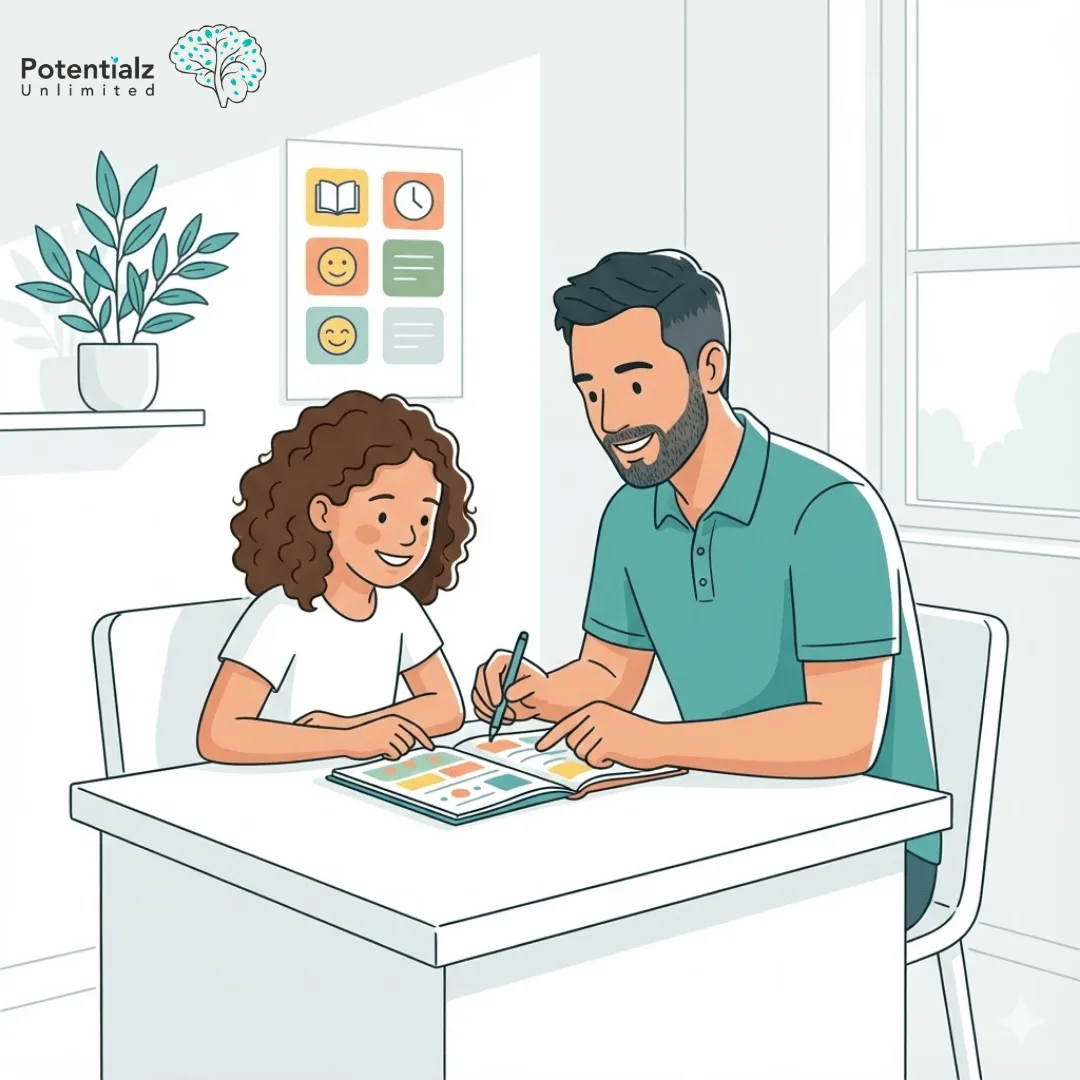 A parent and child enjoy quality time together, working on schoolwork at a tidy desk, fostering a supportive and encouraging learning environment.
Understanding ADHD and Why Traditional Discipline Often Fails
Before diving into strategies, it’s essential to understand what’s happening in your child’s brain. ADHD is a neurodevelopmental condition characterized by differences in brain structure and function, particularly in the prefrontal cortex—the area responsible for executive functions like planning, organization, impulse control, and emotional regulation.
The Executive Function Connection
Research published in Translational Psychiatry confirms that children with ADHD have core deficits in executive functions, which predict poorer academic and occupational functioning (Chacko et al., 2024). These executive functions include:
- Working memory: Holding and manipulating information
- Inhibitory control: Stopping automatic responses
- Cognitive flexibility: Adapting to changing situations
- Planning and organization: Breaking tasks into steps
- Emotional regulation: Managing feelings appropriately
- Time management: Understanding and tracking time
- Task initiation: Starting activities without excessive delay
When your child forgets their homework for the third time this week, it’s not defiance—it’s an executive function challenge. When they interrupt conversations repeatedly, they’re struggling with inhibitory control, not being rude intentionally. Understanding this difference is the foundation for effective parenting strategies.
Why Traditional Parenting Doesn’t Work
Traditional discipline approaches often fail with ADHD because they assume children have the neurological capacity to consistently control their behavior. A child with ADHD might genuinely understand the rules but lack the executive function skills to follow through consistently. Punishment for behavior they can’t fully control only leads to frustration, shame, and damaged parent-child relationships.
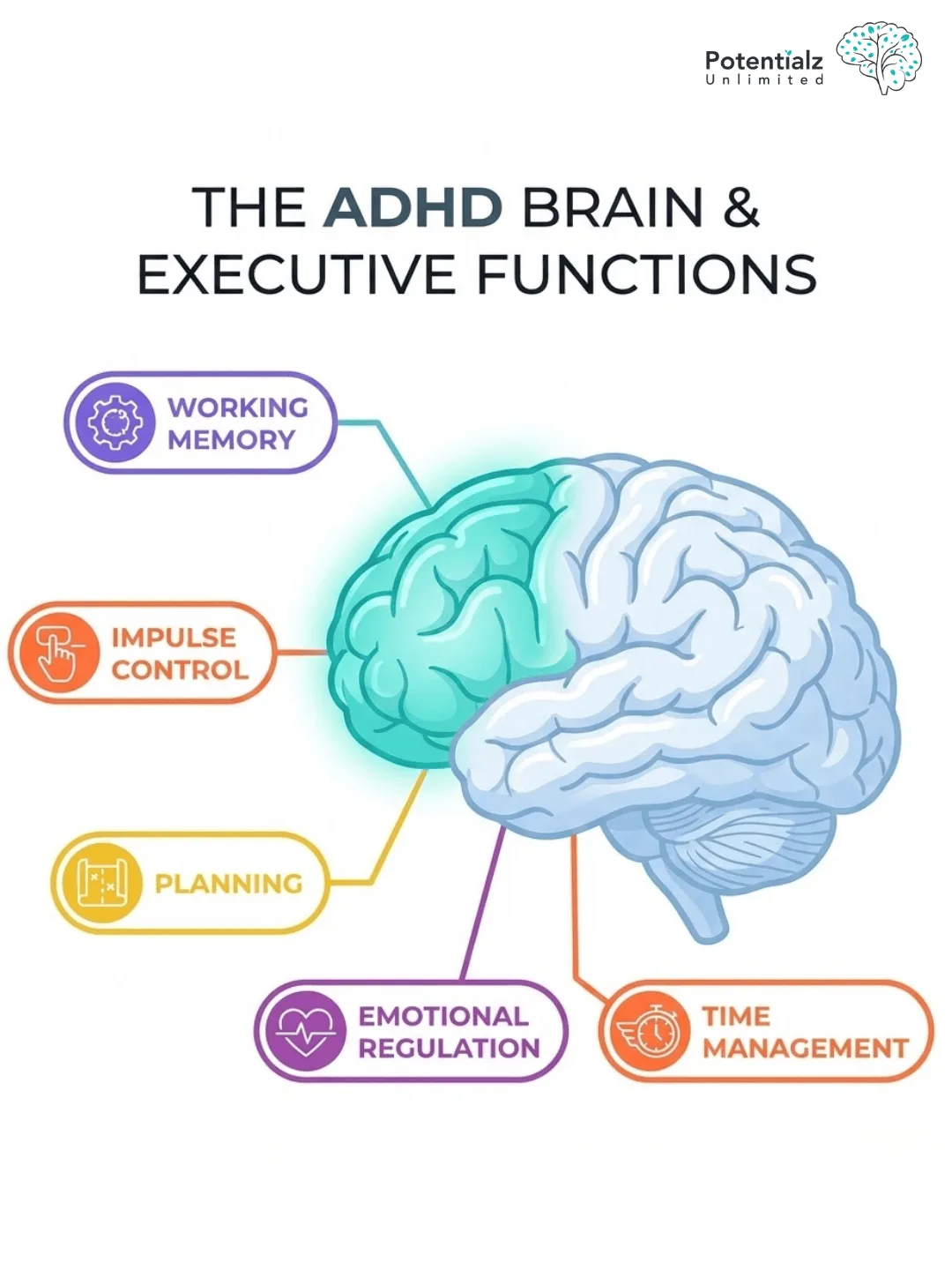 Infographic illustrating the prefrontal cortex’s role in ADHD, highlighting affected executive functions: working memory, impulse control, planning, emotional regulation, and time management.
The Gold Standard: Behavioral Parent Training
Behavioral Parent Training (BPT) is consistently recommended as a first-line intervention for children with ADHD by major health organizations worldwide. A 2024 systematic review of 20 randomized controlled trials found that BPT has significant positive effects on both parents and children (Marquet-Doléac et al., 2024).
What Makes BPT Effective?
Recent meta-analysis research has identified the specific components that make behavioral parent training work. According to a 2022 study published in the Journal of the American Academy of Child & Adolescent Psychiatry, the most effective techniques include:
- Manipulation of antecedents (setting up the environment for success)
- Reinforcement techniques (rewarding positive behaviors)
- Clear, consistent consequences (predictable responses to behaviors)
These techniques work together to create an environment where your child can succeed more often, building confidence and skills over time.
Core Principles of Behavioral Parent Training
1. Positive Reinforcement Over Punishment
The first principle is shifting from a punitive mindset to a reinforcement-based approach. Research shows that positive reinforcement—actively noticing and rewarding desired behaviors—is far more effective than punishment for children with ADHD.
In practice:
- Catch your child being good at least five times for every correction
- Use specific praise: “I noticed you remembered to put your shoes away. That’s excellent organization!” rather than generic “Good job”
- Create reward systems for age-appropriate goals
- For younger children (5-8): Sticker charts with daily rewards
- For older children (9-12): Point systems toward larger privileges
2. Clear, Consistent Rules and Expectations
Children with ADHD need crystal-clear expectations and consistent follow-through. Ambiguity creates anxiety and increases behavioral problems.
In practice:
- State rules positively: “Walk indoors” instead of “Don’t run”
- Limit the number of rules to 3-5 core expectations
- Post rules visually where your child can see them
- Review expectations before transitions or challenging situations
- Follow through consistently—inconsistency teaches children that rules are negotiable
3. Immediate and Specific Consequences
Due to differences in how ADHD brains process time and reward, consequences need to be immediate and specific. Delayed consequences (like “no screen time this weekend” for Tuesday’s misbehavior) are largely ineffective.
In practice:
- Provide feedback within seconds or minutes of behavior
- Use specific language: “You hit your sister. Time out now” rather than “That’s inappropriate behavior”
- Keep consequences brief and age-appropriate
- For 5-7 year olds: 5 minutes
- For 8-10 year olds: 8 minutes
- For 11-12 year olds: 10 minutes
- Return to positive interaction quickly after consequences
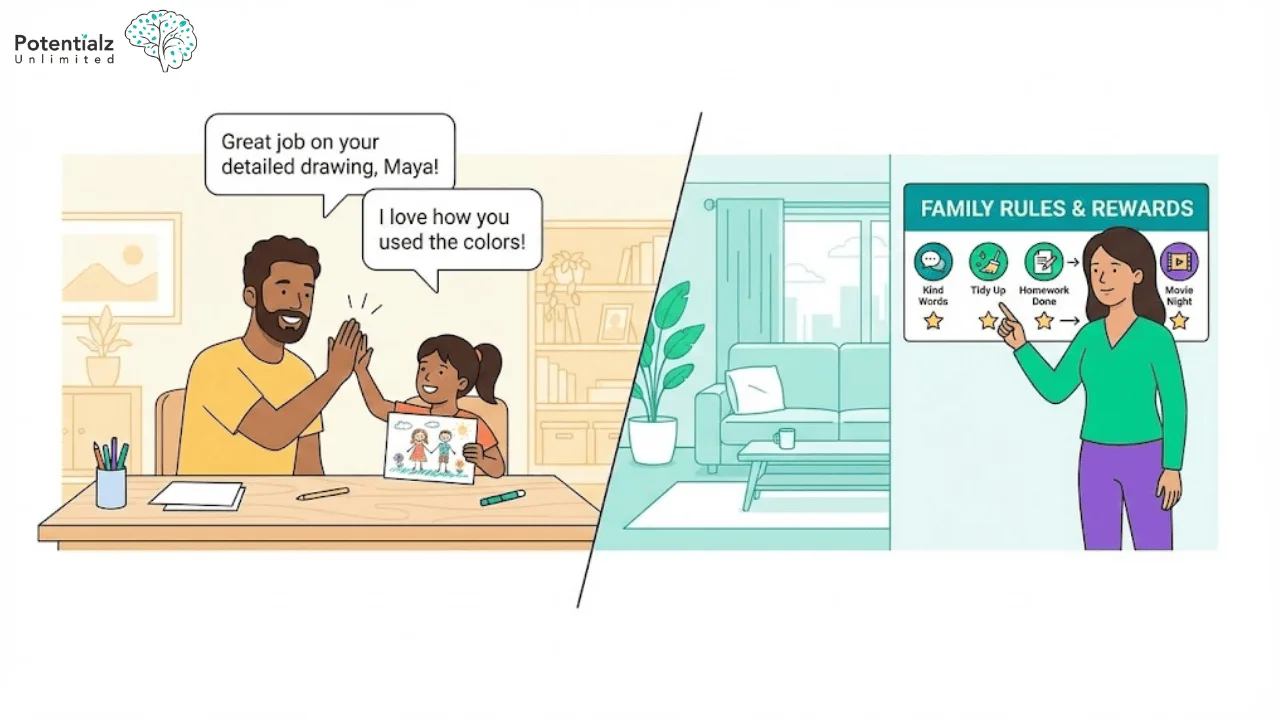 Positive Parenting: Encouraging Children Through Specific Praise and Structured Reward Systems.
Evidence from Recent Studies
A 2025 randomized controlled trial published in Child and Adolescent Psychiatry and Mental Health found that culturally adapted BPT significantly improved parenting competence and reduced behavioral symptoms in children with ADHD. Importantly, the study showed:
- High session attendance (indicating acceptability)
- Strong participant engagement
- Maintained improvements over time
- Benefits extended to online delivery formats
A separate 2024 meta-analysis examining longer-term outcomes found that BPT produced sustained improvements in:
- ADHD symptoms (small to moderate effects)
- Behavioral problems (small to moderate effects)
- Positive parenting behaviors
- Parenting sense of competence
- Parent-child relationship quality
These improvements were maintained an average of 5 months after treatment completion, demonstrating that the skills parents learn have lasting impacts.
Creating ADHD-Friendly Routines and Structure
Consistent routines are perhaps the most powerful tool in your ADHD parenting toolkit. Research consistently shows that stable routines reduce stress, improve executive function, and help children with ADHD manage their symptoms more effectively.
Why Routines Work for ADHD Brains
Routines reduce the cognitive load required for decision-making and task initiation—two areas where children with ADHD struggle. When behaviors become automatic through repetition, they require less executive function capacity. This frees up mental resources for other tasks and reduces daily stress.
According to a 2024 review, consistent routines positively impact:
- Cognitive functioning
- Emotional and behavioral regulation
- Understanding and empathy
- Academic success
- Mental health outcomes
- Physical health
Building Effective ADHD Routines
Morning Routines
The Challenge: Morning chaos, forgotten items, repeated reminders, rushing to school
The Solution:
- Prepare the night before Pack backpack with completed homework
Lay out clothes
Place shoes by door
Prepare breakfast items 2. Create a visual morning checklist Use pictures for younger children
Laminate and use dry-erase marker for checking off
Post at child’s eye level
Example sequence:
- Wake up
- Use bathroom
- Get dressed
- Eat breakfast
- Brush teeth
- Pack lunch
- Put on shoes
- Get backpack
- Go to car
- Build in buffer time Allow 25% more time than you think needed
Reduce pressure and rush
Create opportunity for success 4. Use timers effectively Visual timers show time passage
Set timer for each routine segment
“You have 10 minutes to get dressed”
Provide 2-minute warning before time’s up
Homework Routines
The Challenge: Homework battles, incomplete assignments, hours of struggle
The Solution:
- Establish consistent homework time and place Same time every day builds habit
Quiet, organized, distraction-free space
All materials within reach
Remove screens, toys, and other distractions 2. Break assignments into manageable chunks Use Pomodoro Technique: 20-25 minutes work, 5-minute break
Tackle hardest subjects first when attention is freshest
Physical movement breaks between chunks 3. Provide scaffolding support Sit nearby initially, gradually fade presence
Help break down multi-step problems
Check work at intervals, not just at end
Celebrate completion of each section 4. Collaborate with teachers Request modified homework if appropriate
Quality over quantity for mastery demonstration
Alternative demonstration methods if writing is challenging
Bedtime Routines
The Challenge: Difficulty winding down, delayed sleep, morning exhaustion
The Solution:
- Begin wind-down 1 hour before target sleep time Dim lights throughout house
Turn off screens (blue light affects sleep)
Engage in calming activities 2. Create consistent bedtime sequence Bath/shower
Pajamas
Brush teeth
Lay out tomorrow’s clothes
Brief reading (parent reads to/with child)
Lights out at same time every night 3. Address ADHD-specific sleep challenges White noise machine for racing thoughts
Weighted blanket for sensory input
Talk to psychologist about sleep hygiene
Consider morning medication timing with doctor
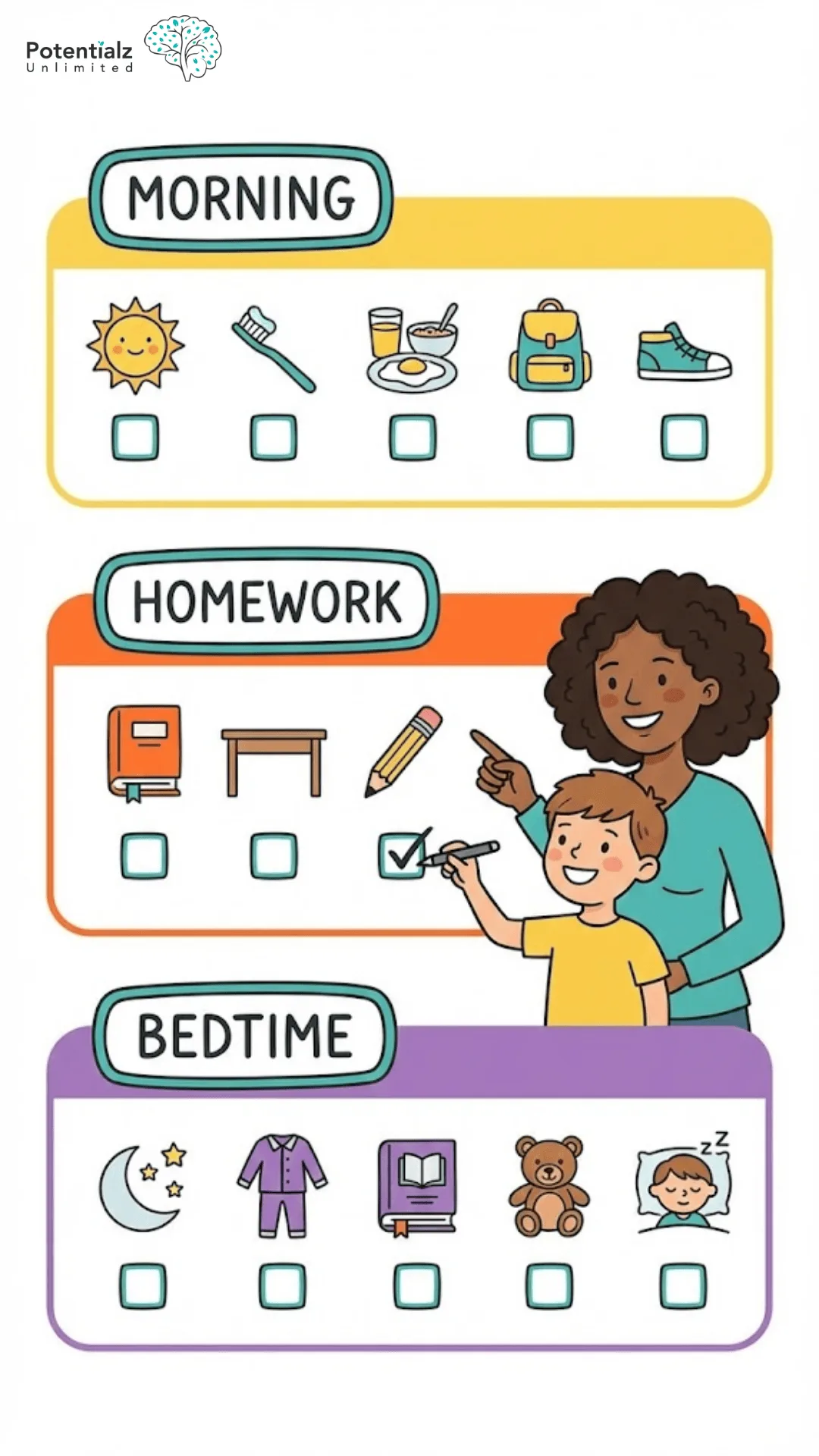 Bright and engaging visual routine chart for children, featuring morning, homework, and bedtime tasks with icons and checkboxes. Parent and child interact to complete tasks, fostering organization and independence for ages 6-12.
Executive Function Support Strategies
Since executive function deficits are central to ADHD, directly teaching and supporting these skills is essential. Recent research has developed specific, effective approaches for building executive function capacity in children with ADHD.
Organization Skills Training
Physical Organization
Materials Management:
- Color-coding system: Different color for each subject (e.g., red folder for maths, blue for English)
- Single location: Everything has one designated spot
- Transparent storage: Clear bins so contents visible without opening
- Labels everywhere: Picture labels for young children, written labels for older children
- Weekly organization time: Sunday evening “reset” to reorganize backpack, desk, room
Workspace Setup:
- Minimize visual clutter
- Only current task materials on desk
- Standing options for kinesthetic learners
- Fidget tools allowed (stress balls, textured objects)
- Noise-cancelling headphones if helpful
Time Management Skills
Children with ADHD have “time blindness”—difficulty accurately perceiving time passage and estimating time needed for tasks.
Teaching Time Awareness:
- Visual timers: Show time passing in concrete way
- Time estimation practice: Guess how long activities take, then check actual time
- Analog clocks: Better for ADHD than digital (shows time passing visually)
- Breaking down time: “We leave in 30 minutes. That’s time for 3 more activities”
- Buffer time: Always add extra time to estimates
Planning and Prioritization:
- Backward planning: Start with deadline, work backward to determine start date
- ABC method: Categorize tasks as A (must do today), B (should do soon), C (can wait)
- Visual planning tools: Large wall calendar, planners with visual elements
- Parent co-piloting: Guide planning process, gradually release responsibility
Working Memory Support
Working memory—the ability to hold and manipulate information—is significantly impaired in ADHD. Strategies that reduce working memory load are essential.
Practical Supports:
- Write everything down: Never rely on memory alone
- Checklists for multi-step tasks: Break down and externalize the steps
- Repeat-back technique: Have child repeat instructions in own words
- Limit verbal instructions: Maximum 1-2 steps at a time
- Visual supports: Picture schedules, written instructions, step-by-step photos
- Chunking: Group related information (phone numbers, spelling words in chunks)
- Mnemonic devices: Memory aids like acronyms, songs, rhymes
Emotional Regulation Support
Children with ADHD often struggle with emotional regulation—experiencing emotions more intensely and having difficulty managing them appropriately. A 2024 study found that emotional dysregulation is associated with greater socio-functional impairment, affecting relationships and stress management.
Building Emotional Regulation Skills:
- Emotional awareness Name feelings regularly: “I notice you seem frustrated”
Emotion charts with faces showing different feelings
Rate intensity on 1-10 scale
Normalize all emotions: “All feelings are okay. It’s what we do with them that matters” 2. Calming strategies Deep breathing: “Balloon breathing,” “snake breath”
Movement: Jump on trampoline, run around yard, dance
Sensory tools: Squeeze stress ball, weighted blanket, fidget toys
Quiet space: Designated calm-down area (not punishment, but regulation support) 3. Problem-solving skills Use structured approach when calm
Define problem clearly
Brainstorm multiple solutions
Consider consequences of each option
Choose best solution
Make plan to implement
Review what worked/didn’t work 4. Modeling regulation Narrate your own emotion regulation: “I’m feeling frustrated, so I’m going to take some deep breaths”
Demonstrate appropriate expression of negative emotions
Apologize when you lose patience: Models taking responsibility
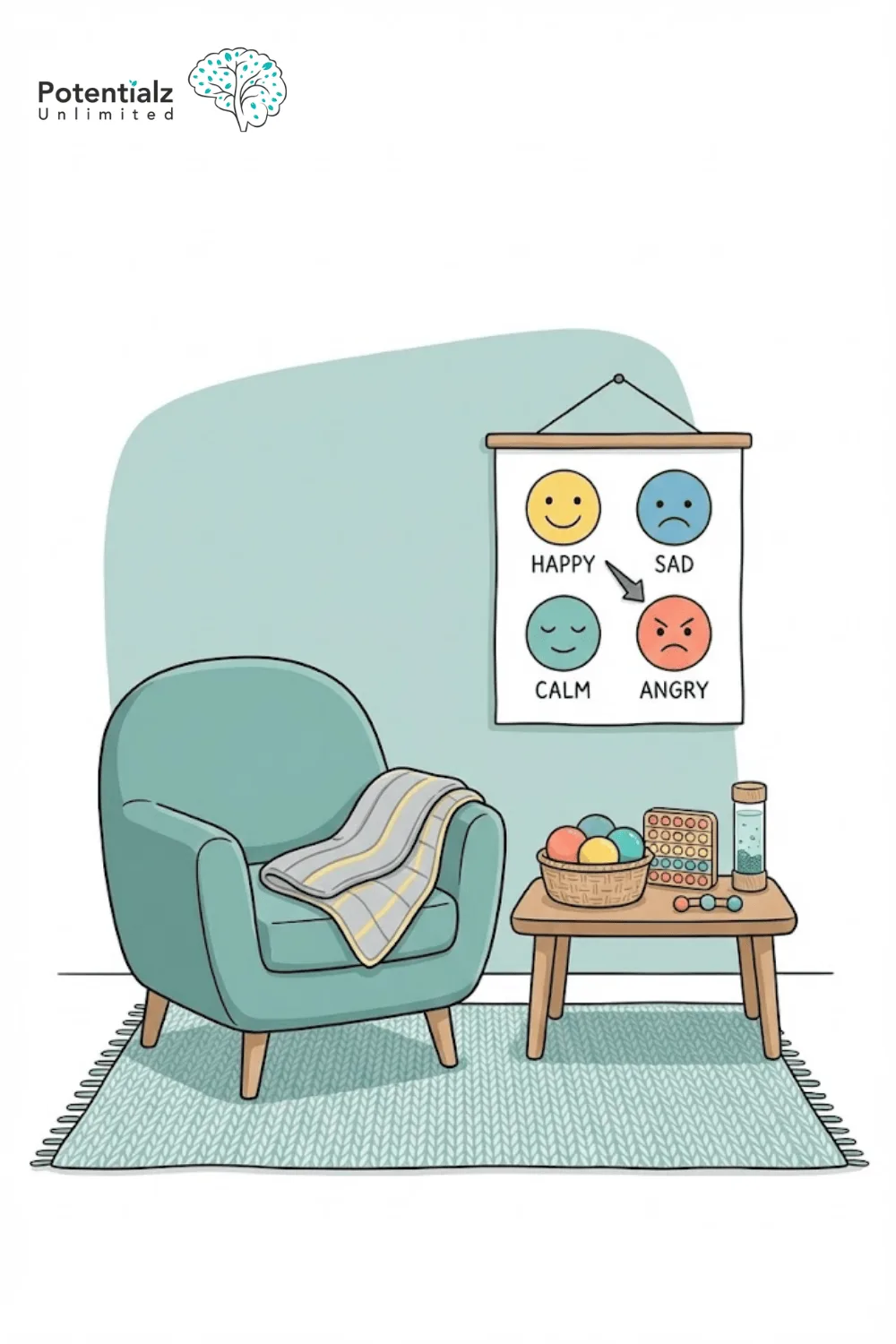 A calming corner in a child’s room, featuring a comfortable chair with a weighted blanket, sensory tools like stress balls and fidgets, and an emotion chart to help kids navigate their feelings.
Managing Common ADHD Challenges
Handling Meltdowns and Emotional Outbursts
During the meltdown:
- Ensure safety first: Remove dangers, stay calm yourself
- Reduce stimulation: Lower lights, reduce noise, clear space
- Use few words: “I’m here. You’re safe. Breathe”
- Give space if needed: Some children need distance during escalation
- Stay present and calm: Your regulation helps their regulation
After the meltdown:
- Reconnect first: Hug, comfort, reassure
- Wait to problem-solve: Don’t discuss what happened until fully calm (20-30 minutes)
- Reflect together: “What happened before you got upset?”
- Plan for next time: “What could help you next time you feel that way?”
- Move forward: Don’t dwell or shame
Reducing Sibling Conflict
ADHD symptoms often trigger sibling conflicts. Children with ADHD may:
- Interrupt siblings’ activities
- Take toys without asking (impulse control)
- Have difficulty sharing and taking turns
- React intensely to perceived unfairness
Strategies:
- Separate spaces: Each child needs own area for belongings and privacy
- Turn-taking systems: Timers, visual schedules for whose turn
- Teach negotiation: “Let’s find a solution that works for both of you”
- Immediate intervention: Address conflicts quickly before escalation
- Individual time: One-on-one parent time with each child
- Educate siblings: Age-appropriate explanation of ADHD
Supporting Social Skills
Children with ADHD often struggle with peer relationships due to impulsivity, emotional intensity, and difficulty reading social cues.
Building Social Competence:
- Role-play social scenarios: Practice greetings, turn-taking, joining games
- Teach conversation skills: Asking questions, listening, appropriate responding
- Video modeling: Watch videos of good social interactions, discuss
- Structured playdates: Shorter is better (1-2 hours), structured activities, parent nearby
- Friendship coaching: Help child identify good friends, maintain friendships
- Sports and groups: Structured activities teach teamwork and rules
School Collaboration Strategies
Your child spends a significant portion of their day at school. Effective home-school collaboration is essential for ADHD management.
Communicating with Teachers
- Early connection: Meet with teachers at start of year
- Share information: Explain ADHD, specific challenges, what works at home
- Regular updates: Weekly email check-ins or communication book
- Solution-focused: Bring concerns with potential solutions
- Appreciate efforts: Teachers work hard; acknowledge their support
Classroom Accommodations
Work with school to implement evidence-based accommodations:
Environmental:
- Preferential seating (front of class, away from distractions)
- Reduced visual clutter in work area
- Movement breaks or standing desk option
- Fidget tools allowed
- Quiet test-taking space
Instructional:
- Check for understanding (not assuming child listened)
- Written instructions in addition to verbal
- Extra time for assignments and tests
- Chunking large assignments
- Visual supports and schedules
Organizational:
- Second set of textbooks at home
- Homework planner with teacher initials
- Organizer support (folder checks)
- Technology supports where appropriate
Working with School Psychologists
Many schools have psychologists who can provide additional support. They can:
- Conduct assessments
- Develop behavior plans
- Provide social skills groups
- Offer parent consultations
- Connect to external services
At Potentialz Psychology, we work collaboratively with schools across Sydney’s Hills District, Parramatta, and surrounding areas to ensure consistent support for children with ADHD.
Lifestyle Factors That Support ADHD Management
Beyond specific behavioral strategies, lifestyle factors significantly impact ADHD symptoms. A 2024 holistic review found that rest, nutrition, movement, and fresh air all support ADHD management by influencing processes involved in ADHD etiology, including gut microbiome-brain axis, inflammation, and oxidative stress.
Nutrition and ADHD
While diet doesn’t cause or cure ADHD, nutrition impacts symptom severity and overall functioning.
Evidence-Based Nutritional Strategies:
- Protein at every meal and snack Helps neurotransmitter production
Stabilizes blood sugar
Improves focus and attention
Examples: eggs, yogurt, nuts, cheese, lean meats 2. Complex carbohydrates Slow-release energy
Prevents blood sugar crashes
Better behavior stability
Examples: oats, whole grains, sweet potato 3. Omega-3 fatty acids Support brain development and function
Anti-inflammatory effects
Sources: fatty fish, walnuts, chia seeds, flaxseed
Consider supplementation (discuss with GP) 4. Limit sugar and artificial additives Some children sensitive to artificial colors and preservatives
Sugar causes energy spikes and crashes
Read labels carefully 5. Regular meal timing Prevents blood sugar fluctuations
Supports medication efficacy
Reduces irritability and fatigue
Physical Activity and Exercise
Exercise is one of the most effective non-pharmacological interventions for ADHD.
Physical activity:
- Increases dopamine and norepinephrine (same as ADHD medications)
- Improves executive function
- Reduces hyperactivity and impulsivity
- Improves mood and reduces anxiety
Recommendations:
- Daily activity: Minimum 60 minutes moderate to vigorous activity
- Morning exercise: Particularly beneficial before school
- Varied activities: Team sports, swimming, martial arts, cycling, dance
- Movement-based mindfulness: Tai chi, yoga, taekwondo show best results for executive function improvement
- Active breaks: 5-10 minutes movement breaks during homework
Sleep Hygiene
Sleep problems are common in ADHD and worsen symptoms. Many children with ADHD have difficulty falling asleep, staying asleep, or waking rested.
Sleep Support Strategies:
- Consistent schedule: Same bedtime and wake time every day (including weekends)
- Bedroom environment: Cool, dark, quiet, comfortable
- Screen cutoff: No screens 1 hour before bed
- Calming routine: Bath, reading, quiet activities
- Address anxiety: Worry time earlier in evening, journaling
- Consider supplements: Melatonin may help (consult doctor)
- Medication timing: Some ADHD medications affect sleep (discuss with prescriber)
Mindfulness and Stress Reduction
Emerging research shows mindfulness practices benefit children with ADHD by improving attention, emotional regulation, and executive function.
Age-Appropriate Mindfulness:
- Young children (5-8): Belly breathing with stuffed animal, mindful eating exercises, body scan games
- Older children (9-12): Guided meditations (5-10 minutes), mindful movement, gratitude practices
Family Mindfulness:
- Practice together
- Model calm responses to stress
- Create calm home environment
- Limit overscheduling
Medication and Behavioral Strategies: A Combined Approach
While this article focuses on behavioral strategies, it’s important to address the role of medication. Research consistently shows that combining medication with behavioral interventions produces the best outcomes for children with ADHD.
How Medication and Behavioral Strategies Work Together
Medication (typically stimulants) helps by:
- Increasing available dopamine and norepinephrine
- Improving attention and focus
- Reducing hyperactivity and impulsivity
- Making it easier for child to use behavioral strategies
Behavioral strategies help by:
- Teaching skills medication can’t provide
- Improving parent-child relationships
- Building long-term coping strategies
- Supporting the whole child and family
A 2024 systematic review found that behavioral strategies work effectively even when children are already on medication, suggesting these approaches address different aspects of ADHD management.
Working with Healthcare Providers
At Potentialz Psychology in Bella Vista, we take a comprehensive, collaborative approach to ADHD management:
- Thorough assessment: Understanding your child’s unique profile
- Evidence-based treatment: Behavioral parent training, child skills training, family therapy
- School consultation: Working with teachers to implement consistent strategies
- Coordination with prescribers: If medication is part of treatment plan
- Ongoing support: Regular follow-up to adjust strategies as needed
Self-Care for Parents: You Can’t Pour from an Empty Cup
Parenting a child with ADHD is exhausting. Research shows that parents of children with ADHD experience:
- Higher parenting stress
- Increased rates of depression and anxiety
- Lower sense of parenting competence
- More negative attributions about their child
- Strain on couple relationships
Taking care of yourself isn’t selfish—it’s essential for effective parenting.
Self-Care Strategies
- Build your support network Connect with other ADHD parents (support groups, online forums)
Accept help from family and friends
Consider respite care when needed
Don’t isolate 2. Set realistic expectations Progress happens gradually
Some days will be hard
You won’t be perfect
Focus on connection over perfection 3. Practice self-compassion Talk to yourself kindly
Acknowledge the difficulty of what you’re doing
Celebrate small wins
Learn from mistakes without harsh self-criticism 4. Maintain your own activities Exercise regularly
Pursue hobbies
Maintain friendships
Have couple time (if partnered) 5. Seek professional support Individual therapy for parenting stress
Couples therapy if relationship strained
Parent coaching or support groups
Medication if experiencing depression or anxiety 6.
Couple Relationship Care
ADHD parenting can strain couple relationships. Partners may disagree about management approaches, feel unsupported, or have little time for connection.
Protecting Your Relationship:
- Schedule regular couple time (even 15 minutes daily)
- Unified front on parenting strategies
- Share responsibilities fairly
- Express appreciation regularly
- Seek couples therapy if needed
At Potentialz Psychology, we offer couples therapy specifically for parents navigating ADHD challenges. Our experienced psychologists understand the unique stressors and can help you work together effectively.
When to Seek Professional Help
While these strategies are evidence-based and effective, some situations require professional support. Consider reaching out when:
- ADHD symptoms severely impact school performance
- Behavioral problems worsen despite consistent strategy implementation
- Your child shows signs of anxiety or depression
- Family stress is overwhelming
- Couple relationship significantly strained
- You feel hopeless or burnt out
- Child has additional challenges (learning disabilities, anxiety, trauma)
What Professional Support Looks Like
At Potentialz Psychology, comprehensive ADHD support includes:
Assessment Services:
- Detailed ADHD assessment using gold-standard tools
- School observation and teacher consultation
- Cognitive and academic assessment if needed
- Comprehensive report with recommendations
Treatment Services:
- Behavioral Parent Training (individual or group)
- Child-focused skills training
- School consultation and collaboration
- Family therapy
- Individual therapy for child
- Couples therapy for parents
Specialized Approaches:
- Cognitive Behavioral Therapy (CBT)
- Dialectical Behavior Therapy (DBT) skills
- Executive function coaching
- Social skills groups
- EMDR for trauma (if relevant)
Why Choose Potentialz Psychology
Led by Dr. Gurprit Ganda, a clinical psychologist with over 22 years of experience, Potentialz Psychology serves multicultural families across Sydney’s Hills District, including Bella Vista, Castle Hill, Norwest, Kellyville, Baulkham Hills, Parramatta, and Blacktown.
Our Approach:
- Evidence-based interventions
- Culturally sensitive care
- Collaborative approach with schools
- NDIS registered provider
- Flexible appointment times (evenings available)
- Telehealth options available
- Bulk billing available (conditions apply)
We understand the unique challenges faced by first-generation immigrant families and provide culturally responsive care that respects diverse backgrounds and parenting approaches.
Key Takeaways: Your ADHD Parenting Strategies Roadmap
Parenting a child with ADHD requires understanding, patience, and evidence-based strategies. Here are the key points to remember:
- ADHD is a neurological condition, not a behavior problem. Executive function deficits explain many challenging behaviors.
- Behavioral Parent Training works. Research consistently shows BPT improves both parent and child outcomes.
- Positive reinforcement is more effective than punishment. Catch your child being good 5:1 ratio.
- Structure and routines reduce ADHD symptoms. Predictability decreases stress and builds skills.
- Executive function support is essential. Teach organization, time management, and emotional regulation explicitly.
- Lifestyle factors matter. Nutrition, exercise, and sleep significantly impact ADHD symptoms.
- School collaboration is crucial. Work as a team with teachers and school psychologists.
- Self-care isn’t optional. You must take care of yourself to effectively parent your child.
- Combined approaches work best. Medication plus behavioral strategies produce optimal outcomes.
- Professional support helps. Don’t hesitate to reach out for assessment and treatment.
Moving Forward: Small Steps, Big Changes
Implementing these strategies won’t transform your family overnight. ADHD management is a marathon, not a sprint. Start with one or two strategies that seem most relevant to your family’s current challenges. Build on success gradually.
Remember that every child with ADHD is unique. What works beautifully for one child may need adaptation for another. Be patient with yourself and your child as you figure out what works for your family.
The journey of parenting a child with ADHD has challenges, but it also has incredible rewards. Children with ADHD are often creative, energetic, passionate, and caring. With the right support and strategies, they can thrive and reach their full potential.
You don’t have to do this alone. Support is available, strategies work, and hope is real. Your child can succeed—and so can you.
Test Your ADHD Parenting Knowledge
References
- Chacko, A., Wymbs, B. T., Arnold, F. W., Pelham, W. E., Swanger-Gagne, M., Girio, E. L., et al. (2024). Improving the efficacy and effectiveness of evidence-based psychosocial interventions for attention-deficit/hyperactivity disorder (ADHD) in children and adolescents. Translational Psychiatry, 14(1), 234. https://doi.org/10.1038/s41398-024-02890-3
- Dekkers, T. J., Hornstra, R., van der Oord, S., Luman, M., Hoekstra, P. J., Groenman, A. P., et al. (2022). Meta-analysis: Which components of parent training work for children with attention-deficit/hyperactivity disorder? Journal of the American Academy of Child & Adolescent Psychiatry, 61(4), 478-494. https://doi.org/10.1016/j.jaac.2021.06.015
- Hornstra, R., Groenman, A. P., van der Oord, S., Luman, M., Dekkers, T. J., van der Veen-Mulders, L., et al. (2023). Review: Which components of behavioral parent and teacher training work for children with ADHD? A metaregression analysis on child behavioral outcomes. Child and Adolescent Mental Health, 28(2), 258-268. https://doi.org/10.1111/camh.12561
- Marquet-Doléac, J., Biotteau, M., & Chaix, Y. (2024). Behavioral parent training for school-aged children with ADHD: A systematic review of randomized control trials. Journal of Attention Disorders, 28(3), 377-393. https://doi.org/10.1177/10870547231211595
- Rasmussen, L. M. P., Bilenberg, N., Thomsen, P. H., Berntsen, D., & Videbech, P. (2024). Sustained improvements by behavioural parent training for children with attention-deficit/hyperactivity disorder: A meta-analytic review of longer-term child and parental outcomes. European Child & Adolescent Psychiatry, 33, 2865-2881. https://doi.org/10.1007/s00787-023-02297-3
- Sluiter, M. N., Hornstra, R., van der Oord, S., Hoekstra, P. J., & Groenman, A. P. (2025). Intervention towards disruptive behavior among ADHD students: A systematic literature review (2020-2024). International Journal of Research and Innovation in Social Science, 9(19), 109-122.
- Wahbeh, F., Hamed, O., Abu-Raya, K., Saleh, M., & Shawahna, R. (2025). Positive parenting program for attention deficit hyperactivity disorder: Maternal perspective shifts and child behavior problems reduction in a clinical trial. Child and Adolescent Psychiatry and Mental Health, 19, 106. https://doi.org/10.1186/s13034-025-00960-y
Related Articles on Potentialz.com.au
Need Professional Support?
If you're experiencing mental health concerns, our team is here to help.