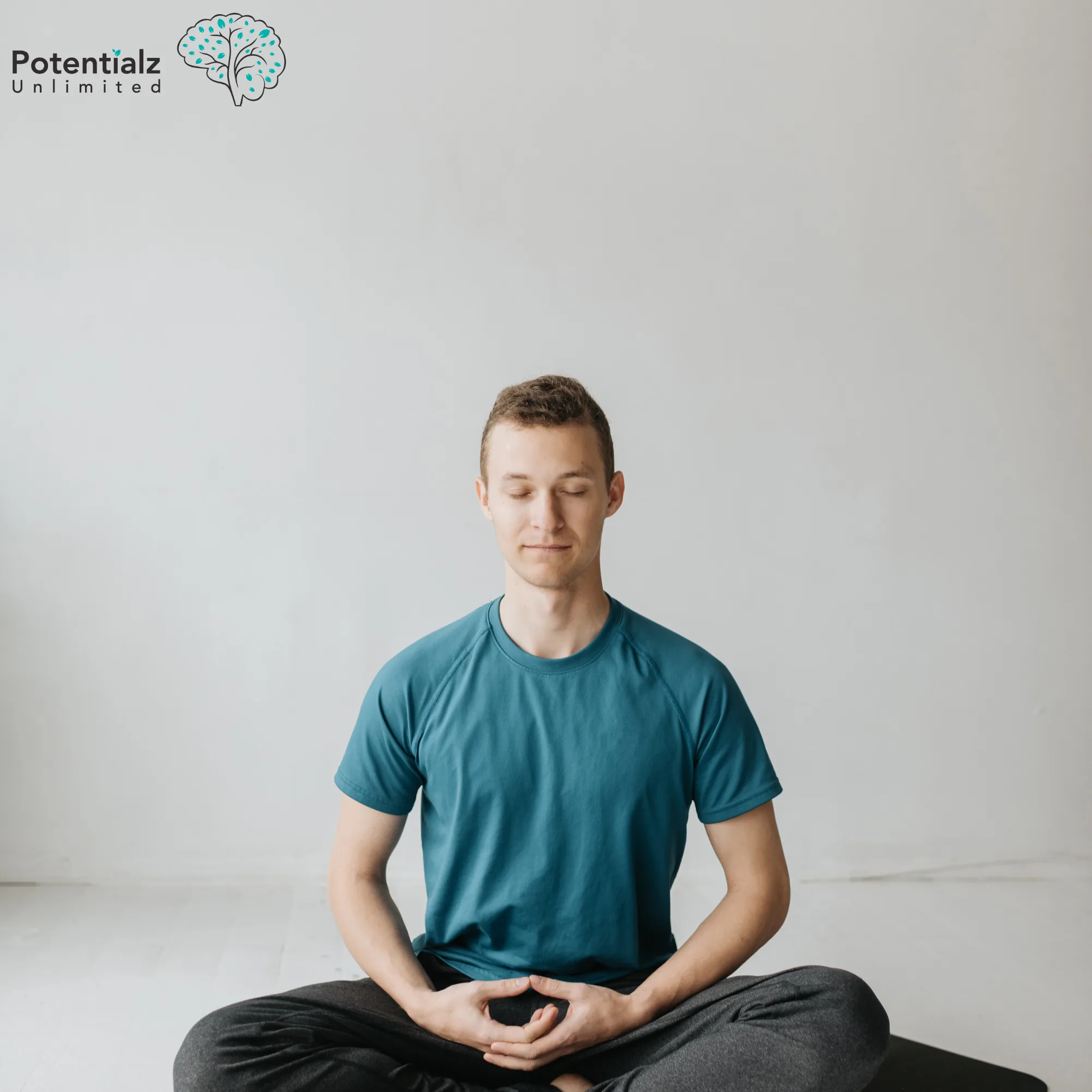
 Person practicing mindfulness meditation for mental health
Life can feel overwhelming. Between work deadlines, family commitments, and the constant buzz of notifications, finding peace seems impossible. Your mind races with worries about yesterday and anxieties about tomorrow. Sound familiar? You’re not alone, and there’s a powerful tool that can help: mindfulness.
Research confirms that mindfulness is more than just a trendy buzzword. It’s a scientifically proven approach to improving mental health that anyone can learn, regardless of age or experience. Think of mindfulness as training your brain to focus on what’s happening right now, rather than getting caught up in endless worries or regrets.
What Is Mindfulness and Why Does It Matter?
Mindfulness means paying attention to the present moment without judging your thoughts or feelings. Instead of automatically reacting to stress, you learn to notice what’s happening in your body and mind, then choose how to respond.
Recent studies from 2024-2025 show remarkable results. Research involving university students found that mindfulness programmes effectively reduced stress, anxiety, and depression whilst improving sleep quality and social connections. A large international study demonstrated that digital mindfulness interventions produced small but statistically significant improvements in mental health for both anxiety and depression.
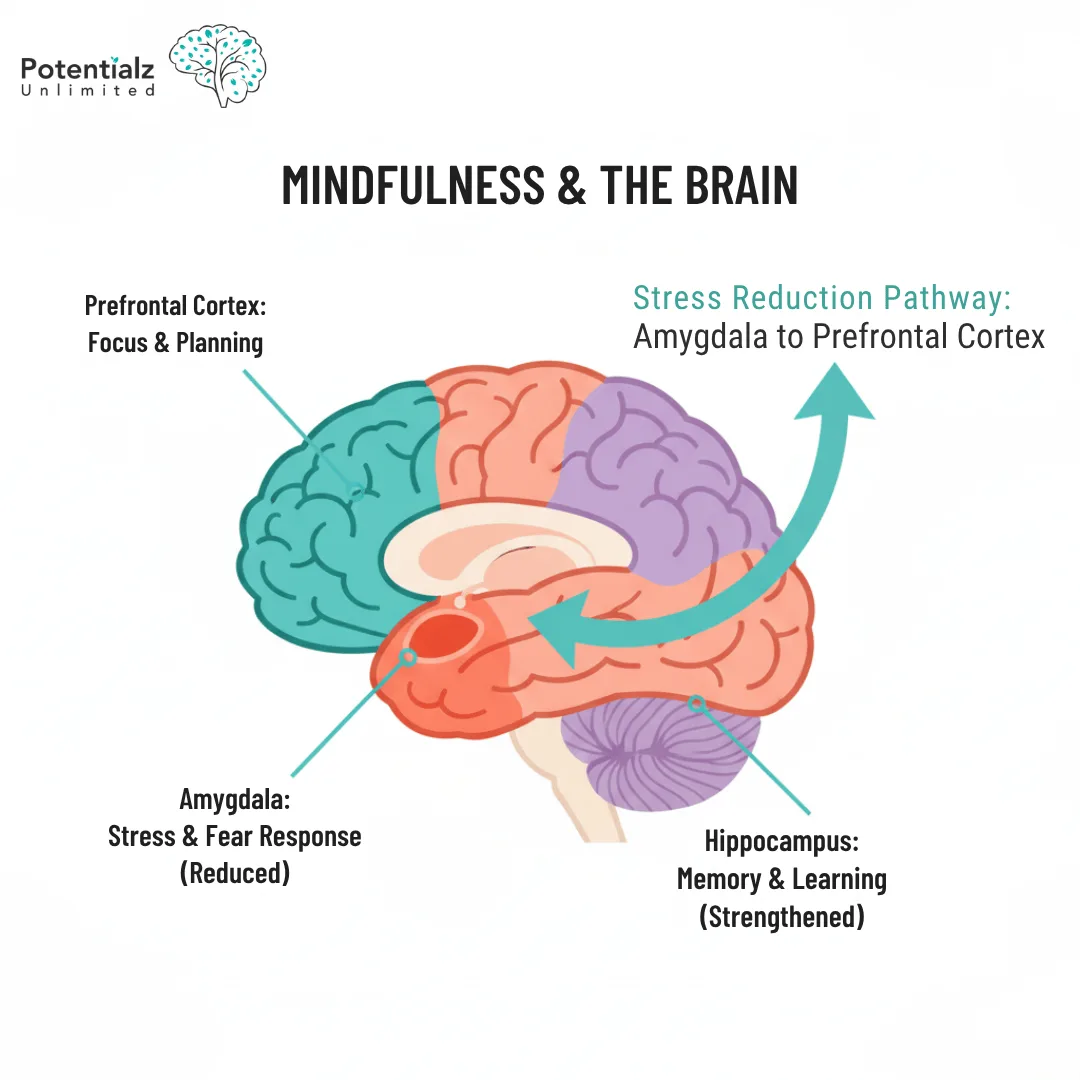 How mindfulness changes the brain to reduce stress and anxiety
How Mindfulness Benefits Mental Health
Stress Reduction: Calming Your Nervous System
When you’re stressed, your body activates its “fight or flight” response. Your heart races, muscles tense, and thinking becomes clouded. Mindfulness helps reverse this process.
Recent systematic reviews show that Mindfulness-Based Stress Reduction (MBSR) programmes significantly reduce perceived stress by up to 33% and mental health issues by 40%, particularly in academic settings. The eight-week MBSR programme teaches you to recognise stress triggers before they overwhelm you.
Real-world example: Sarah, a busy professional from Castle Hill, found herself constantly exhausted and irritable. After practising mindful breathing for just 10 minutes each morning, she noticed she could handle work pressures with more ease. Within two months, her sleep improved and her energy levels increased.
Anxiety Management: Breaking the Worry Cycle
Anxiety often involves rumination - repeatedly thinking about potential problems or past mistakes. Mindfulness interrupts this pattern by bringing attention back to the present moment.
A comprehensive meta-analysis of acceptance and mindfulness-based interventions for anxiety disorders found that Mindfulness-Based Cognitive Therapy (MBCT) and Acceptance and Commitment Therapy (ACT) showed comparable effects to Cognitive Behavioral Therapy for reducing anxiety symptoms.
How it works: When you notice anxious thoughts arising, instead of trying to push them away or getting caught in them, you acknowledge them without judgement. “I’m noticing I’m having worried thoughts about tomorrow’s meeting.” This simple shift reduces the power anxiety has over you.
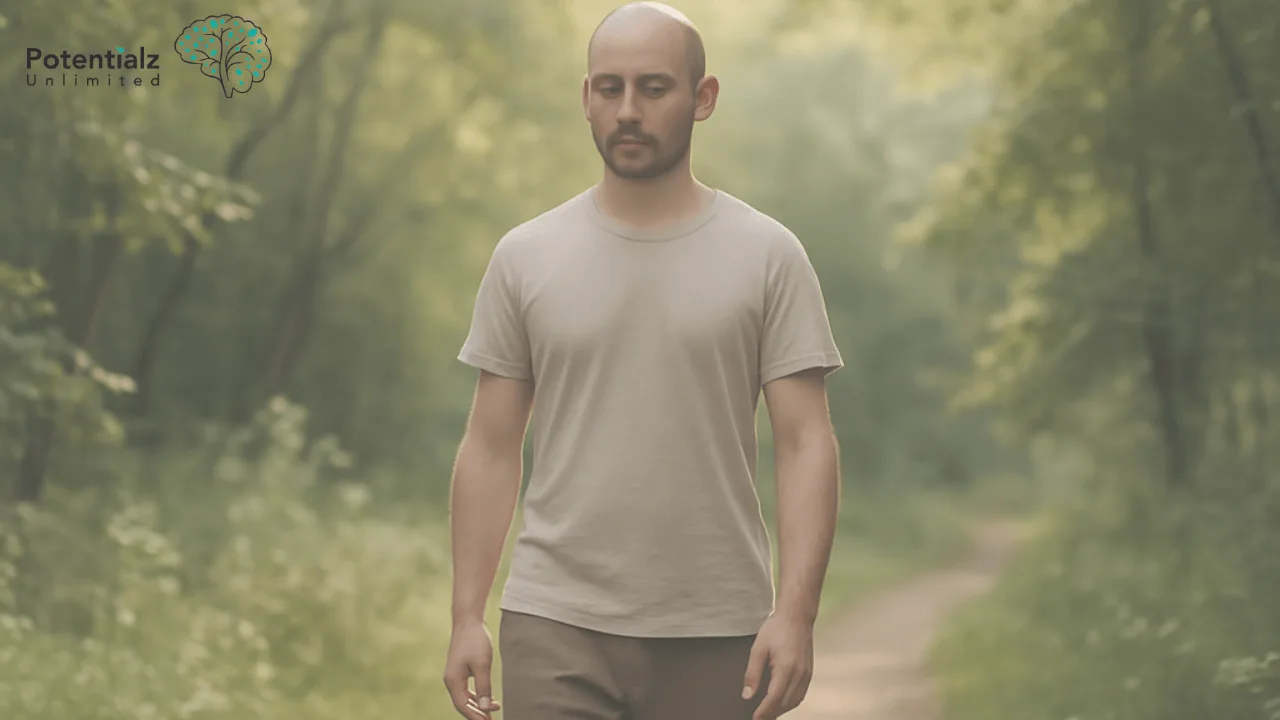 Walking meditation for anxiety management and present-moment awareness
Depression Prevention: Building Emotional Resilience
Depression often involves negative thought patterns that feel impossible to escape. Mindfulness-Based Cognitive Therapy has been shown to be as effective as antidepressants in preventing relapse in individuals with recurrent depression, with studies demonstrating superior outcomes to non-specific control conditions.
Research on MBCT for major depressive disorder with multiple episodes found it significantly improved depression levels and reduced suicidal ideation. The practice helps you recognise early warning signs of depression and respond before symptoms worsen.
Key insight: MBCT teaches you to view thoughts as mental events rather than facts. When you think “I’m worthless,” mindfulness helps you recognise this as a thought pattern, not reality. This creates space to choose a different response.
Simple Mindfulness Techniques You Can Start Today
Mindful Breathing (5-10 Minutes)
This is the foundation of mindfulness practice and perfect for beginners.
How to practice:
- Find a comfortable seated position
- Close your eyes or lower your gaze
- Notice your breath moving in and out
- When your mind wanders (it will!), gently bring attention back to your breath
- Continue for 5-10 minutes
Why it works: Research shows that mindfulness enhances metacognitive awareness, reduces cognitive reactivity, and regulates the stress-response system, thereby alleviating physiological and psychological symptoms associated with stress and anxiety.
Michael’s story: A Year 11 student struggling with exam anxiety started using mindful breathing for just 5 minutes before studying. He noticed his concentration improved and his panic about exams decreased significantly.
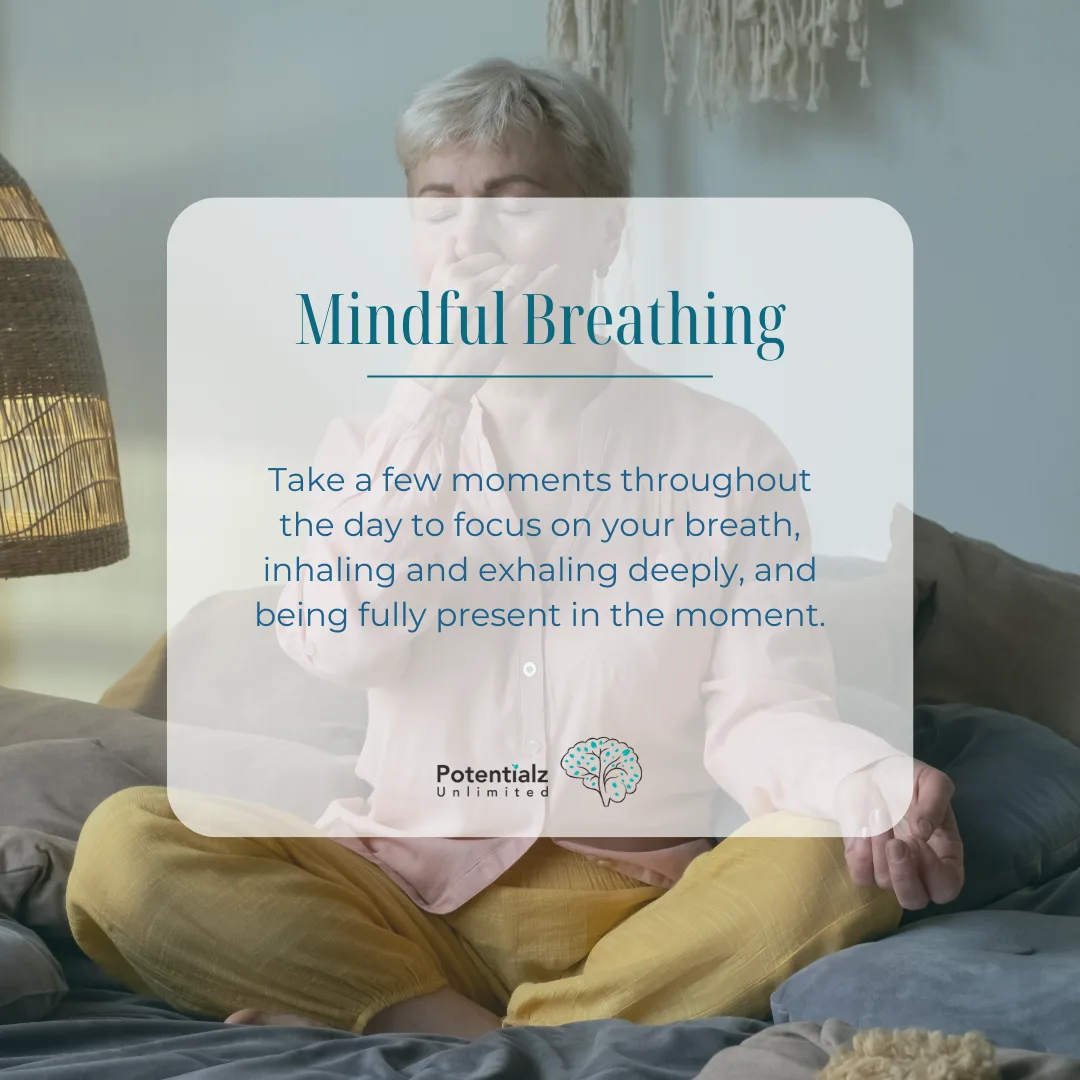 Mindful breathing technique for stress relief and anxiety management
Body Scan Meditation (10-20 Minutes)
This technique helps you reconnect with physical sensations and release tension you might not realise you’re holding.
Instructions:
- Lie down or sit comfortably
- Close your eyes
- Start at your toes, noticing any sensations
- Slowly move your attention up through your body: feet, ankles, calves, knees, thighs, hips, abdomen, chest, hands, arms, shoulders, neck, face, head
- Simply observe without trying to change anything
- If you notice tension, breathe into that area
John’s experience: Working in Norwest’s busy business district, John struggled with chronic shoulder tension and anxiety. After two weeks of nightly body scan meditation, he not only slept better but also became aware of stress building during the day, allowing him to address it earlier.
Mindful Eating (During Meals)
Transform your relationship with food whilst practising mindfulness.
Practice guide:
- Remove distractions (turn off TV, put away phone)
- Look at your food
- Notice colours and textures of food
- Smell the aromas
- Take small bites, chewing slowly
- Notice flavours, textures, and how food feels in your mouth
- Put your utensil down between bites
- Pay attention to feelings of hunger and fullness
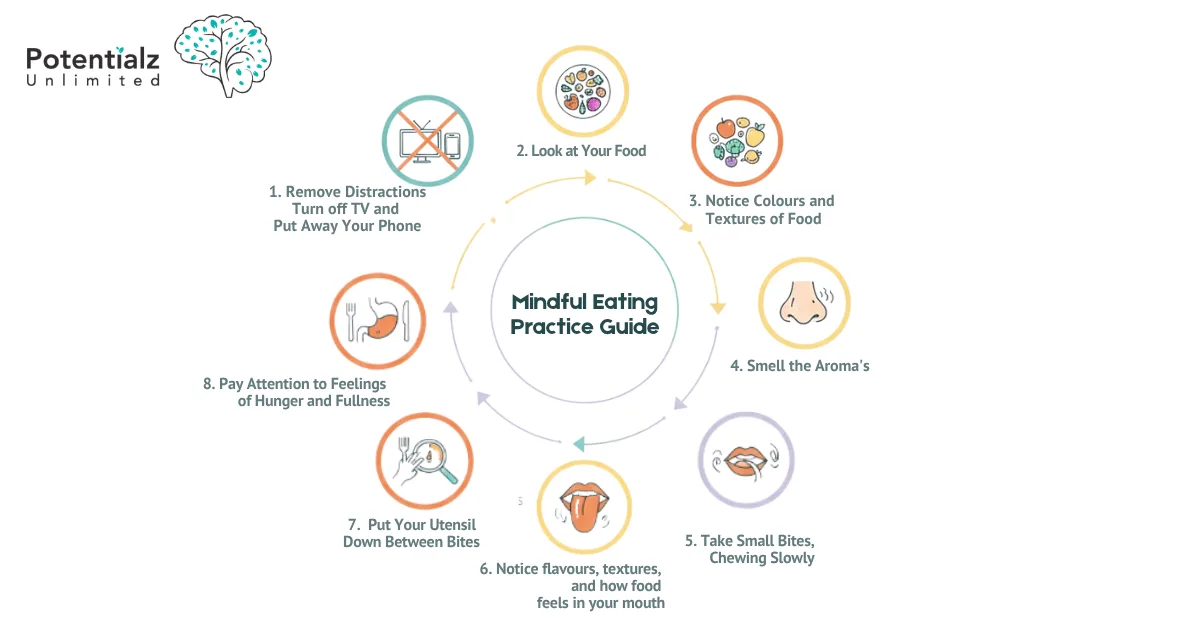 Guide to Mindful Eating: Enhance your dining experience by removing distractions, focusing on your food, appreciating its colors and textures, inhaling its aromas, savoring flavors, taking small bites, resting utensils between bites, and tuning into your body’s hunger and fullness cues.
Benefits beyond mindfulness: Studies combining physical activity with mindfulness show enhanced mental health benefits compared to either approach alone.
Emily’s transformation: Always eating on the go, Emily from Bella Vista started mindful eating during lunch breaks. Not only did her digestion improve, but she found meals more satisfying and stopped overeating.
Mindful Yoga (15-30 Minutes)
Combining gentle movement with mindful awareness creates powerful benefits for both body and mind.
Getting started:
- Choose a quiet space
- Start with simple poses (child’s pose, cat-cow, downward dog)
- Focus on sensations in your body as you move
- Coordinate movement with breath
- Notice thoughts without judgement
- Gradually increase duration as comfort allows
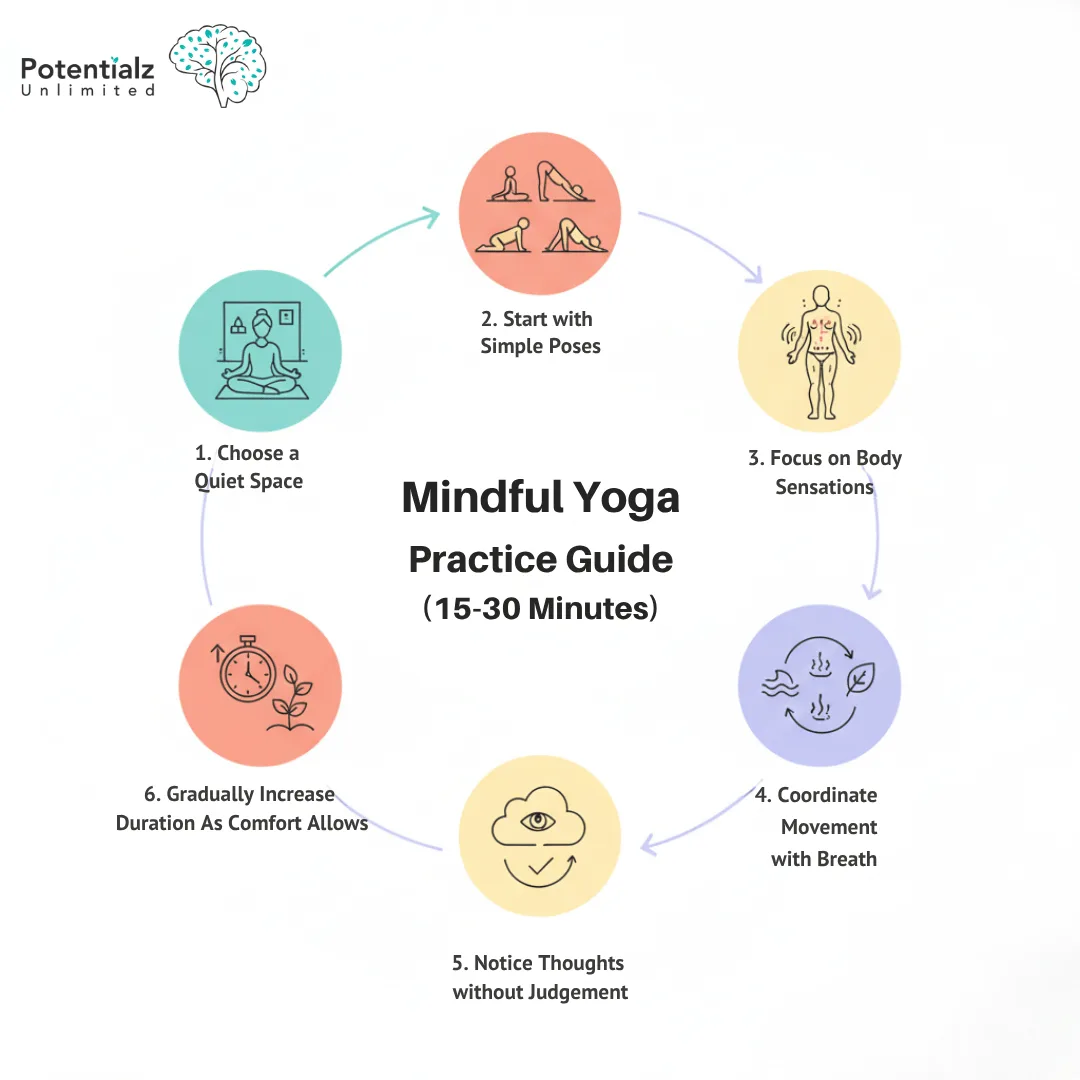 Guide to Mindful Yoga: Follow these six steps for a 15-30 minute practice, starting with a quiet space and simple poses, focusing on body sensations, coordinating movement with breath, noticing thoughts without judgment, and gradually increasing duration.
Why yoga works: The combination of physical movement, breath awareness, and present-moment focus creates multiple pathways for stress relief and emotional regulation.
Making Mindfulness a Daily Habit
Starting is easy, but maintaining practice requires strategy. Here’s how to make mindfulness stick:
Start Small and Build Gradually
Don’t try to meditate for an hour on day one. Begin with just 2-3 minutes daily, then gradually increase. Consistency matters more than duration.
- Week 1: 2-3 minutes daily breathing
- Week 2-3: 5 minutes daily
- Week 4-6: 10 minutes daily
- Week 7+: 15-20 minutes daily
Set a Specific Time
Link your practice to an existing habit:
- After brushing your teeth
- Before your morning coffee
- During your lunch break
- Before bed
Use Technology Wisely
Recent meta-analyses of mindfulness apps show small but significant effects for depression and anxiety symptoms, with over 43 randomised controlled trials demonstrating efficacy.
Recommended apps:
- Headspace: Structured courses for beginners
- Calm: Sleep stories and anxiety management
- Insight Timer: Free meditations with large community
- Smiling Mind: Australian-developed, evidence-based
Join a Community
Practising with others increases motivation and provides support. Consider:
- Local mindfulness groups in Bella Vista and surrounding areas
- Online meditation communities
- Workplace mindfulness programmes
- Psychology practices offering mindfulness training
Be Patient with Yourself
Your mind will wander - that’s normal and expected. The practice isn’t about having a perfectly clear mind; it’s about noticing when your mind wanders and gently bringing it back. Research demonstrates that mindfulness reduces mental health issues through serial mediation by self-compassion and psychological wellbeing.
Latest Research: What Science Tells Us in 2024-2025
Mindfulness for Different Populations
Recent studies in 2024-2025 examining diverse populations found that mindfulness interventions effectively reduced stress, anxiety, and depression among university students across different cultural contexts, though cultural factors influence acceptance and effectiveness.
Large-scale individual participant data meta-analysis confirmed beneficial effects of mindfulness-based programmes for mental health promotion, though effects varied based on baseline distress levels and individual characteristics.
Digital vs. In-Person Mindfulness
Meta-analysis of e-health MBCT showed it yields small but statistically significant effects on anxiety and depression at short and long-term follow-ups, offering a scalable alternative to traditional face-to-face delivery.
What this means for you: Whether you prefer attending groups in person at practices around Bella Vista, Kellyville, and Baulkham Hills, or using apps at home, both approaches offer genuine benefits.
Combining Mindfulness with Other Approaches
Research shows that interventions combining physical activity with mindfulness are effective for improving mental health and wellbeing, possibly more so than either approach alone.
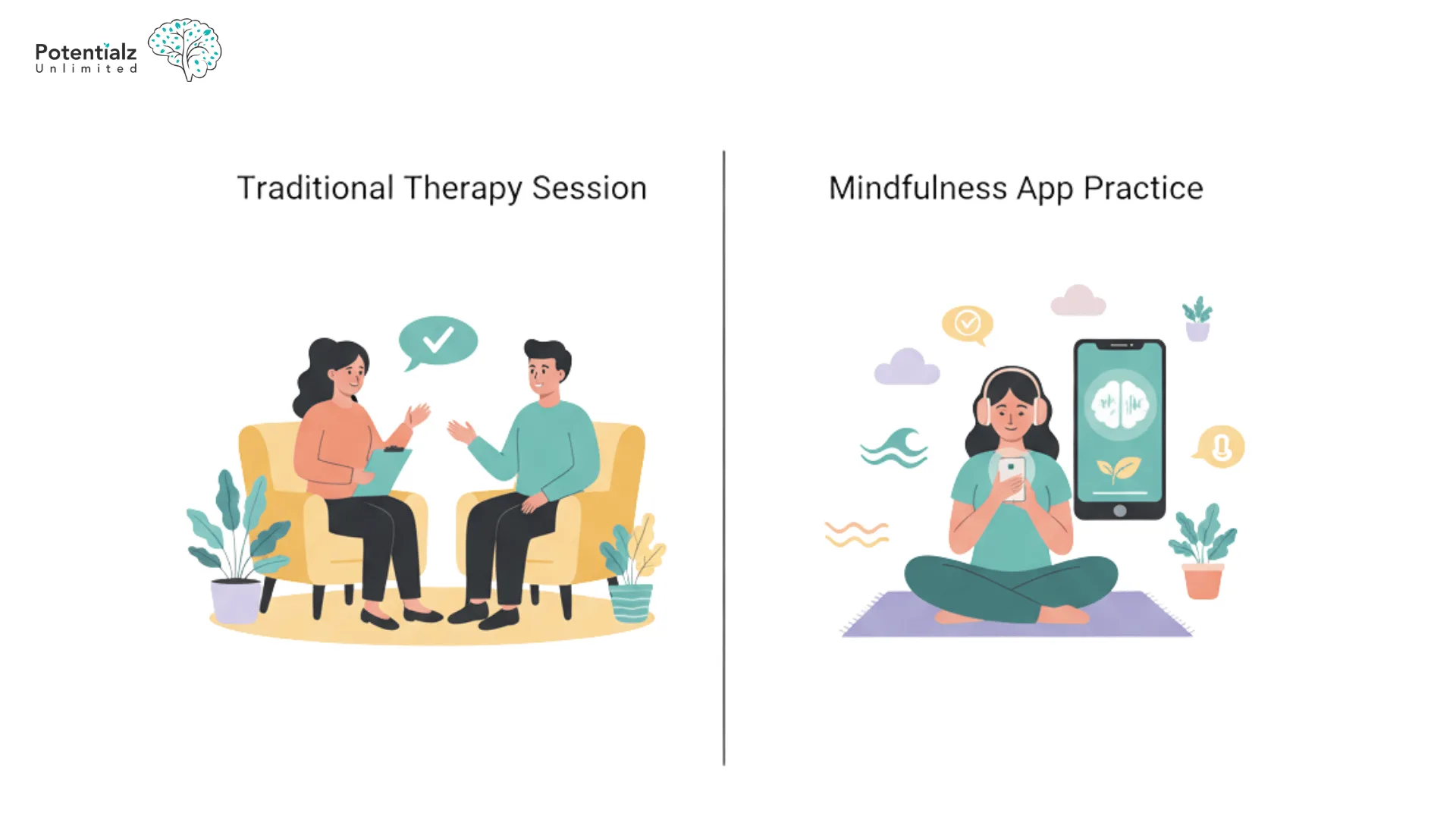 Both in-person and digital mindfulness approaches offer evidence-based mental health benefits
When to Seek Professional Help
While mindfulness is powerful, it’s not a replacement for professional mental health care. Consider seeing a psychologist in Bella Vista or clinical psychologist if you’re experiencing:
- Persistent sadness or hopelessness lasting more than two weeks
- Thoughts of self-harm or suicide
- Anxiety that interferes with daily activities
- Inability to complete work, school, or home responsibilities
- Significant changes in sleep, appetite, or energy
- Relationship difficulties affecting quality of life
Local support options:
- Anxiety therapy Bella Vista
- Depression treatment services
- EMDR therapy for trauma
- Cognitive Behavioural Therapy
Mindfulness Resources and Further Reading
Evidence-Based Books
- “Full Catastrophe Living” by Jon Kabat-Zinn - The original MBSR guidebook
- “The Mindful Way Through Depression” by Williams, Teasdale, Segal, and Kabat-Zinn - Specific to depression prevention
- “Wherever You Go, There You Are” by Jon Kabat-Zinn - Accessible introduction to mindfulness
- “The Miracle of Mindfulness” by Thich Nhat Hanh - Practical exercises and philosophy
Trusted Websites
- Mindful.org - Research, practices, and articles
- Greater Good Science Center (Berkeley) - Scientific research on mindfulness
- Black Dog Institute - Australian mental health research
- Beyond Blue - Australian mental health support
Professional Training
For those interested in deeper learning or becoming mindfulness teachers, consider:
- Dialectical Behaviour Therapy skills (includes mindfulness training)
- Mindfulness-Based Cognitive Therapy courses
- Professional development through Australian Psychological Society
Conclusion: Your Journey to Better Mental Health Starts Now
Mindfulness isn’t a magic cure, but it’s a powerful, scientifically-proven tool that can transform how you relate to stress, anxiety, and depression. The latest research from 2024-2025 confirms what practitioners have known for decades: regular mindfulness practice creates real, lasting changes in both brain and behaviour.
You don’t need special equipment, expensive retreats, or hours of free time. Start with just 2-5 minutes of mindful breathing today. Notice how it feels. Tomorrow, try again. Before you know it, you’ll have built a practice that supports your mental health for years to come.
Remember, taking care of your mental health is as important as taking care of your physical health. Mindfulness is one powerful tool in your wellness toolkit, and it works even better when combined with other forms of support.
If you’re struggling with your mental health and need additional support, reaching out to a qualified psychologist can make all the difference. At Potentialz Unlimited, we offer evidence-based treatments including mindfulness training, CBT, EMDR, and DBT to support your mental health journey.
Ready to take the first step?
- Read more about managing anxiety and depression
- Explore stress management techniques
- Learn about therapy options available
- Book an appointment: live.potentialz.com.au
Your mental health matters. Start your mindfulness journey today.
References
- Alvarado-García, P. A. A., Soto-Vásquez, M. R., Infantes Gomez, F. M., Guzman Rodriguez, N. M., & Castro-Paniagua, W. G. (2025). Effect of a mindfulness program on stress, anxiety, depression, sleep quality, social support, and life satisfaction: A quasi-experimental study in college students. Frontiers in Psychology, 16, 1508934. https://doi.org/10.3389/fpsyg.2025.1508934
- Linardon, J., Messer, M., Goldberg, S. B., & Fuller-Tyszkiewicz, M. (2023). The efficacy of mindfulness apps on symptoms of depression and anxiety: An updated meta-analysis of randomized controlled trials. Clinical Psychology Review, 107, 102370. https://doi.org/10.1016/j.cpr.2023.102370https://doi.org/10.1016/j.cpr.2023.102370
- Remskar, M., Western, M. J., & Ainsworth, B. (2024). Mindfulness improves psychological health and supports health behaviour cognitions: Evidence from a pragmatic RCT of a digital mindfulness‐based intervention. British Journal of Health Psychology, 29(4), 1031–1048. https://doi.org/10.1111/bjhp.12745https://doi.org/10.1111/bjhp.12745
- Remskar, M., Western, M. J., Osborne, E. L., Maynard, O. M., & Ainsworth, B. (2023). Effects of combining physical activity with mindfulness on mental health and wellbeing: Systematic review of complex interventions. Mental Health and Physical Activity, 26, 100575. https://doi.org/10.1016/j.mhpa.2023.100575
- Wang, Q., Wang, F., Zhang, S., Liu, C., Feng, Y., & Chen, J. (2023). Effects of mindfulness-based interventions on stress and burnout in nurses: A systematic review and meta-analysis. Frontiers in Psychiatry, 14, 1218340. https://doi.org/10.3389/fpsyt.2023.1218340
- Tseng, H. W., Chou, F. H., Chen, C. H., & Chang, Y. P. (2023). Effects of Mindfulness-Based Cognitive Therapy on Major Depressive Disorder with Multiple Episodes: A Systematic Review and Meta-Analysis. International journal of environmental research and public health, 20(2), 1555. https://doi.org/10.3390/ijerph20021555
- Xue, P., & Abdullah, S. M. S. (2025). A systematic review of mindfulness-based Stress Reduction (MBSR) and its effects on mental health and academic performance in university students. The Open Psychology Journal, 18(1). https://doi.org/10.2174/0118743501379520250716121048
- Zuo, X., Tang, Y., Chen, Y., & Zhou, Z. (2023). The efficacy of mindfulness-based interventions on mental health among university students: A systematic review and meta-analysis. Frontiers in Public Health, 11, 1259250. https://doi.org/10.3389/fpubh.2023.1259250
Need Professional Support?
If you're experiencing mental health concerns, our team is here to help.