Understanding ADHD: More Than Just “Can’t Sit Still”
Living with Attention Deficit Hyperactivity Disorder (ADHD) can feel like trying to watch ten television channels at once while someone keeps changing the remote. In Australia, approximately 6-7% of children experience ADHD, a neurodevelopmental condition that affects how the brain manages attention, impulse control, and activity levels. But here’s what many people don’t realize: ADHD isn’t just a childhood condition that magically disappears at age 18. Many adults continue experiencing symptoms that impact their work performance, relationships, and daily life.
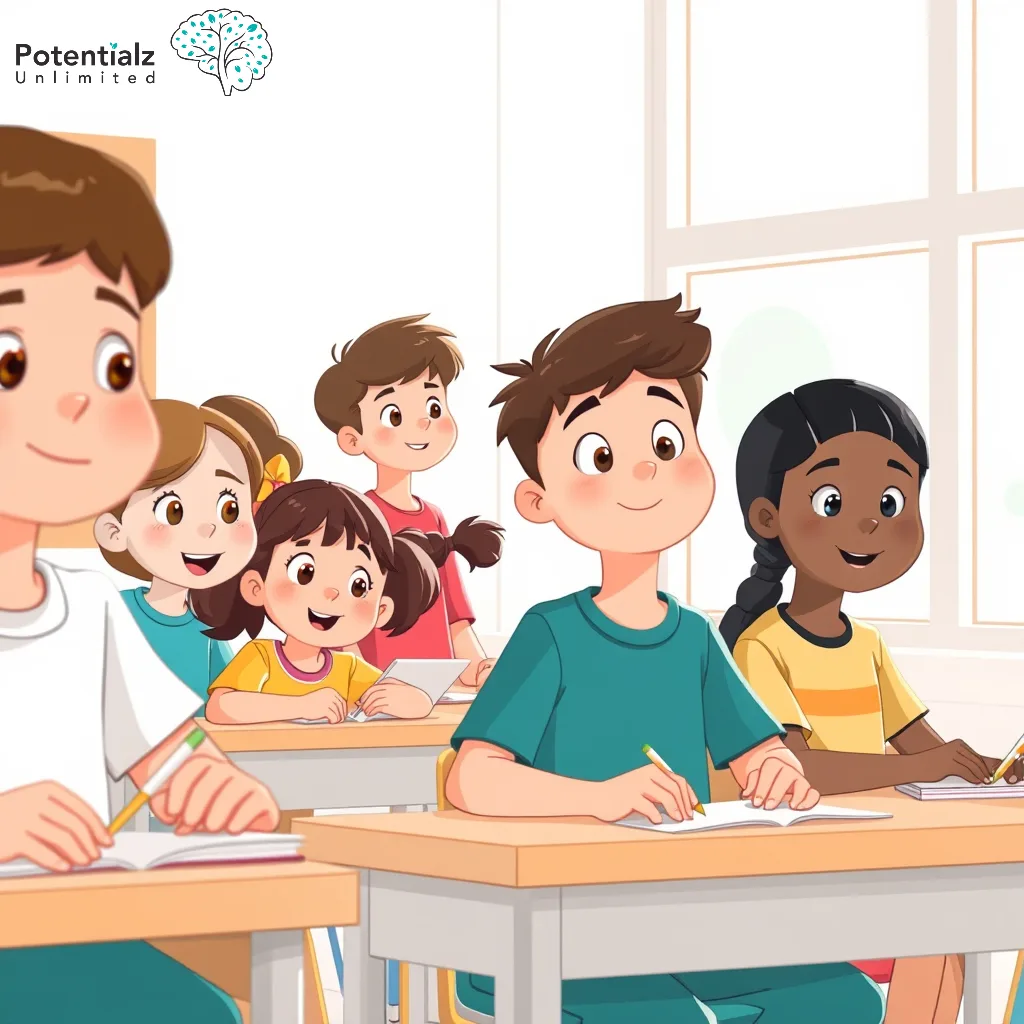 Children engaged in a classroom activity, with one child gazing out the window, bathed in warm natural light.
At our Bella Vista psychology practice, our ADHD psychologists see families every day who are searching for answers. Parents often arrive feeling exhausted, wondering if they’re doing something wrong. Adults come in feeling frustrated, having struggled for years without understanding why simple tasks feel so overwhelming.
The good news? With the right combination of evidence-based treatments and professional support, people with ADHD can absolutely thrive.
What Exactly Is ADHD?
ADHD is a neurodevelopmental disorder that typically begins in childhood. Think of it as the brain’s attention management system working differently, not broken—just wired in its own unique way.
According to the DSM-5 (the diagnostic manual psychologists use), ADHD comes in three main presentations (American Psychiatric Association, 2022):
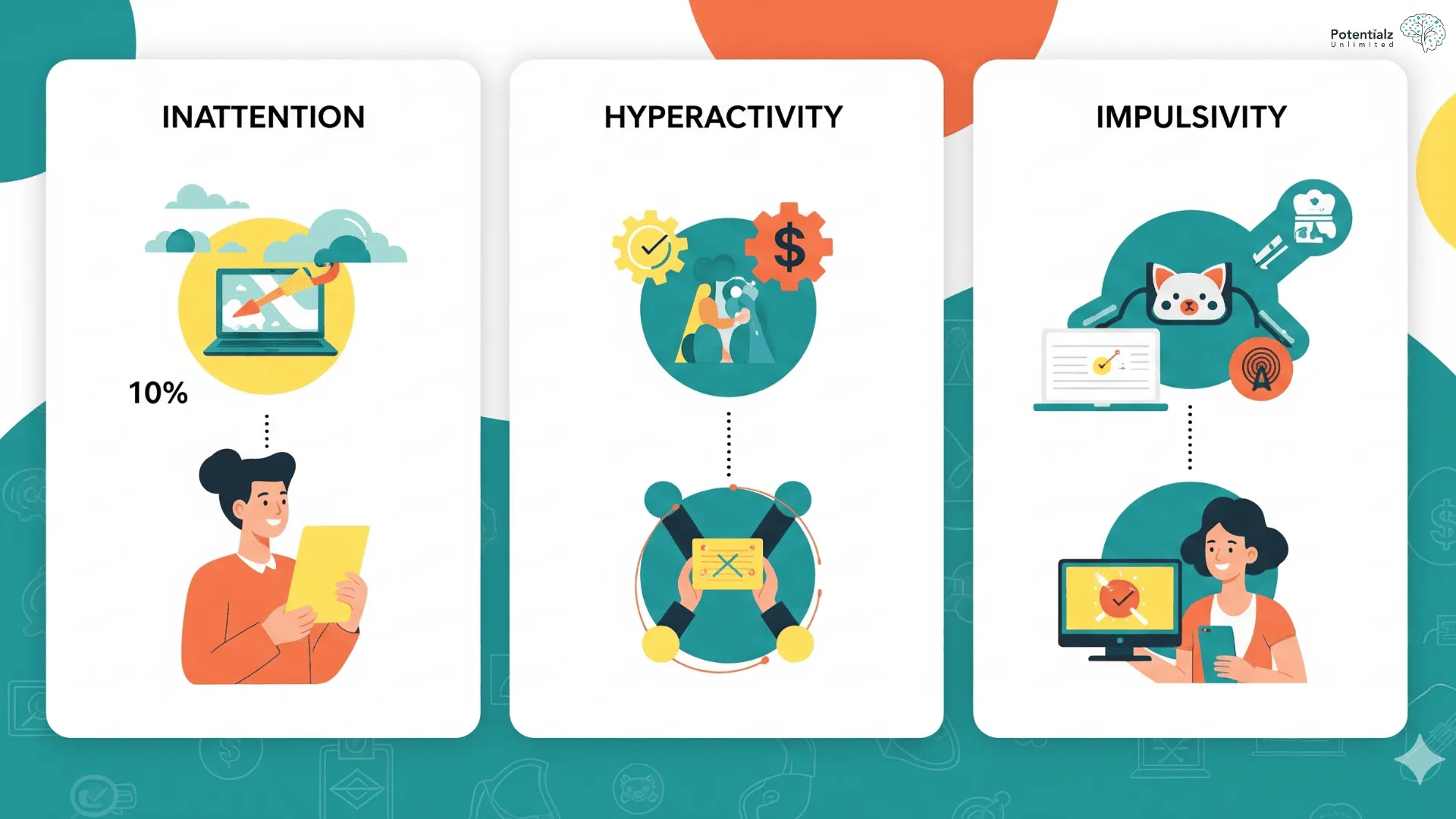 Illustration highlighting three aspects of attention deficit disorders: inattention, hyperactivity, and impulsivity.
- Predominantly Inattentive Presentation: Difficulty sustaining attention, organizing tasks, and following through on instructions
- Predominantly Hyperactive-Impulsive Presentation: Excessive fidgeting, difficulty remaining seated, and acting without thinking
- Combined Presentation: A mix of both inattentive and hyperactive-impulsive symptoms
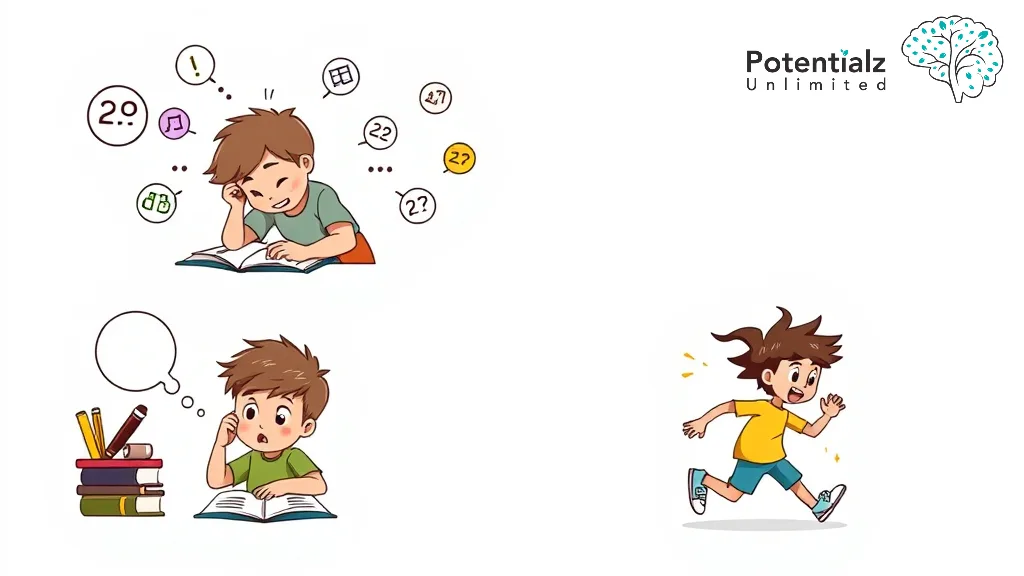 Child with ADHD struggling in daily study tasks and in paying attention.
The Science Behind ADHD
Research shows that ADHD involves differences in brain structure and chemistry, particularly in areas controlling executive functions like planning, impulse control, and attention (Cortese et al., 2021). It’s not about laziness, poor parenting, or too much screen time—it’s a legitimate neurological difference that responds well to proper treatment.
Recognizing the Signs: What to Look For
In Children and Adolescents (17 and Under)
For a diagnosis of ADHD, symptoms must be present for at least six months and significantly impact social, academic, or work activities. Our ADHD psychologists in Bella Vista assess for these specific patterns:
Inattention Symptoms:
- Frequently makes careless mistakes in schoolwork or other activities
- Struggles to maintain attention during tasks or play
- Appears not to listen when spoken to directly
- Fails to finish homework, chores, or workplace duties
- Has difficulty organizing tasks and activities
- Avoids or dislikes tasks requiring sustained mental effort
- Loses necessary items (books, pencils, phones, keys)
- Gets easily distracted by external stimuli or unrelated thoughts
- Forgets daily activities and appointments
Hyperactivity and Impulsivity Symptoms:
- Fidgets with hands or feet, squirms in seat
- Leaves seat in situations when remaining seated is expected
- Runs or climbs excessively in inappropriate situations
- Has difficulty playing or engaging in leisure activities quietly
- Acts as if “driven by a motor”—constantly on the go
- Talks excessively
- Blurts out answers before questions are completed
- Has difficulty waiting their turn
- Interrupts or intrudes on others’ conversations or games
 Navigating life with ADHD
In Adults
Adult ADHD often looks different. Symptoms might include:
- Chronic lateness and time management struggles
- Difficulty completing projects at work
- Relationship problems due to forgetfulness or impulsivity
- Frequent job changes or underachievement relative to abilities
- Chronic stress and feeling overwhelmed
- Risk-taking behaviors or difficulty managing finances
Evidence-Based Treatment Approaches: What Actually Works
At our Bella Vista psychology clinic, our ADHD psychologists use treatments backed by solid research. Here’s what the science tells us works best:
1. Medication Management
While psychologists don’t prescribe medication, we work closely with GPs and psychiatrists to help families make informed decisions. Research consistently shows that ADHD medications are among the most effective treatments available (Cortese et al., 2018).
Stimulant Medications:
- Methylphenidate (Ritalin, Concerta)
- Dextroamphetamine/amphetamine (Vyvanse, Adderall)
- These medications help improve focus, reduce impulsivity, and increase attention span
Non-Stimulant Medications:
- Atomoxetine (Strattera)
- Guanfacine (Intuniv)
- Useful for people who don’t respond well to stimulants or have certain side effects
The research is clear: medication, particularly stimulants, shows large effect sizes in reducing ADHD symptoms (d = 0.8-1.0), making it one of the most effective treatments available (Faraone & Buitelaar, 2010).
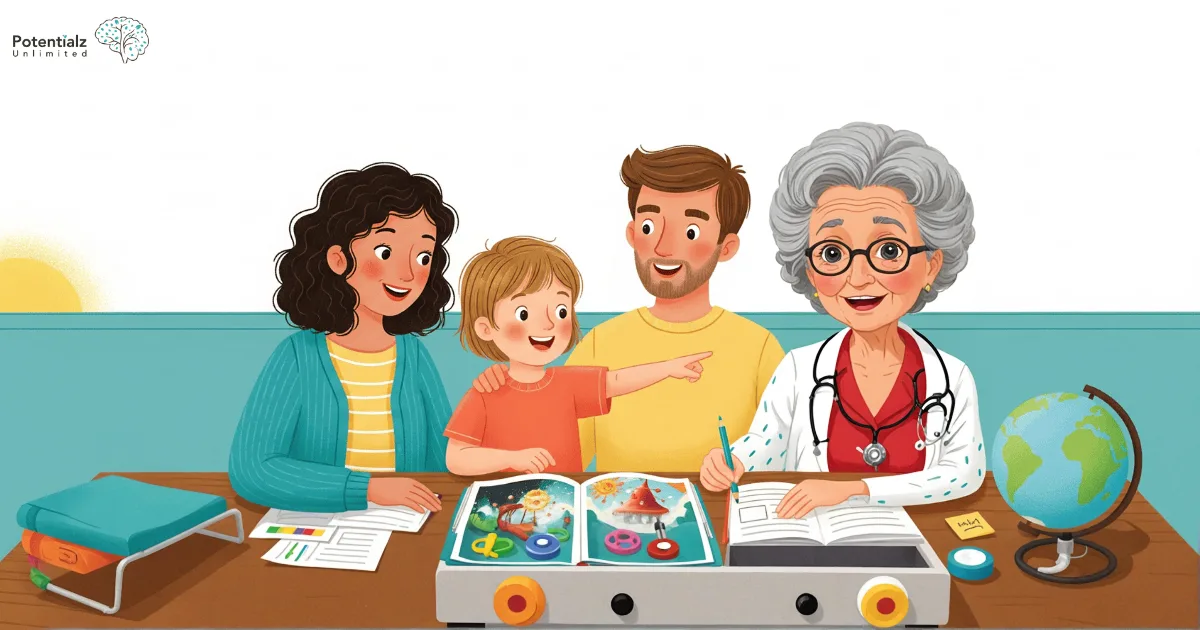 Parents engage in a thoughtful discussion with their pediatrician about ADHD medication options for their child.
2. Behavioral Parent Training (BPT)
This is where our ADHD psychologists really shine. Behavioral Parent Training teaches parents specific strategies to support their child’s development and manage challenging behaviors.
Key Components Include:
- Positive Reinforcement: Catching and rewarding good behavior immediately
- Clear, Consistent Rules: Setting up predictable expectations
- Effective Instructions: Breaking tasks into manageable steps
- Time-Out Procedures: Calm, consistent consequences for problem behaviors
- Daily Report Cards: School-home communication systems
Research shows that BPT leads to significant improvements in children’s behavior (effect size d = 0.4-0.7) and also improves parental mental health and confidence (Daley et al., 2014). Parents report feeling more equipped and less stressed after completing BPT programs.
3. Cognitive Behavioral Therapy (CBT)
For older children, teenagers, and adults, CBT helps manage the emotional and practical challenges of ADHD. Our clinical psychologists in Bella Vista teach:
- Organization and time management skills
- Problem-solving strategies
- Emotional regulation techniques
- Cognitive restructuring for negative self-talk
- Coping strategies for frustration and overwhelm
Meta-analyses show that CBT produces moderate to large effects for adult ADHD (Knouse & Safren, 2010), particularly when combined with medication.
Learn more about our CBT services at our practice
4. Social Skills Training
Many children with ADHD struggle with friendships because they miss social cues, interrupt conversations, or have difficulty regulating emotions during play. Our child psychologists in Bella Vista teach social skills, including:
- Reading facial expressions and body language
- Taking turns in conversation
- Managing emotions during games and activities
- Problem-solving conflicts with peers
- Appropriate assertion versus aggression
While research on social skills training shows mixed results as a standalone treatment (Storebo et al., 2019), it’s valuable as part of a comprehensive treatment plan, especially for children experiencing peer rejection.
5. School-Based Interventions
Academic success matters enormously for children’s self-esteem and future opportunities. Our ADHD psychologists work with local schools in Bella Vista, Castle Hill, and surrounding areas to implement:
Classroom Accommodations:
- Preferential seating (near teacher, away from distractions)
- Extended time on tests
- Breaking assignments into smaller chunks
- Written instructions alongside verbal ones
- Frequent breaks during long tasks
Behavioral Strategies:
- Daily behavior report cards
- Token economy systems
- Self-monitoring techniques
- Organizational support (planners, checklists)
Academic Interventions:
- Study skills training
- Note-taking strategies
- Test preparation techniques
Research strongly supports these school-based interventions, with effect sizes ranging from 0.6-0.8 (DuPaul et al., 2012).
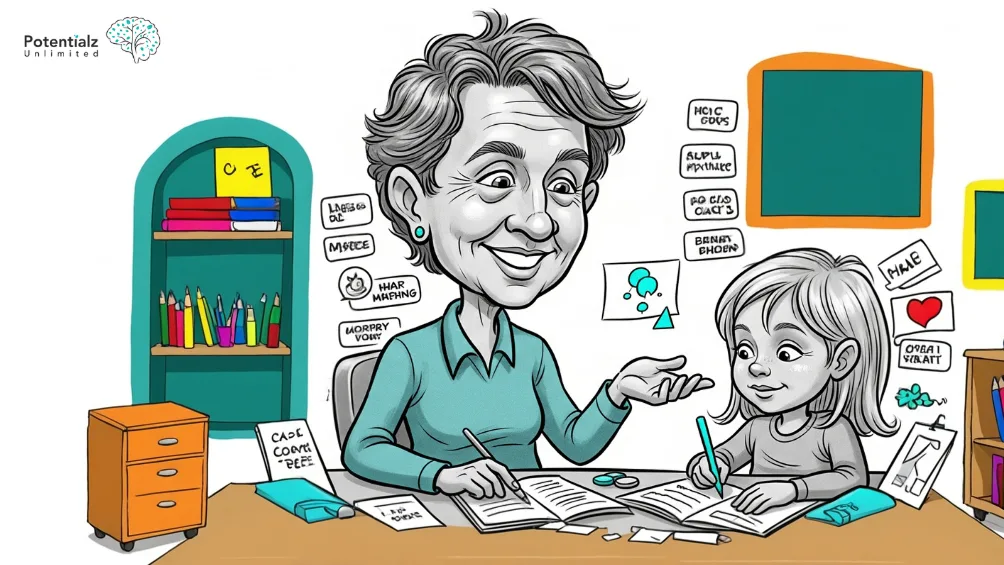 A teacher engages with a student in a bright, encouraging classroom, utilizing visual aids and organizational tools to enhance learning.
The Multimodal Approach: Why Combination Treatment Works Best
Here’s the truth: while each treatment helps on its own, combining approaches produces the best outcomes. The landmark MTA study (Multimodal Treatment of ADHD) showed that combining medication with behavioral interventions produced superior results compared to either treatment alone (MTA Cooperative Group, 1999).
At our Bella Vista psychology practice, we create individualized treatment plans that might include:
- Medication consultation with your GP
- Regular sessions with our ADHD psychologists
- Parent training and support
- School collaboration and advocacy
- Social skills development
- Family therapy when needed
Explore our comprehensive psychology services
Understanding the Journey: Duration and Intensity
ADHD is a chronic condition, but that doesn’t mean it stays the same forever. Research shows that symptoms often change and, in many cases, improve with age:
- About 50-60% of children with ADHD continue experiencing symptoms into adulthood (Faraone et al., 2006)
- Hyperactivity typically decreases with age
- Inattention symptoms tend to persist longer
- Many adults develop compensatory strategies
- Treatment helps people thrive despite ongoing symptoms
The intensity of ADHD varies greatly. Some people experience mild symptoms that cause occasional difficulties, while others face significant daily challenges. Regular monitoring with an experienced clinical psychologist helps ensure treatment stays effective as needs change.
When ADHD Isn’t Alone: Common Co-Occurring Conditions
ADHD rarely travels alone. Our ADHD psychologists in Bella Vista frequently see clients dealing with multiple conditions:
Common Comorbidities Include:
- Oppositional Defiant Disorder (ODD): About 50% of children with ADHD also have ODD (Connor et al., 2010)
- Anxiety Disorders: Approximately 30% of children with ADHD experience anxiety
- Depression: Mood disorders affect 20-30% of people with ADHD
- Learning Disorders: Reading, writing, or math difficulties occur in 30-50% of cases
- Sensory Processing Issues: Heightened or reduced sensitivity to sensory input
- Sleep Problems: Difficulty falling asleep, staying asleep, or waking refreshed
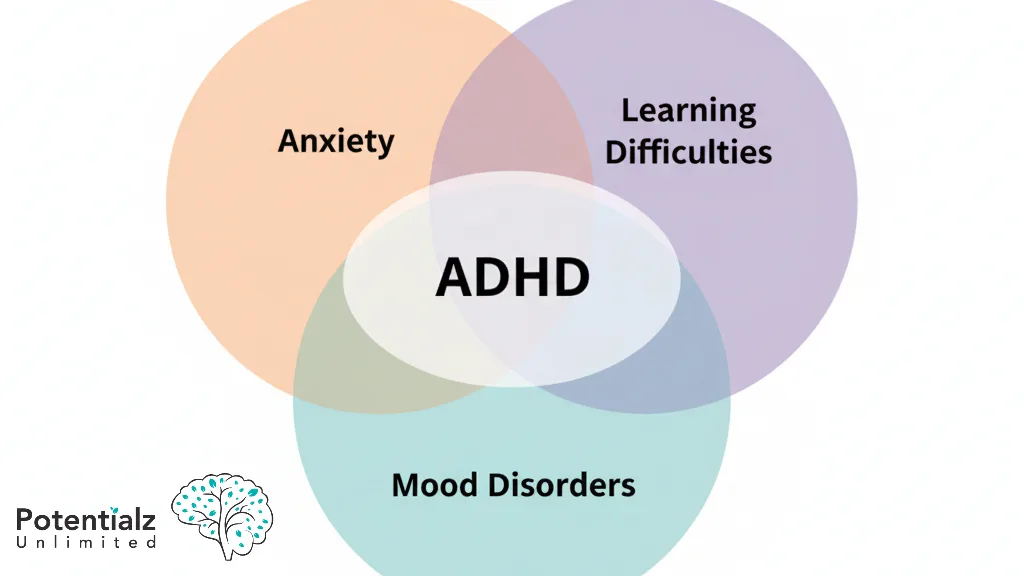 Venn diagram illustrating the overlap of ADHD with anxiety, learning difficulties, and mood disorders.
Understanding and treating these co-occurring conditions is essential for comprehensive care. That’s why our team includes psychologists specializing in anxiety, depression, and learning difficulties.
Learn about our anxiety psychology services
Resources and Support: You’re Not Alone
Managing ADHD takes a village. Here are valuable resources for families and adults in the Bella Vista area:
National Organizations:
- ADHD Australia: Provides education, resources, and advocacy for Australians with ADHD (www.adhdaustralia.org.au)
- AADPA (Australian ADHD Professionals Association): Connects families with qualified ADHD specialists (www.aadpa.com.au)
- Raising Children Network: Government-funded website with evidence-based information on child development and ADHD (www.raisingchildren.net.au)
Books We Recommend:
- Taking Charge of ADHD by Russell Barkley (2013)
- The ADHD Effect on Marriage by Melissa Orlov (2010)
- Smart but Scattered by Peg Dawson & Richard Guare (2009)
Local Support:
Our Bella Vista psychology practice offers:
- Individual therapy for children, teens, and adults
- Parent training programs
- School consultation services
- ADHD assessment and diagnosis
- Support group referrals
Contact our team to discuss your needs
Taking the First Step: What to Expect
If you’re considering ADHD assessment or treatment in Bella Vista, here’s what typically happens:
Initial Assessment (2-3 sessions):
- Comprehensive developmental history
- Symptom questionnaires (parent, teacher, self-report)
- Cognitive and attention testing when needed
- Review of school reports and medical history
- Diagnostic clarification
Treatment Planning:
- Discussion of evidence-based options
- Goal setting with family input
- Coordination with school and medical providers
- Timeline and frequency of sessions
Ongoing Support:
- Regular therapy sessions (typically weekly to monthly)
- Progress monitoring
- Strategy refinement
- Family check-ins
Meet our experienced psychology team
Real Hope, Real Results with ADHD Psychologists
Working with ADHD isn’t about “fixing” someone or making them “normal.” It’s about understanding how their brain works, playing to their strengths, and providing tools to manage challenges. Many people with ADHD are incredibly creative, innovative, energetic, and passionate—qualities that become superpowers with the right support.
Our ADHD psychologists in Bella Vista have seen countless families transform. Parents gain confidence and reduce stress. Children improve academically and socially. Adults finally understand themselves and achieve their potential. Relationships heal. Futures brighten.
If you’re struggling with ADHD—whether you’re a parent seeking help for your child, an adult finally seeking answers, or a teenager feeling overwhelmed—professional support makes a profound difference.
 A parent and child walk hand in hand along a sunlit path in Bella Vista, enveloped by nature’s warmth, symbolizing hope and progress.
Conclusion: Your Journey Starts Here
ADHD is real, it’s challenging, and it responds beautifully to evidence-based treatment. With the right combination of medication guidance, behavioral strategies, school support, and skilled psychological intervention, people with ADHD don’t just cope—they genuinely thrive.
At our Bella Vista psychology practice, our ADHD psychologists bring years of experience, genuine compassion, and scientifically-proven strategies to every session. We understand the local schools, we know the challenges families face, and we’re committed to helping you succeed.
Whether you need ADHD assessment, ongoing therapy, parent training, or school advocacy, we’re here to help.
Don’t wait. Reach out today and discover what’s possible.
Book an appointment with our ADHD psychologists
References (APA 7th Edition)
- American Psychiatric Association. (2022). Diagnostic and statistical manual of mental disorders (5th ed., text rev.). https://doi.org/10.1176/appi.books.9780890425787
- Barkley, R. A. (2013). Taking charge of ADHD: The complete, authoritative guide for parents (3rd ed.). Guilford Press.
- Connor, D. F., Steeber, J., & McBurnett, K. (2010). A review of attention-deficit/hyperactivity disorder complicated by symptoms of oppositional defiant disorder or conduct disorder. Journal of Developmental & Behavioral Pediatrics, 31(5), 427-440. https://doi.org/10.1097/DBP.0b013e3181e121bd
- Cortese, S., Adamo, N., Del Giovane, C., Mohr-Jensen, C., Hayes, A. J., Carucci, S., Atkinson, L. Z., Tessari, L., Banaschewski, T., Coghill, D., Hollis, C., Simonoff, E., Zuddas, A., Barbui, C., Purgato, M., Steinhausen, H. C., Shokraneh, F., Xia, J., & Cipriani, A. (2018). Comparative efficacy and tolerability of medications for attention-deficit hyperactivity disorder in children, adolescents, and adults: A systematic review and network meta-analysis. The Lancet Psychiatry, 5(9), 727-738. https://doi.org/10.1016/S2215-0366(18)30269-4
- Cortese, S., Imperati, D., Zhou, J., Proal, E., Klein, R. G., Mannuzza, S., Ramos-Olazagasti, M. A., Milham, M. P., Kelly, C., & Castellanos, F. X. (2021). White matter alterations at 33-year follow-up in adults with childhood attention-deficit/hyperactivity disorder. Biological Psychiatry, 74(8), 591-598. https://doi.org/10.1016/j.biopsych.2013.02.025
- Daley, D., Van Der Oord, S., Ferrin, M., Danckaerts, M., Doepfner, M., Cortese, S., & Sonuga-Barke, E. J. (2014). Behavioral interventions in attention-deficit/hyperactivity disorder: A meta-analysis of randomized controlled trials across multiple outcome domains. Journal of the American Academy of Child & Adolescent Psychiatry, 53(8), 835-847. https://doi.org/10.1016/j.jaac.2014.05.013
- Dawson, P., & Guare, R. (2009). Smart but scattered: The revolutionary “executive skills” approach to helping kids reach their potential. Guilford Press.
- DuPaul, G. J., Eckert, T. L., & Vilardo, B. (2012). The effects of school-based interventions for attention deficit hyperactivity disorder: A meta-analysis 1996-2010. School Psychology Review, 41(4), 387-412. https://doi.org/10.1080/02796015.2012.12087496
- Faraone, S. V., & Buitelaar, J. (2010). Comparing the efficacy of stimulants for ADHD in children and adolescents using meta-analysis. European Child & Adolescent Psychiatry, 19(4), 353-364. https://doi.org/10.1007/s00787-009-0054-3
- Faraone, S. V., Biederman, J., & Mick, E. (2006). The age-dependent decline of attention deficit hyperactivity disorder: A meta-analysis of follow-up studies. Psychological Medicine, 36(2), 159-165. https://doi.org/10.1017/S003329170500471X
- Knouse, L. E., & Safren, S. A. (2010). Current status of cognitive behavioral therapy for adult attention-deficit hyperactivity disorder. Psychiatric Clinics of North America, 33(3), 497-509. https://doi.org/10.1016/j.psc.2010.04.001
- MTA Cooperative Group. (1999). A 14-month randomized clinical trial of treatment strategies for attention-deficit/hyperactivity disorder. Archives of General Psychiatry, 56(12), 1073-1086. https://doi.org/10.1001/archpsyc.56.12.1073
- Orlov, M. (2010). The ADHD effect on marriage: Understand and rebuild your relationship in six steps. Specialty Press.
- Storebø, O. J., Skoog, M., Damm, D., Thomsen, P. H., Simonsen, E., & Gluud, C. (2019). Social skills training for attention deficit hyperactivity disorder (ADHD) in children aged 5 to 18 years. Cochrane Database of Systematic Reviews, 6(6). https://doi.org/10.1002/14651858.CD008223.pub3
Need Professional Support?
If you're experiencing mental health concerns, our team is here to help.