Introduction
Have you ever felt like your emotions were so intense they completely took over your life? Or struggled with relationships because your feelings seemed too big to handle? You’re not alone. Many people experience overwhelming emotions that make daily life challenging, affecting their relationships, work, and overall wellbeing.
Dialectical Behavior Therapy (DBT) offers hope and practical solutions for people who experience very intense emotions. Originally developed by Dr. Marsha Linehan in the 1980s to help people with Borderline Personality Disorder, DBT has since proven effective for a wide range of mental health conditions including depression, anxiety, eating disorders, and post-traumatic stress disorder (PTSD).
This comprehensive guide will help you understand what DBT is, how it works, and whether it might be the right approach for you or someone you care about. We’ll explore the science behind DBT, its core components, and real-world applications that are helping thousands of people build lives worth living.
 A serene individual meditates, enveloped by vibrant swirling colors symbolizing harmony and balanced emotions.
What is Dialectical Behavior Therapy (DBT)?
At its core, DBT is a form of cognitive-behavioral therapy (CBT). Yet, DBT developed as a result of failures of traditional CBT for women with chronic suicidal behaviors and borderline personality disorder (Rizvi et al., 2024). The key difference is that DBT balances two seemingly opposite approaches: acceptance and change.
The word “dialectical” means finding the middle ground between two opposing forces. In DBT, this means learning to accept yourself as you are right now while also working to make positive changes in your life. This balance is crucial because focusing only on change can make people feel criticized, while focusing only on acceptance might not lead to the improvements they need.
The Core Philosophy: Wise Mind
DBT teaches that we have three different “minds”:
- Reasonable Mind: The logical, fact-based part of thinking
- Emotional Mind: The feeling-based part that’s driven by current emotions
- Wise Mind: The balanced integration of both reason and emotion
The goal is to learn to access your Wise Mind, where you can make decisions that honor both your thoughts and feelings while considering what’s most effective in each situation.
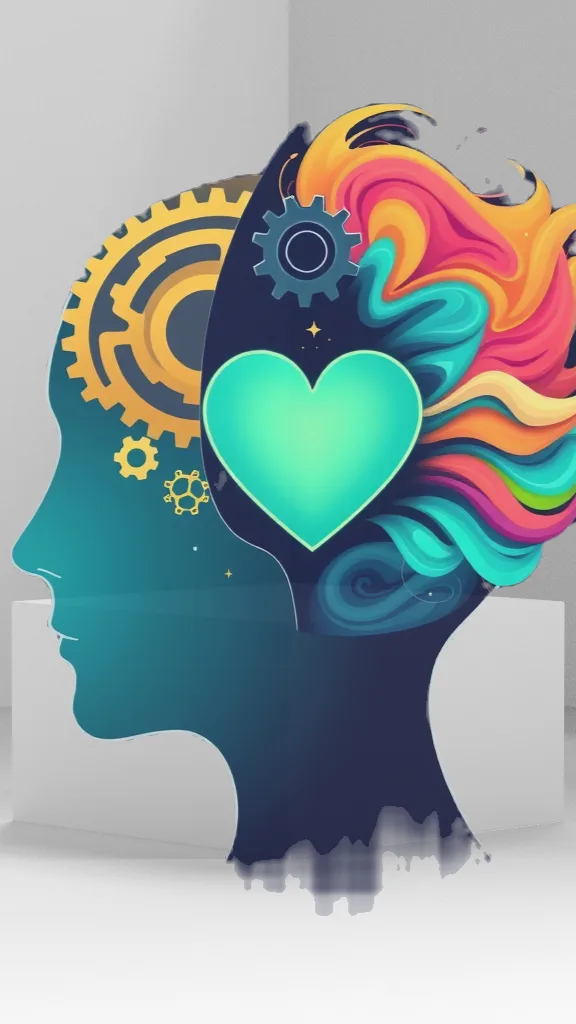 Exploring the Balance of the Mind: Reasonable with gears and logic, Wise with a glowing heart, and Emotional with vibrant colors.
Evidence-Based Effectiveness
Research consistently shows that DBT is highly effective. A comprehensive bibliometric analysis of global research on DBT from 1987 to 2024 found that DBT research has grown significantly, with dozens of randomized controlled trials demonstrating its effectiveness (Chen et al., 2025).
Proven benefits include:
- 50-70% reduction in suicide attempts
- Significant decreases in self-harm behaviors
- Improved emotional regulation and stability
- Better interpersonal relationships
- Reduced hospitalizations and treatment dropout rates
- Enhanced quality of life and overall functioning
The Four Core Skills Modules of DBT
DBT teaches four main sets of skills that work together to help you manage difficult situations and emotions effectively.
1. Mindfulness Skills
Mindfulness is the foundation of all other DBT skills. It involves paying attention to the present moment without judgment, helping you observe your thoughts and feelings without being overwhelmed by them.
Core mindfulness skills include:
- Observe: Noticing what’s happening inside and around you
- Describe: Putting experiences into words without judgmental language
- Participate: Being fully present in activities and experiences
- Non-judgmentally: Avoiding “good” or “bad” labels for experiences
- One-mindfully: Focusing on one thing at a time
- Effectively: Doing what works in each situation
2. Distress Tolerance Skills
These skills help you survive crisis situations without making them worse through impulsive or harmful behaviors.
Key distress tolerance techniques:
- TIPP: Temperature, Intense exercise, Paced breathing, Paired muscle relaxation
- Distraction: Engaging in activities that shift your focus
- Self-soothing: Using your five senses to comfort yourself
- Radical acceptance: Completely accepting painful reality without approval
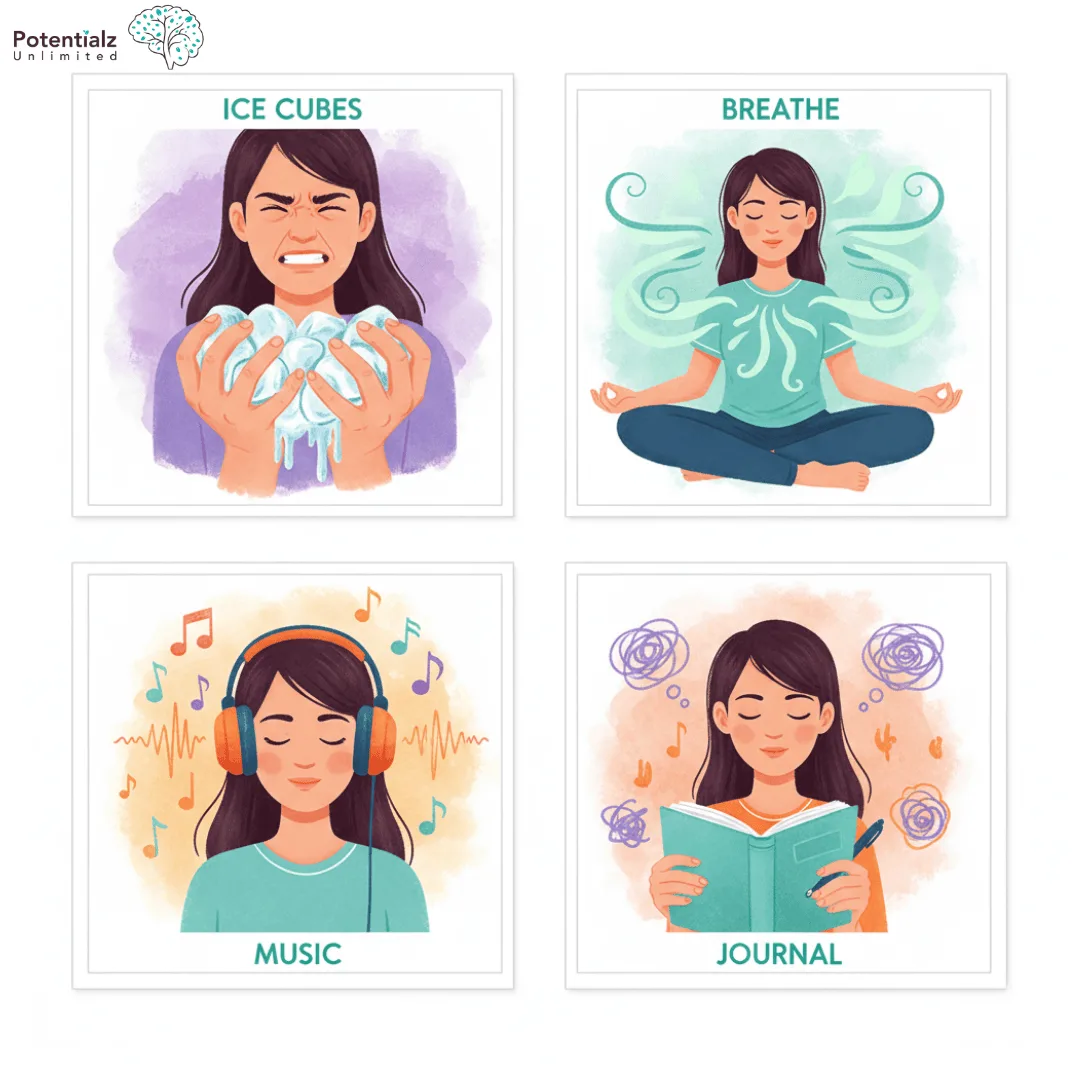 Exploring distress tolerance techniques: using ice cubes, practicing mindful breathing, enjoying music, and journaling.
3. Emotion Regulation Skills
Research shows that DBT has the potential to improve key cognitive functions such as attention, memory, fluency, response inhibition, planning, set shifting, tolerance for delayed rewards and time perception (Abdolghaddri et al., 2023). These skills help you understand and manage your emotions more effectively.
Emotion regulation techniques include:
- PLEASE: Treating PhysicaL illness, balancing Eating, avoiding mood-Altering substances, balancing Sleep, and getting Exercise
- Identifying and labeling emotions: Understanding what you’re feeling and why
- Building mastery: Engaging in activities that make you feel competent and confident
- Opposite action: Acting opposite to your emotional urges when the emotion isn’t helpful
4. Interpersonal Effectiveness Skills
These skills help you communicate your needs, set boundaries, and maintain relationships while keeping your self-respect.
Core interpersonal skills:
- DEAR MAN: Describe, Express, Assert, Reinforce, Mindful, Appear confident, Negotiate
- GIVE: Gentle, Interested, Validate, Easy manner
- FAST: Fair, no Apologies, Stick to values, Truthful
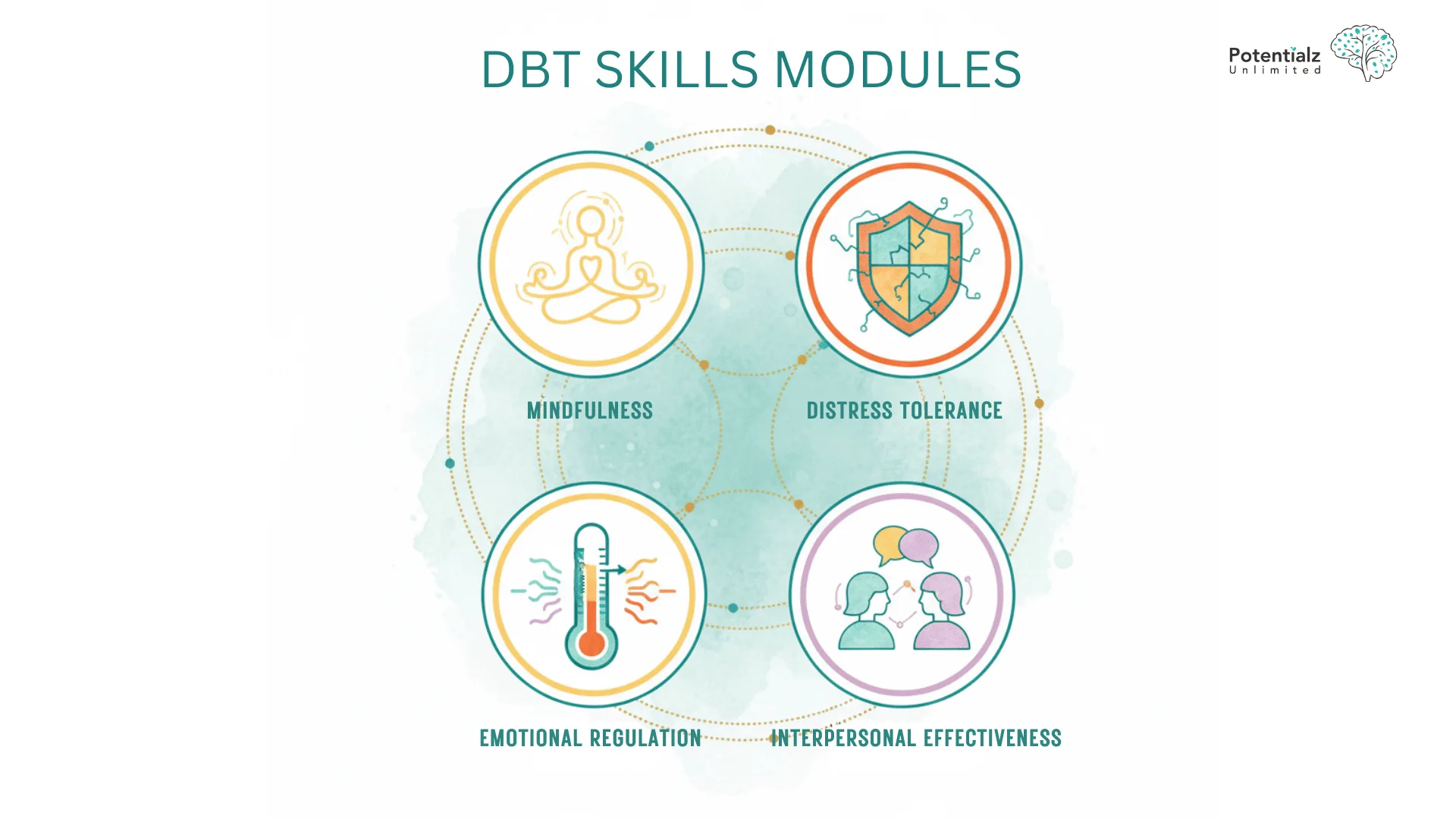 An interconnected depiction of the core modules, including Mindfulness, Distress Tolerance, Emotional Regulation, and Interpersonal Effectiveness, each represented by distinctive icons.
Who Can Benefit from DBT?
Primary Conditions Treated
Dialectical Behavior Therapy (DBT) is especially effective for people who have difficulty managing and regulating their emotions. DBT has proven to be effective for treating and managing a wide range of mental health conditions (Cleveland Clinic, 2022):
Borderline Personality Disorder (BPD)
- The original target condition for DBT
- Shows the strongest research support
- Significant improvements in emotional stability and self-harm reduction
Depression and Mood Disorders
- Particularly effective for depression with emotional dysregulation
- A systematic review found DBT effective for mood symptoms in bipolar disorders (Rahmani et al., 2023)
- Helps with mood instability and suicidal thoughts
Anxiety Disorders
- Reduces anxiety symptoms through improved emotional regulation
- Particularly helpful for anxiety with emotional intensity
- Teaches practical coping skills for anxious thoughts
Post-Traumatic Stress Disorder (PTSD)
- Dialectical behavior therapy for posttraumatic stress disorder (DBT-PTSD) compared with cognitive processing therapy (CPT) shows promising results
- Helps process trauma while building emotional regulation skills
- Reduces trauma-related emotional overwhelm
Expanding Applications
Recent research shows DBT’s effectiveness extends beyond its original scope:
Eating Disorders
- Particularly effective for binge eating disorder and bulimia
- Addresses emotional aspects of disordered eating
- Helps break the cycle of emotional eating
Substance Use Disorders
- Reduces reliance on substances for emotional regulation
- Teaches alternative coping strategies
- Addresses underlying emotional dysregulation
ADHD
- A pilot randomized controlled trial showed DBT group skills training effective for ADHD among college students
- Helps with emotional regulation challenges common in ADHD
- Improves attention and impulse control
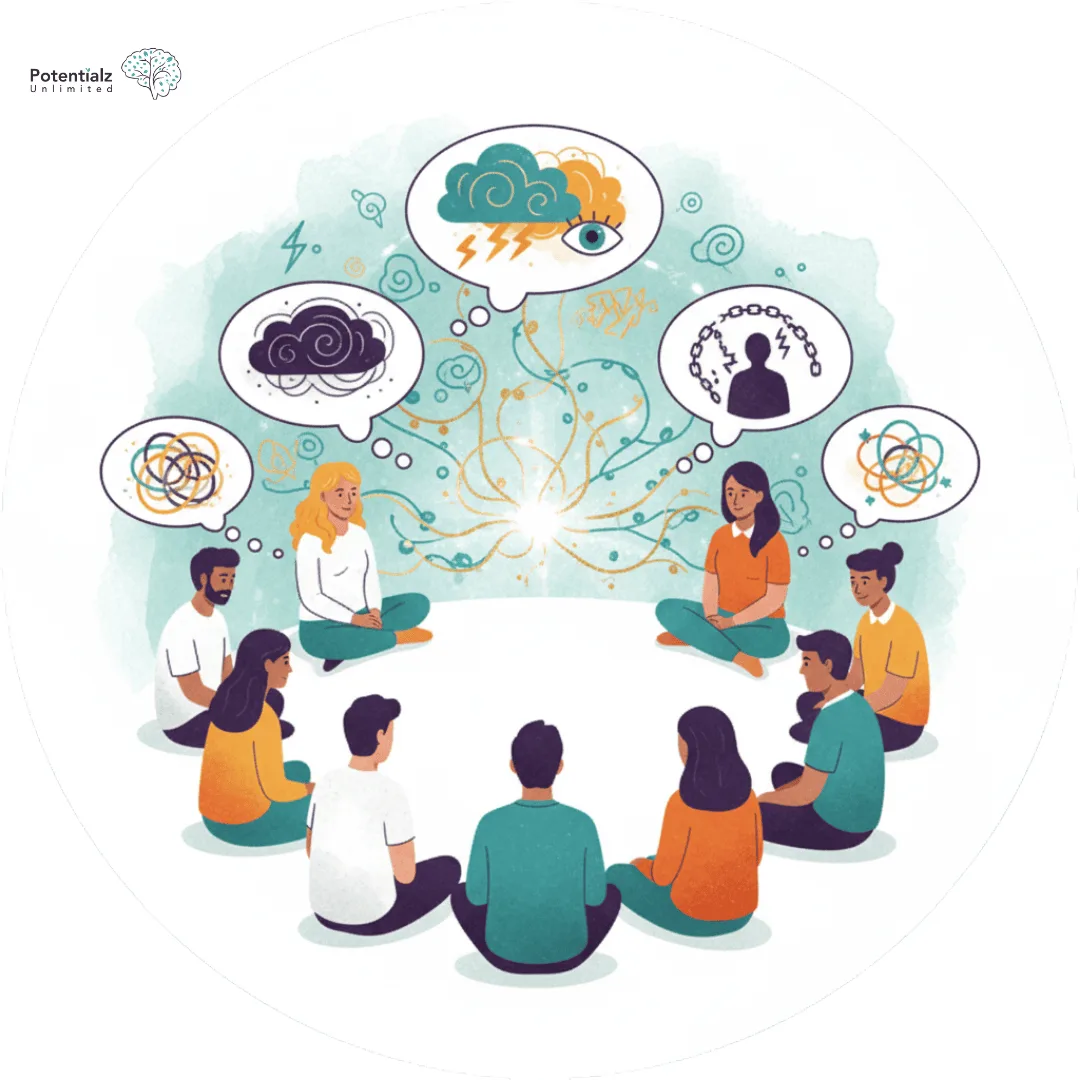 A diverse group engages in a supportive therapy circle, using DBT skills to address various mental health challenges depicted in thought bubbles.
Test Your Knowledge
How DBT Treatment Works
The Four Modes of DBT
Comprehensive DBT involves four different ways of receiving treatment, each serving a specific purpose in your healing journey.
1. Individual Therapy
- Weekly one-on-one sessions with a DBT-trained therapist
- Focus on applying DBT skills to specific life situations
- Address individual goals and challenges
- Typically lasts 60-90 minutes per session
2. Group Skills Training
- Weekly group sessions teaching DBT skills modules
- Learn alongside others facing similar challenges
- Practice skills in a supportive environment
- Usually 2-2.5 hours per week for about 6 months
3. Phone Coaching
- Brief phone calls with your therapist between sessions
- Get help applying skills during real-life crisis moments
- Available during predetermined hours
- Focuses on skill use, not crisis intervention
4. Therapist Consultation Team
- Therapists meet weekly to support each other
- Ensures high-quality, consistent treatment
- Helps therapists stay motivated and skilled
- Not directly involving clients but crucial for treatment quality
Treatment Duration and Commitment
Dialectical behavior therapy (DBT) usually takes at least six months to a year. However, each person is unique, and mental health conditions are complex (Cleveland Clinic, 2022). Many people see improvements within the first few months, but lasting change typically requires:
- Full commitment: Regular attendance at individual and group sessions
- Skills practice: Daily use of DBT techniques in real-life situations
- Homework completion: Between-session assignments and skill practice
- Long-term perspective: Understanding that change takes time and patience
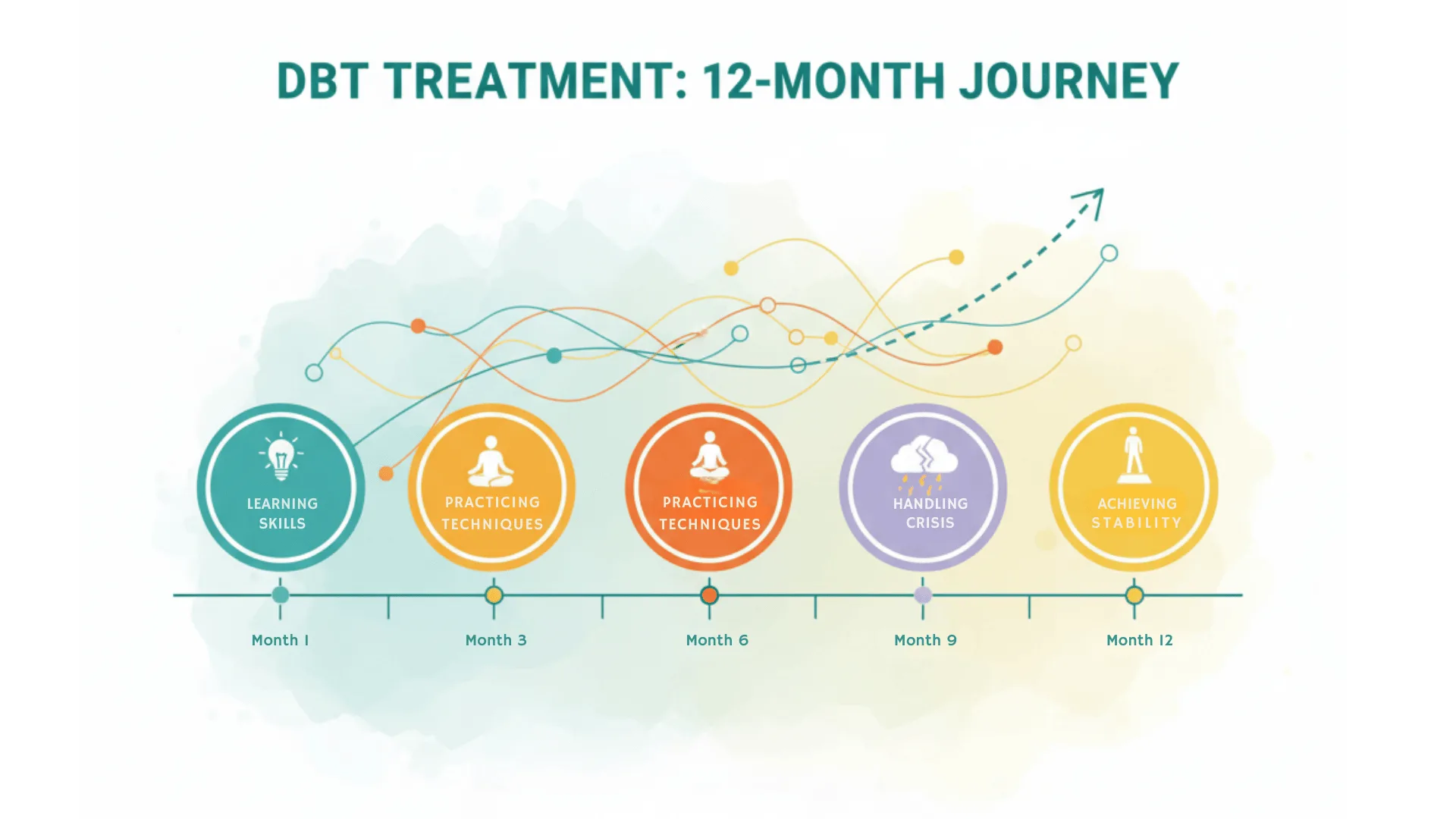 The image illustrates a 12-month journey in Dialectical Behavior Therapy (DBT), outlining a structured path from learning skills in the first month to achieving stability by month twelve, with stages of practicing techniques and handling crises in between.
Finding the Right DBT Therapist
Qualifications to Look For
Finding a qualified DBT therapist is crucial for treatment success. Look for therapists who have:
DBT-Specific Training
- Completed intensive DBT training programs
- Received certification from recognized DBT training organizations
- Ongoing consultation and supervision in DBT
Professional Credentials
- Licensed mental health professionals (psychologists, social workers, counselors)
- Experience working with your specific concerns
- Good standing with professional organizations
Personal Fit
- Someone you feel comfortable talking with
- Understands your cultural background and values
- Demonstrates warmth, empathy, and genuine care
At Potentialz, our experienced therapists are trained in evidence-based approaches including DBT therapy. We understand that finding the right fit is crucial for treatment success, and we’re committed to providing compassionate, skilled care that honors your individual journey toward healing.
 In a cozy therapy room, therapist and patient in a Dialectical Behavior Therapy (DBT) session, surrounded by calming decor and insightful materials.
Real-World Applications and Success Stories
DBT in Different Settings
Outpatient Mental Health Clinics
- Standard DBT programs for community-based treatment
- Most common setting for DBT delivery
- Allows people to maintain work and family responsibilities
Residential Treatment Centers
- Intensive DBT programs for severe mental health conditions
- 24-hour support with DBT principles integrated throughout
- Typical stays range from 30-90 days
Schools and Educational Settings
- DBT skills training adapted for students
- Helps with academic stress, peer relationships, and emotional regulation
- Particularly effective for adolescents with emotional difficulties
Forensic and Correctional Facilities
- Dialectical behavior therapy (DBT) has strong evidence in support of its effectiveness in reducing suicide attempts, anger, impulsivity, and substance abuse in forensic settings (Marshall et al., 2024)
- Helps individuals manage anger and violent behaviors
- Reduces recidivism and improves rehabilitation outcomes
Adaptations for Different Populations
DBT for Adolescents
- Modified to account for developmental differences
- Includes family members in treatment
- Efficacy of Dialectical Behavior Therapy for Adolescents at High Risk for Suicide shows significant improvements (McCauley et al., 2018)
DBT for Men and Boys
- Research shows preliminary evidence supporting the use of DBT for males, specifically targeting anger and violence as well as emotional regulation and suicidality (Holah et al., 2024)
- Addresses unique challenges faced by men in emotional expression
- Adapted to be more appealing to male participants
Cultural Adaptations
- Modified to respect different cultural values and practices
- Incorporates cultural strengths and healing traditions
- Addresses unique stressors faced by different communities
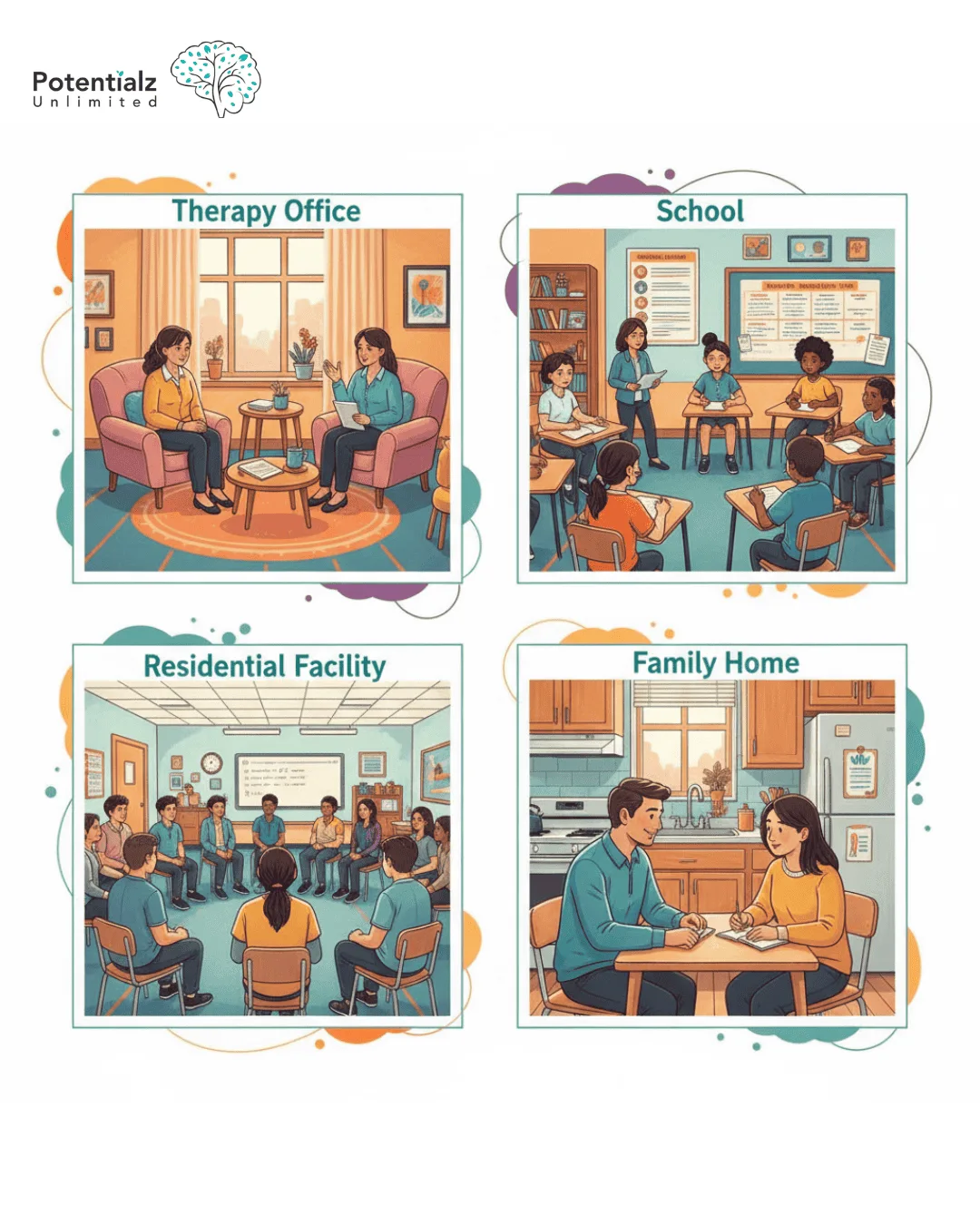 Dialectical Behavior Therapy (DBT) practices adapted for various settings: individual therapy in an office, group sessions in school and residential facilities, and personalized guidance at home.
The Science Behind DBT’s Effectiveness
Neurobiological Changes
Recent neuroscience research shows that DBT creates measurable changes in the brain:
Prefrontal Cortex Strengthening
- Enhanced executive function and decision-making
- Better impulse control and emotional regulation
- Improved ability to think before acting
Amygdala Regulation
- Reduced hyperactivity in the brain’s fear center
- Less intense emotional reactions to triggers
- Improved emotional stability over time
Neural Connectivity
- Strengthened connections between thinking and feeling brain regions
- Enhanced communication between different brain areas
- More integrated emotional and cognitive processing
Long-Term Outcomes Research
Studies following DBT participants over several years show:
Sustained Improvements
- Benefits maintained 1-2 years after treatment completion
- Continued reduction in self-harm and suicidal behaviors
- Ongoing improvements in relationships and life satisfaction
Quality of Life Enhancements
- Improved work and academic performance
- Better family and romantic relationships
- Increased engagement in meaningful activities
Reduced Healthcare Utilization
- Fewer emergency room visits and hospitalizations
- Decreased need for intensive mental health services
- Overall reduction in healthcare costs
Potential Challenges and How to Overcome Them
Common Obstacles in DBT
High Time Commitment
- DBT requires significant time investment (individual + group + practice)
- Solution: View it as an investment in your long-term wellbeing
- Tip: Schedule DBT activities like important appointments
Emotional Intensity During Treatment
- Learning new skills can initially increase emotional awareness
- Solution: Remember that this is temporary and part of the healing process
- Tip: Use distress tolerance skills when treatment feels overwhelming
Group Therapy Anxiety
- Some people feel nervous about sharing in group settings
- Solution: Start by listening and sharing when you feel ready
- Tip: Remember that everyone in group faces similar struggles
Skill Practice Outside Sessions
- Real-world application can feel difficult initially
- Solution: Start with small, manageable situations
- Tip: Keep a diary card to track your skill use and progress
Maximizing Your Success in DBT
Commit Fully to the Process
- Attend all sessions consistently
- Complete homework assignments
- Practice skills daily, even when you don’t feel like it
Be Patient with Yourself
- Change takes time and practice
- Expect setbacks as part of the learning process
- Celebrate small improvements along the way
Use Your Support System
- Share your DBT journey with trusted friends and family
- Ask for support in practicing skills
- Consider joining online DBT support communities
Stay Connected with Your Why
- Remember your reasons for starting DBT
- Keep your goals visible and review them regularly
- Connect with your values and what matters most to you
Building Your DBT Skills Toolkit
Daily Practices for Success
Morning Routine
- Start with 5 minutes of mindfulness
- Set an intention to use DBT skills throughout the day
- Review your goals and priorities
Throughout the Day
- Practice observing and describing emotions without judgment
- Use TIPP or other distress tolerance skills when stressed
- Apply interpersonal effectiveness skills in conversations
Evening Reflection
- Complete your diary card (if using one)
- Reflect on which skills you used and how they worked
- Plan for tomorrow’s challenges and which skills might help
Creating a Personal Crisis Plan
Work with your therapist to develop a plan that includes:
- Warning signs that you’re becoming emotionally overwhelmed
- Specific DBT skills to use in different types of crises
- Support people you can contact
- Professional resources available to you
- Self-care activities that help you feel grounded
Building Mastery Activities
Engage in activities that make you feel competent and confident:
- Creative pursuits (art, music, writing)
- Physical activities (exercise, sports, yoga)
- Learning new skills (languages, instruments, hobbies)
- Helping others through volunteering or acts of kindness
For comprehensive DBT support and other evidence-based therapies, Potentialz offers evidence-basd mental health services. Our team includes therapists trained in anxiety treatment, trauma therapy, and family counseling to support your complete mental health journey.
Looking Forward: Your Life Worth Living
Defining Your Life Worth Living
In DBT, the ultimate goal is to help you build a “life worth living.” This is deeply personal and might include:
- Meaningful relationships with family and friends
- Work or activities that give you purpose
- Physical and emotional health
- Personal growth and learning
- Contributing to your community
- Spiritual or philosophical fulfillment
Maintaining Progress After DBT
Continue Using Your Skills
- DBT skills are for life, not just during treatment
- Regular practice keeps skills sharp and effective
- Consider refresher sessions or groups as needed
Stay Connected to Treatment Resources
- Maintain relationship with your therapist or treatment team
- Know when and how to access additional support
- Stay informed about new DBT developments and resources
Build a Sustainable Lifestyle
- Create routines that support your mental health
- Maintain healthy relationships and boundaries
- Engage in ongoing self-care and personal growth
Conclusion
Dialectical Behavior Therapy represents hope and healing for millions of people who struggle with intense emotions and mental health challenges. By combining acceptance and change, mindfulness and practical skills, DBT provides a comprehensive approach to building a life worth living.
The journey through DBT requires commitment, patience, and courage, but the rewards are profound. Research consistently shows that DBT creates lasting positive changes in emotional regulation, relationships, and overall quality of life. The skills you learn become tools you can use for the rest of your life, helping you navigate challenges with greater wisdom and resilience.
Remember that seeking help is a sign of strength, not weakness. If you recognize yourself in the descriptions of emotional intensity and relationship struggles discussed in this guide, DBT might offer the path forward you’ve been looking for. With proper treatment and commitment to the process, you can learn to manage your emotions effectively, build meaningful relationships, and create the fulfilling life you deserve.
Take the first step today by reaching out to a qualified DBT therapist or treatment program. Your future self will thank you for having the courage to begin this transformative journey toward emotional freedom and a life truly worth living.
Related Articles on Potentialz
- DBT Skills for Managing Borderline Personality Disorder
- Master Your Moods: A Deep Dive into DBT’s Model of Emotional Regulation
- DBT: A New Approach to Mental Health
- Emotional Regulation Activities for ADHD Kids
References
- Abdolghaddri, M., Narimani, M., Atadokht, A., Abolghasemi, A., & Hamidrezahatamian. (2023). Effectiveness of dialectical behavior therapy as a transdiagnostic treatment for improving cognitive functions: A systematic review. Research in Psychotherapy: Psychopathology, Process and Outcome, 26(2), 662.
- Chen, L., Wang, X., & Zhang, Y. (2025). Bibliometric analysis of global research on dialectical behavior therapy from 1987 to 2024. Frontiers in Psychology, 15, 1450497.
- Cleveland Clinic. (2022). Dialectical behavior therapy (DBT): What it is & purpose. Retrieved from https://my.clevelandclinic.org/health/treatments/22838-dialectical-behavior-therapy-dbt
- Holah, S., Davies, J., & Thompson, A. R. (2024). Dialectical behaviour therapy for men and boys: A systematic review. Counselling and Psychotherapy Research, 24(2), 487-502.
- Marshall, L., Kletzka, N., Kanitz, J., Opperman, K. J., & Rockwell, J. (2024). Effectiveness of dialectical behavior therapy in a forensic psychiatric hospital. Journal of the American Academy of Psychiatry and the Law, 52(2), 196-206.
- McCauley, E., Berk, M. S., Asarnow, J. R., Adrian, M., Cohen, J., Korslund, K., … & Linehan, M. M. (2018). Efficacy of dialectical behavior therapy for adolescents at high risk for suicide: A randomized clinical trial. JAMA Psychiatry, 75(8), 777-785.
- Rahmani, F., Ranjbar, F., Ebrahimi, A., Heidari, M., Khorrami, Z., Faridhosseini, F., & Tavakolizadeh, J. (2023). A systematic review on the effectiveness of dialectical behavior therapy for improving mood symptoms in bipolar disorders. International Journal of Bipolar Disorders, 11(1), 5.
- Rizvi, S. L., Linehan, M. M., & Lynch, T. R. (2024). The state of the science: Dialectical behavior therapy. Cognitive and Behavioral Practice, 29(2), 367-380.
- Robins, C. J., & Chapman, A. L. (2004). Dialectical behavior therapy: Current indications and unique elements. Psychiatry, 1(2), 7-18.
- Tejedor-Prado, M., Ramos-Quiroga, J. A., & Richarte, V. (2024). Efficacy of dialectical behavior therapy in the treatment of borderline personality disorder: A systematic review of randomized controlled trials. Iranian Journal of Psychiatry and Behavioral Sciences, 18(1), e139827.
Need Professional Support?
If you're experiencing mental health concerns, our team is here to help.