THE BOTTOM LINE: Climate anxiety and eco-grief are normal psychological responses to environmental threats affecting over 75% of Australian young people. While these emotions can feel overwhelming, evidence-based strategies including connecting with nature, taking meaningful action, building community support, and professional counselling can transform distress into adaptive coping and environmental action.
What’s Really Happening to Our Mental Health and the Planet?
The summer of 2019-2020 brought devastating bushfires to Australia. In early 2022, catastrophic floods ravaged northern New South Wales. These weren’t just news stories for many Sydney families—they were lived experiences that left lasting emotional scars.
Today, Australian families face an unprecedented mental health challenge that many healthcare professionals are only beginning to understand: climate anxiety and ecological grief. These aren’t just buzzwords or fleeting trends. Research from 2024 reveals that 75% of Australian young people report concern about climate change, with one in four feeling very or extremely worried about our planet’s future.
What makes this particularly challenging for families in Bella Vista, Castle Hill, and across Sydney’s Hills District is that we’re navigating something entirely new. Unlike traditional anxiety disorders that respond to reassurance, climate anxiety stems from a very real, ongoing threat that demands our attention rather than dismissal.
 A loving family enjoys quality time together on a picnic mat in a serene Australian park, surrounded by native eucalyptus trees.
Understanding Climate Anxiety: When Worry Becomes Overwhelming
Climate anxiety, also called eco-anxiety, refers to persistent worry, fear, and stress related to the awareness of environmental threats and climate change impacts. Research published in BMC Psychiatry in November 2024 examined 35 studies involving over 45,000 adults and found consistent associations between eco-anxiety and symptoms of psychological distress, depression, anxiety, and stress.
The key symptoms include:
- Emotional responses: Persistent worry about environmental futures, feelings of sadness or hopelessness about ecological loss, anger toward inaction or environmental harm, and fear about climate impacts on loved ones.
- Physical manifestations: Sleep disturbances when thinking about climate issues, difficulty concentrating due to environmental worry, fatigue from carrying constant concern, and physical tension related to environmental stress.
- Behavioural patterns: Compulsive checking of climate news or weather updates, avoidance of environmental information due to overwhelming feelings, difficulty making long-term plans due to uncertainty, and social withdrawal or conflict over climate concerns.
A 2024 study of Australian young adults found that 93% identified “worry about future” as a potential mental health impact of climate change. What’s particularly significant is that these aren’t irrational fears—they’re responses to real threats that require acknowledgment rather than dismissal.
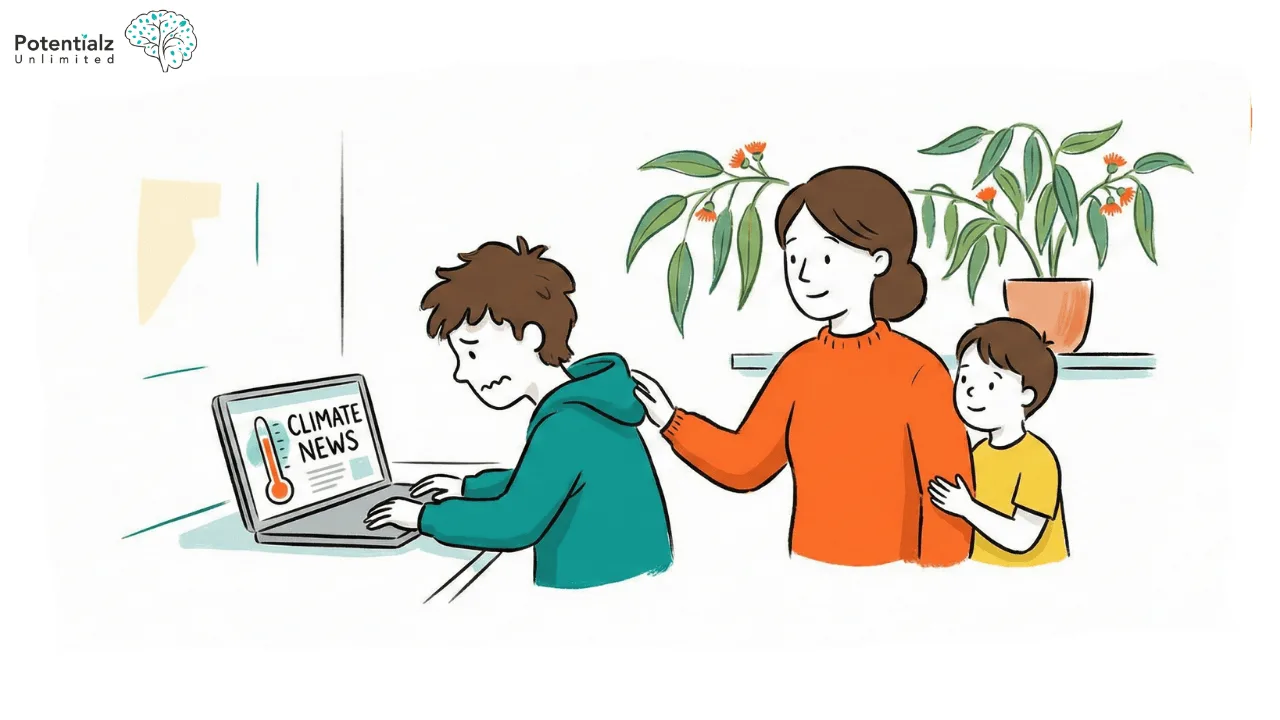 A concerned young teenager in Australia reads climate news on a laptop, finding comfort in the supportive presence of family members by their side.
Eco-Grief: Mourning What We’re Losing
While climate anxiety focuses on future threats, ecological grief involves mourning losses we’ve already experienced or anticipate experiencing. Australian philosopher Glenn Albrecht coined the term “solastalgia” in 2005 to describe the distress people feel when their home environment changes in distressing ways while they remain in place.
Research published in Nature Climate Change and updated through 2024 identifies three main types of ecological grief:
- Physical ecological losses: Grief for destroyed ecosystems, lost species, changed landscapes that hold personal or cultural meaning, and environmental damage from extreme weather events. For Australian families, this might include mourning burnt forests after bushfires, flooded communities along the Northern Rivers, or the ongoing degradation of the Great Barrier Reef.
- Loss of environmental knowledge: Grief related to disrupted traditional ecological knowledge, changing seasonal patterns that affect cultural practices, and lost intergenerational environmental wisdom. This particularly affects First Nations communities whose cultural identity connects deeply with Country.
- Anticipated future losses: Grief for what we know will be lost, anxiety about ecological futures for children, and mourning the world we hoped to leave for future generations.
A 2024 study in regional Australia found that young people with existing mental health challenges experienced eco-anxiety intensified by direct experience of climate disasters. The research, conducted through headspace Port Macquarie, revealed that climate-related distress disproportionately affects rural and regional youth who face both environmental and mental health vulnerabilities.
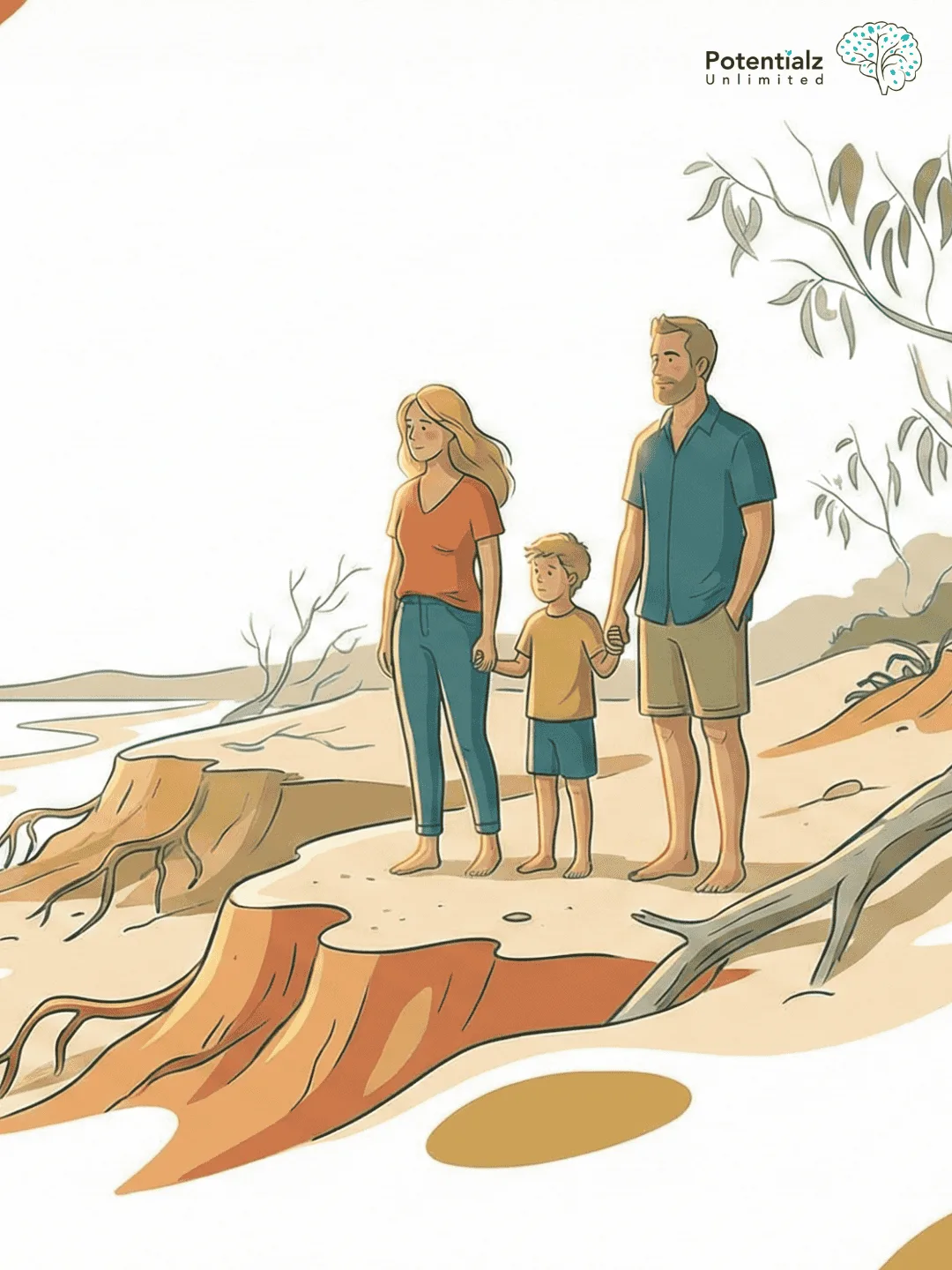 A family stands together, reflecting on the subtle signs of environmental change along a coastal landscape, symbolizing a shared commitment to understanding and addressing ecological challenges.
The Science Behind These Emotions
Understanding why climate anxiety and eco-grief occur requires looking at how our brains process threat and loss. Research published in Frontiers in Psychology in September 2024 examined the neurological underpinnings of these experiences.
- The threat detection system: Our amygdala, the brain’s alarm system, activates when we perceive danger. Unlike immediate threats that trigger fight-or-flight responses we can act on directly, climate change represents a chronic, diffuse threat that keeps our stress response partially activated without clear resolution. This creates what researchers call “habitual ecological worry”—a state of ongoing concern that our nervous system struggles to resolve.
- The grief response: Ecological grief follows similar neurological pathways to other forms of loss. The anterior cingulate cortex, involved in processing social pain and loss, activates when we contemplate environmental destruction. However, ecological grief often goes unacknowledged or “disenfranchised” because society doesn’t always recognize environmental loss as legitimate grounds for mourning.
- The development of eco-emotions: A 2024 review in the International Journal of Environmental Research and Public Health describes how occasional emotional distress about climate issues can deteriorate without appropriate reassurance or coping strategies. For some individuals, this escalates into eco-paralysis—a state of overwhelming distress that leads to apparent apathy or total inertia.
What’s crucial to understand is that these responses indicate a healthy, functioning empathy system recognizing real threats. The 2024 research published in Lancet Planetary Health emphasises that ecological grief and anxiety represent “the start of a healthy response to climate change” rather than pathology requiring elimination.
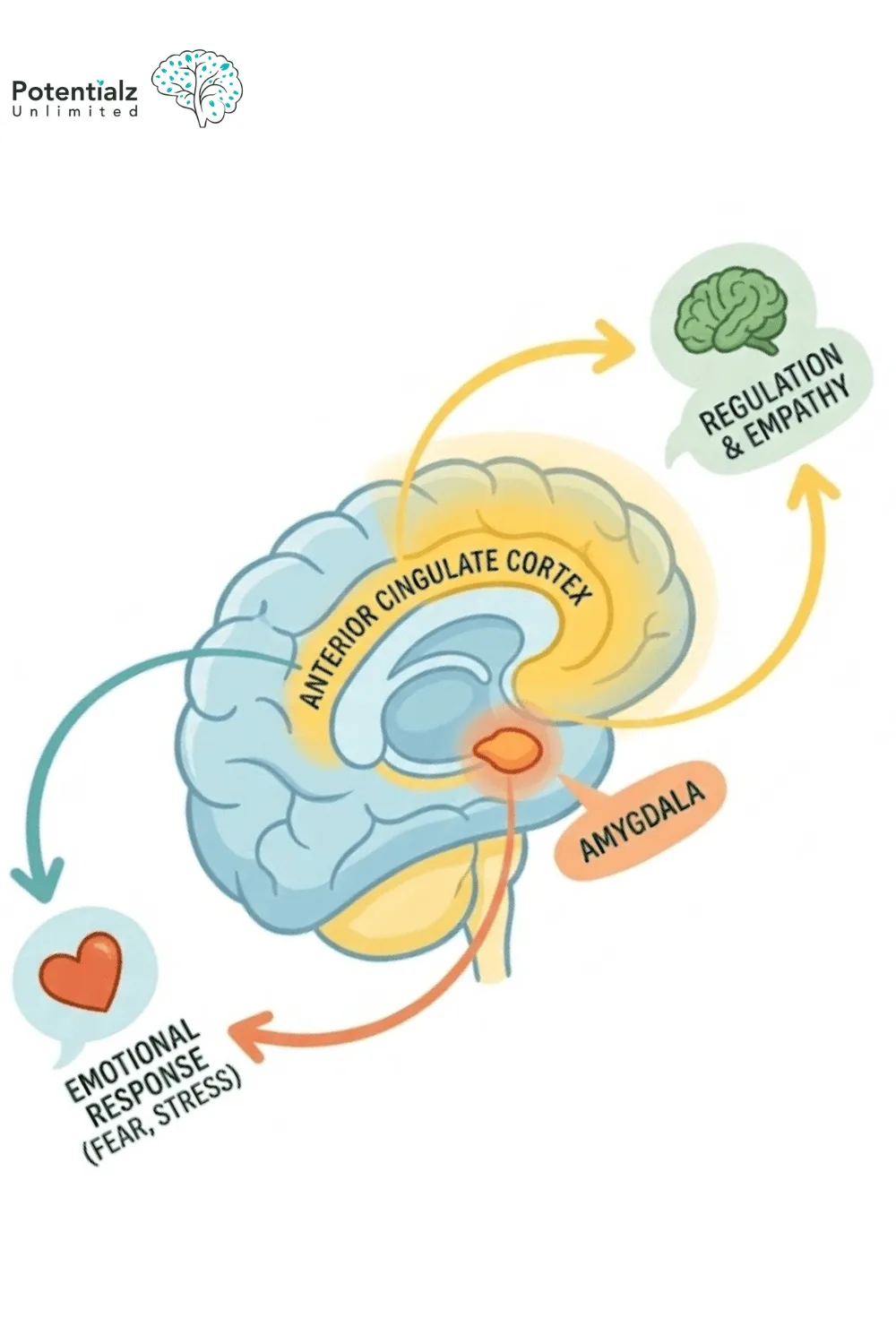 Illustration depicting the brain’s amygdala and anterior cingulate cortex, highlighting their roles in regulating emotional responses such as fear and stress, as well as empathy.
How Climate Anxiety Affects Australian Families Differently
The impact of climate anxiety and eco-grief varies significantly based on age, location, and life circumstances. Understanding these differences helps families provide appropriate support.
- Children and adolescents: Research from the Australian Journal of General Practice (January 2025) found that 44% of Australian children aged 10-14 worry about climate change’s future impact, with one quarter worrying the world will end before they grow older. Young people report feeling their voices aren’t heard in climate decisions, contributing to feelings of powerlessness. An eight-year longitudinal study tracking Australian adolescents found that substantial numbers experienced high or increasing worry about climate change, which associated with greater societal engagement but also elevated distress.
- Young adults: The 2022 Mission Australia Youth Survey of 18,800 young people aged 15-19 revealed those very or extremely concerned about climate change were 1.81 times more likely to experience high psychological distress and 1.52 times more likely to have negative future outlooks. Many young adults report anxiety about bringing children into an uncertain world, with some researchers identifying this as “reproductive anxiety” linked to climate concerns.
- Parents: Climate anxiety for parents often manifests as intense worry about children’s futures, guilt about the world being left to younger generations, stress about providing safety in increasingly unpredictable conditions, and conflict about balancing present needs with environmental action.
- Regional and rural families: The Deloitte analysis for UNICEF Australia found that over 1.4 million Australian children and young people experience climate disasters yearly—approximately one in six children. Those in remote areas, from lower socio-economic backgrounds, and First Nations children face disproportionate impact. Research from Port Macquarie found regional youth with mental health challenges experience intensified eco-anxiety following direct disaster exposure.
- First Nations Australians: Indigenous communities experience unique dimensions of ecological grief tied to Country, disrupted cultural practices linked to environmental changes, loss of traditional ecological knowledge as environments shift, and compounded trauma from both historical injustice and environmental destruction. Research published in 2024 emphasises that for First Nations people, environmental grief connects deeply with cultural identity and spiritual wellbeing.
When Should Families Seek Professional Support?
While climate anxiety and eco-grief are normal responses, certain signs indicate when professional psychological support becomes important:
- Red flags requiring attention: When climate worry significantly interferes with daily functioning—school, work, or relationships, persistent sleep disturbances or physical symptoms linked to environmental worry, social withdrawal or isolation due to climate distress, extreme behaviour changes like refusing to leave home due to environmental fears, suicidal thoughts or self-harm related to feelings of hopelessness, substance use to cope with climate-related emotions, or panic attacks triggered by environmental news or weather events.
- When children need help: A child or teen expressing they feel life isn’t worth living due to climate concerns, significant academic decline associated with environmental worry, extreme social isolation or conflict with peers over environmental issues, age-inappropriate fixation on environmental catastrophe, or physical symptoms without medical cause that correlate with climate discussions.
The 2024 Australian research emphasises that clinicians should distinguish between adaptive eco-anxiety that motivates positive action and maladaptive distress that impairs functioning. Professional support aims not to eliminate concern but to help individuals process emotions and maintain wellbeing while engaging meaningfully with environmental challenges.
 A psychologist engages with a diverse family in a warm and welcoming environment, filled with natural light and comfortable seating, fostering open communication.
Evidence-Based Coping Strategies That Actually Work
Research from 2024 identifies multiple effective approaches for managing climate anxiety and eco-grief. These strategies acknowledge the legitimacy of eco-emotions while building resilience.
1. Nature Connection and Eco-Therapy
Studies published in 2024 in BioScience found that nature-based interventions effectively improve mental health outcomes for climate-related distress. The mechanisms include:
- Direct nature contact: Regular time in natural settings reduces stress hormones and activates the parasympathetic nervous system. Research shows that even brief nature exposure (20 minutes) significantly reduces cortisol levels. For Sydney families, this might mean walks in local bushland, visits to parks with native vegetation, or time at beaches.
- Shinrin-yoku (forest bathing): This Japanese practice, studied extensively in 2024, involves mindful immersion in forest environments. The practice reduces anxiety markers and improves mood through multiple pathways including exposure to phytoncides (beneficial compounds released by trees) and attention restoration.
- Nature-based mindfulness: Combining mindfulness practices with nature connection shows particular effectiveness for climate anxiety. Techniques include sitting meditation in natural settings, mindful observation of seasonal changes, and gratitude practices focused on nature’s resilience.
2. Problem-Focused Action
Research published in 2024 identified problem-focused coping as highly adaptive for eco-anxiety. Taking meaningful action provides:
- Sense of agency: Research shows that engaging in pro-environmental behaviours reduces feelings of helplessness. Even small actions create psychological benefits through restored sense of control.
- Community connection: Environmental action often occurs in groups, providing social support that independently reduces anxiety. The 2024 research emphasises that community capacity significantly buffers climate distress.
- Practical steps for families: Install home solar panels or energy-efficient systems, reduce household waste through composting and recycling, support local environmental groups or initiatives, participate in citizen science projects like wildlife monitoring, attend local council meetings on environmental planning, and engage in regenerative gardening with native plants.
3. Meaning-Focused Coping
Research from 2024 emphasises meaning-focused coping strategies that help individuals find purpose amid environmental challenges:
- Values clarification: Identifying core values (such as protecting future generations, honouring Country, or preserving biodiversity) provides direction for action and reduces values-based distress.
- Constructive hope: Research by Maria Ojala and colleagues distinguishes between three types of hope: hope-trust (confidence things will work out), hope-action (belief in the power of action), and realistic worry (acknowledging threats while maintaining engagement). Constructive hope combines realistic assessment with action-focused optimism.
- Spiritual and cultural practices: For many Australians, including First Nations peoples, spiritual connection with land provides resilience. Practices might include acknowledgment of Country, traditional ceremonies, or contemporary spiritual practices that honour interconnection with nature.
4. Emotional Regulation and Processing
The 2024 research emphasises importance of processing eco-emotions rather than suppressing them:
- Expressive activities: Writing about climate feelings, creating art representing environmental emotions, music or movement to express eco-grief, and structured rituals for acknowledging environmental losses.
- Cognitive strategies: Recognising and challenging catastrophic thinking patterns (while acknowledging real threats), practicing acceptance of uncertainty, distinguishing between controllable and uncontrollable factors, and developing realistic timeframes for environmental change.
- Emotion regulation skills: The research identifies several helpful techniques including controlled breathing exercises during climate-related distress, progressive muscle relaxation for physical tension, self-compassion practices for feelings of guilt or inadequacy, and emotional granularity—naming specific eco-emotions with precision.
5. Social Support and Community Building
Research published in 2024 consistently identifies social support as protective against climate distress:
- Climate cafés and eco-grief circles: These structured peer support groups provide space to share environmental emotions without judgment. The 2024 research from young professionals in conservation found that creating communities of support was the most impactful strategy for managing ecological grief.
- Family conversations: Research emphasises importance of age-appropriate climate discussions within families, validating children’s concerns while providing reassurance, family projects that address environmental concerns together, and limiting catastrophic climate discussions around young children.
- Professional networks: Psychologists increasingly recognise need for climate-aware practice. Psychology for a Safe Climate in Australia provides training for mental health practitioners on managing climate anxiety in clinical settings.
6. Information Management
The 2024 research addresses the double-edged nature of climate information:
- Strategic engagement: Setting specific times for consuming climate news rather than constant checking, choosing credible sources that balance realistic reporting with solution-focused content, balancing global news with local environmental success stories, and taking regular breaks from environmental media.
- Action-oriented information: Research suggests focusing on information that enables action rather than passive consumption of catastrophic content reduces distress while maintaining informed engagement.
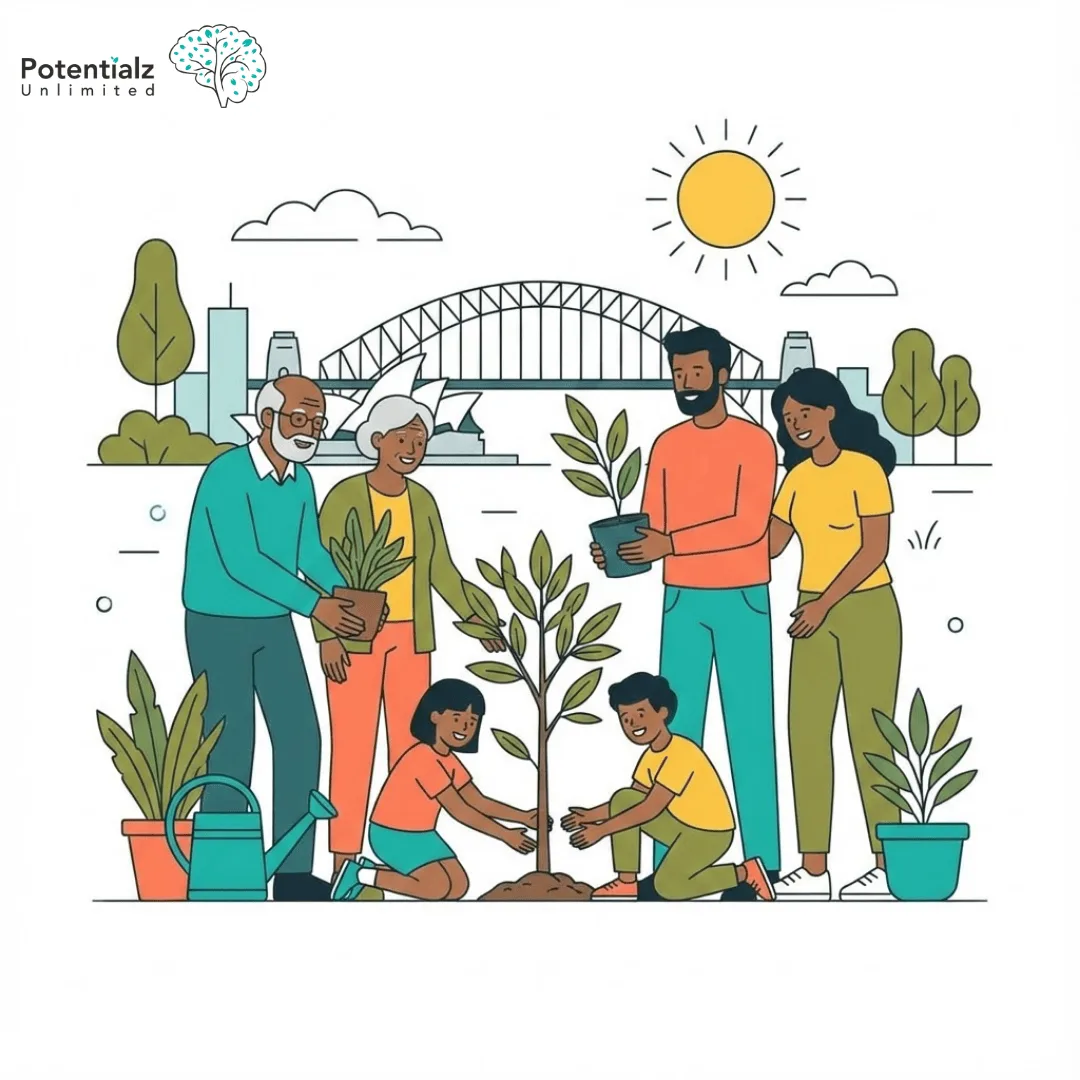 A diverse Australian family enjoys a day of tree planting by the waterfront, fostering environmental awareness together under a bright sun.
Professional Therapeutic Approaches
When self-help strategies aren’t sufficient, several therapeutic approaches show promise for climate-related distress:
- Cognitive Behavioural Therapy (CBT): Modified CBT for climate anxiety helps individuals identify and reframe unhelpful thought patterns while acknowledging legitimate concerns. The 2024 research emphasises that therapists must validate eco-emotions as rational responses rather than irrational fears.
- Acceptance and Commitment Therapy (ACT): ACT helps individuals accept difficult emotions about climate change while committing to values-based action. The approach teaches psychological flexibility in the face of environmental uncertainty.
- Narrative therapy: This approach helps individuals separate their identity from overwhelming climate anxiety, creating new stories about personal agency and meaning in environmental contexts.
- Ecotherapy: Professional ecotherapy combines psychological support with nature-based interventions. Therapists might conduct sessions outdoors, incorporate wilderness experiences, or use nature metaphors in treatment.
- Group therapy: The 2024 research emphasises benefits of group approaches for ecological grief, noting that interpersonal support reduces isolation and shame while facilitating emotional processing.
At Potentialz Psychology Practice in Bella Vista, our team recognises the growing need for climate-aware mental health support. Dr. Gurprit Ganda brings over 22 years of clinical experience working with anxiety, trauma, and multicultural families navigating complex emotional challenges. Our practice offers evidence-based approaches including CBT, anxiety treatment, and family therapy tailored to support families experiencing climate-related distress.
 A serene therapy session unfolds as a therapist engages with a couple in a room filled with natural light and lush greenery, fostering a calm and supportive atmosphere.
Building Climate Resilience in Children and Teens
Parents and caregivers play crucial roles in helping young people develop healthy responses to climate change. The 2024 research from Australia offers specific guidance:
- Age-appropriate communication: For young children (under 8), focus on simple environmental concepts, immediate local nature connection, and concrete actions (recycling, saving water) without overwhelming global information.
For primary school children (8-12), introduce broader environmental concepts gradually, discuss problems alongside solutions, encourage questions and validate concerns, and involve them in family environmental decisions.
For teenagers (13-18), engage in authentic discussions about climate realities, respect their environmental activism and concerns, support youth-led climate action, and help them develop critical media literacy for environmental information.
- Fostering environmental agency: The research emphasises that young people who engage in environmental action report better mental health outcomes than those who remain passive. Support children in identifying actions matching their interests and abilities, celebrate small environmental accomplishments, connect young people with age-appropriate environmental groups, and model active hope through family environmental practices.
- Emotional validation and boundaries: The 2024 Australian research emphasises the importance of validating genuine concern while providing developmental scaffolding. Acknowledge that environmental problems are real and their feelings are understandable, avoid dismissing or minimising climate concerns, provide age-appropriate reassurance about immediate safety, and teach distinction between what they can and cannot control.
- Building broader resilience: Climate resilience connects to general psychological resilience. Supporting children’s emotional intelligence and regulation skills, fostering secure attachment and family connection, building problem-solving and coping skills, and encouraging diverse interests and activities beyond environmental focus provides broader foundation for navigating uncertainty.
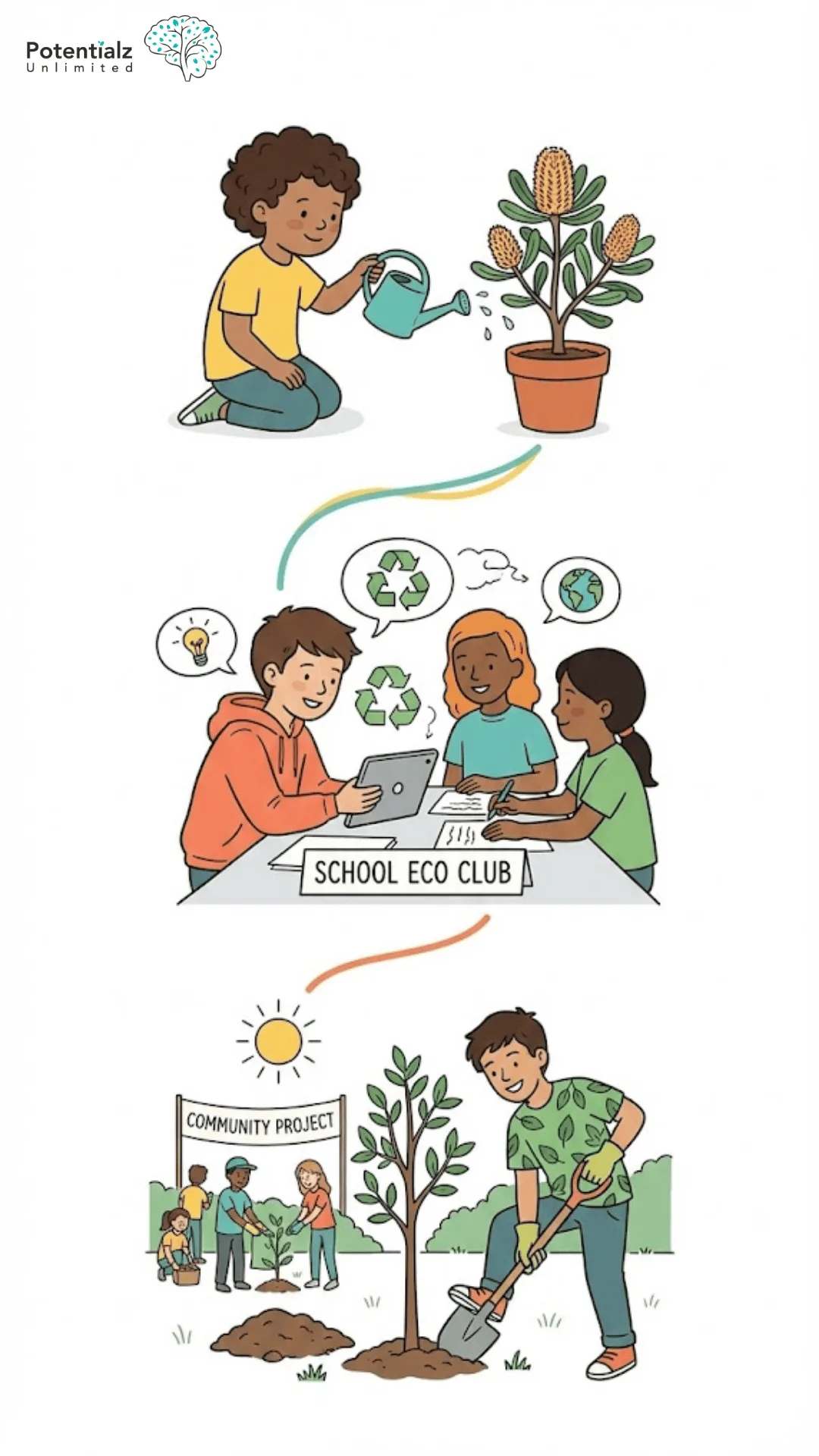 Australian children actively participate in environmental stewardship through activities such as plant care, school eco clubs, and community projects.
The Role of Community and Cultural Connection
Research increasingly recognises that community and cultural factors significantly influence how individuals experience and cope with climate distress.
- Community capacity: Studies published in 2024 found that communities with strong social cohesion, accessible natural spaces, community environmental projects, and supportive networks experience lower rates of climate-related mental health impacts.
For Sydney’s Hills District, this might include participation in local environmental groups, supporting council sustainability initiatives, joining neighbourhood composting schemes, or participating in bushland regeneration projects in places like Castle Hill or Bella Vista.
- Cultural considerations: The 2024 research emphasises that climate anxiety manifests differently across cultural groups. For multicultural families in Sydney’s Hills District, considerations include how cultural background influences environmental worldviews, traditional ecological knowledge from countries of origin, different cultural expressions of environmental grief, and varying comfort levels with discussing mental health concerns.
At Potentialz, we specifically work with multicultural families, understanding how cultural context shapes both environmental connection and mental health experiences. Our culturally responsive approach recognises diverse perspectives on nature, community, and wellbeing.
- Intergenerational healing: The 2024 research emphasises importance of intergenerational environmental action. When grandparents, parents, and children engage together in environmental stewardship, this provides multiple benefits including strengthened family bonds, shared purpose and meaning, transmission of traditional knowledge, and collective hope through combined action.
Moving Forward: From Anxiety to Adaptive Action
The most recent research from 2024 emphasises an important reframing: while climate anxiety and eco-grief can be debilitating, they can also serve as adaptive responses that motivate protective action when appropriately supported.
Adaptive versus maladaptive responses: Research distinguishes between eco-anxiety that leads to constructive engagement (attending environmental meetings, making lifestyle changes, supporting environmental causes) and eco-anxiety that leads to paralysis, denial, or dysfunction.
The key difference often lies in access to:
- Social support and community
- Information about effective action
- Psychological tools for emotional regulation
- Opportunities for meaningful environmental engagement
- Professional support when needed
Creating sustainable engagement: The 2024 research warns against environmental activism that leads to burnout. Sustainable engagement includes pacing environmental action with rest and renewal, maintaining life balance beyond environmental focus, practicing self-compassion for limitations, celebrating incremental progress, and recognising personal contributions within larger movements.
Hope as a practice: Recent research reframes hope from passive optimism to active practice. This involves acknowledging difficult realities without despair, identifying personally meaningful environmental actions, connecting with others working toward solutions, practicing gratitude for environmental resilience, and maintaining engagement despite uncertainty.
For Australian families navigating climate anxiety and eco-grief, the path forward involves neither denial nor despair. Instead, it requires acknowledging legitimate concerns, processing difficult emotions with support, taking meaningful action within personal capacity, connecting with community and nature, and seeking professional support when distress becomes overwhelming.
Finding Support in Sydney’s Hills District
If you or your family members are experiencing significant climate anxiety or eco-grief, professional support can make a crucial difference. At Potentialz Psychology Practice in Bella Vista, we offer comprehensive mental health services including:
- Individual anxiety therapy for climate-related distress
- Family therapy to navigate environmental concerns together
- Child and adolescent services for young people struggling with eco-anxiety
- Evidence-based approaches including CBT, EMDR, and DBT
- Culturally responsive care for multicultural families
Located in Bella Vista and serving Castle Hill, Kellyville, Baulkham Hills, and surrounding areas, we understand the unique environmental and community context of Sydney’s Hills District.
Contact us:
- Phone: 0410 261 838
- Email: info@potentialz.com.au
- Website: www.potentialz.com.au
- Book online: live.potentialz.com.au
Additional Resources for Australian Families
Mental health support:
- Psychology for a Safe Climate: www.psychologyforasafeclimate.org
- headspace (youth mental health): www.headspace.org.au
- Beyond Blue: www.beyondblue.org.au
- Lifeline: 13 11 14
Environmental action:
- Climate Council: www.climatecouncil.org.au
- Australian Youth Climate Coalition: www.aycc.org.au
- Landcare Australia: www.landcareaustralia.org.au
- Local environmental groups in The Hills Shire
Education and research:
- UNICEF Australia Climate Report: www.unicef.org.au
- Climate Change in Australia: www.climatechangeinaustralia.gov.au
Remember: Experiencing climate anxiety or eco-grief doesn’t mean you’re weak or irrational. These emotions reflect your capacity for empathy and your recognition of genuine threats. With appropriate support and strategies, you can transform distress into meaningful engagement while maintaining your mental health and wellbeing.
Knowledge Check
References
- Ágoston, C., Csaba, B., Nagy, B., Kőváry, Z., Dúll, A., Rácz, J., & Demetrovics, Z. (2022). Identifying types of eco-anxiety, eco-guilt, eco-grief, and eco-coping in a climate-sensitive population: A qualitative study. International Journal of Environmental Research and Public Health, 19(4), 2461. https://doi.org/10.3390/ijerph19042461
- Boyd, C. P., Jamieson, J., Gibson, K., Duffy, M., Williamson, M., & Parr, H. (2024). Eco-anxiety among regional Australian youth with mental health problems: A qualitative study. Early Intervention in Psychiatry, 18(12), 1022-1031. https://doi.org/10.1111/eip.13549
- Clayton, S., & Karazsia, B. T. (2020). Development and validation of a measure of climate change anxiety. Journal of Environmental Psychology, 69, 101434. https://doi.org/10.1016/j.jenvp.2020.101434
- Clayton, S., Manning, C. M., Krygsman, K., & Speiser, M. (2017). Mental health and our changing climate: Impacts, implications, and guidance. American Psychological Association and ecoAmerica.
- Comtesse, H., Ertl, V., Hengst, S. M. C., Rosner, R., & Smid, G. E. (2021). Ecological Grief as a Response to Environmental Change: A Mental Health Risk or Functional Response?. International Journal of Environmental Research and Public Health, 18(2), 734. https://doi.org/10.3390/ijerph18020734
- Cosh, S., Ryan, R., Fallander, K., Robinson, K., Tognela, J., Tully, P. J., & Lykins, A. D. (2024). The relationship between climate change and mental health: A systematic review of the association between eco-anxiety, psychological distress, and symptoms of major affective disorders. BMC Psychiatry, 24(1), 833. https://doi.org/10.1186/s12888-024-06274-1
- Cunsolo, A., & Ellis, N. R. (2018). Ecological grief as a mental health response to climate change-related loss. Nature Climate Change, 8(4), 275-281. https://doi.org/10.1038/s41558-018-0092-2
- Cunsolo, A., Harper, S. L., Minor, K., Hayes, K., Williams, K. G., & Howard, C. (2020). Ecological grief and anxiety: The start of a healthy response to climate change? The Lancet Planetary Health, 4(7), e261-e263. https://doi.org/10.1016/S2542-5196(20)30144-3
- Deloitte Access Economics. (2024). The cost of climate disasters on children and young people in Australia. UNICEF Australia. https://www.deloitte.com/content/dam/assets-zone1/au/en/docs/services/economics/dae-unicef-impact-disasters-children-and-young-people-2025.pdf
- Gago, T., Sargisson, R. J., & Milfont, T. L. (2024). A meta-analysis on the relationship between climate anxiety and wellbeing. Journal of Environmental Psychology, 94, 102230. https://doi.org/10.1016/j.jenvp.2024.102230
- Gianfredi, V., Mazziotta, F., Clerici, G., Astorri, E., Oliani, F., Cappellina, M., Castellini, G., Graffigna, G., Amerio, A., Vigezzi, G. P., & Odone, A. (2024). Climate change perception and mental health: Results from a systematic review of the literature. European Journal of Investigation in Health, Psychology and Education, 14(1), 215-229. https://doi.org/10.3390/ejihpe14010014
- Léger-Goodes, T., Malboeuf-Hurtubise, C., Mastine, T., Généreux, M., Paradis, P. O., & Camden, C. (2022). Eco-anxiety in children: A scoping review of the mental health impacts of the awareness of climate change. Frontiers in Psychology, 13, 872544. https://doi.org/10.3389/fpsyg.2022.872544
- Lykins, A. D., Bonich, M., Sundaraja, C., & Cosh, S. (2024). Climate change anxiety positively predicts antenatal distress in expectant female parents. Journal of Anxiety Disorders, 101, 102801. https://doi.org/10.1016/j.janxdis.2023.102801
- Micoulaud-Franchi, J. A., Coelho, J., Geoffroy, P. A., Vecchierini, M. F., Poirot, I., Royant-Parola, S., Benoit, O., & Lopez, R. (2024). Eco-anxiety: An adaptive behavior or a mental disorder? Results of a psychometric study. L’Encéphale, 50(4), 406-415. https://doi.org/10.1016/j.encep.2023.08.009
- Ojala, M. (2012). Hope and climate change: The importance of hope for environmental engagement among young people. Environmental Education Research, 18(5), 625-642. https://doi.org/10.1080/13504622.2011.637157
- Orrù, L., & Mannarini, S. (2024). Psychological impact of climate change emergency: An attempt to define eco-anxiety. Frontiers in Psychology, 15, 1375803. https://doi.org/10.3389/fpsyg.2024.1375803
- Pihkala, P. (2022). The process of eco-anxiety and ecological grief: A narrative review and a new proposal. Sustainability, 14(24), 16628. https://doi.org/10.3390/su142416628
- Pihkala, P. (2024). Ecological sorrow: Types of grief and loss in ecological grief. Sustainability, 16(2), 849. https://doi.org/10.3390/su16020849
- Sangha, K., Russell-Smith, J., Costanza, R., & Kubiszewski, I. (2024). Ecological grief is a One Health imperative for building socioecological resilience. BioScience, 74(9), 575-584. https://doi.org/10.1093/biosci/biaf135
- Sciberras, E., & Fernando, J. W. (2022). Climate change-related worry among Australian adolescents: an eight-year longitudinal study. Child and Adolescent Mental Health, 27(1), 22–29. https://doi.org/10.1111/camh.12521
- Stanley, S. K., Hogg, T. L., Leviston, Z., & Walker, I. (2021). From anger to action: Differential impacts of eco-anxiety, eco-depression, and eco-anger on climate action and wellbeing. The Journal of Climate Change and Health, 1, 100003. https://doi.org/10.1016/j.joclim.2021.100003
- Teo, S. M., Gao, C. X., Brennan, N., Fava, N., Simmons, M. B., Baker, D., Zbukvic, I., Rickwood, D. J., Brown, E., Smith, C. L., Watson, A. E., Browne, V., Cotton, S., McGorry, P., Killackey, E., Freeburn, T., & Filia, K. M. (2024). Climate change concerns impact on young Australians’ psychological distress and outlook for the future. Journal of Environmental Psychology, 93, 1–11. https://doi.org/10.1016/j.jenvp.2023.102209
- Tucci, J., Mitchell, J., & Goddard, C. (2007). Children’s fears, hopes and heroes: Modern childhood in Australia. Australian Childhood Foundation.
- Willox, A. C., Harper, S. L., Edge, V. L., Landman, K., Houle, K., Ford, J. D., & Rigolet Inuit Community Government. (2013). The land enriches the soul: On climatic and environmental change, affect, and emotional health and well-being in Rigolet, Nunatsiavut, Canada. Emotion, Space and Society, 6, 14-24. https://doi.org/10.1016/j.emospa.2011.08.005
Need Professional Support?
If you're experiencing mental health concerns, our team is here to help.