As a psychologist, parents often come to me with questions about their child’s WISC scores. “What do these numbers mean?” they ask, worry evident in their voices. “Is my child normal?” Today, let’s demystify the Wechsler Intelligence Scale for Children (WISC) and understand what these scores really tell us about our children’s cognitive abilities.
The WISC: More Than Just Numbers
Think of the WISC as a detailed map of your child’s cognitive landscape. Just as a map shows different terrains - mountains, valleys, rivers - the WISC reveals different aspects of your child’s thinking abilities. This comprehensive assessment tool helps us understand how your child processes information, solves problems, and learns.
According to recent research the WISC-V provides reliable measurements across diverse populations and continues to be the gold standard for cognitive assessment in children.
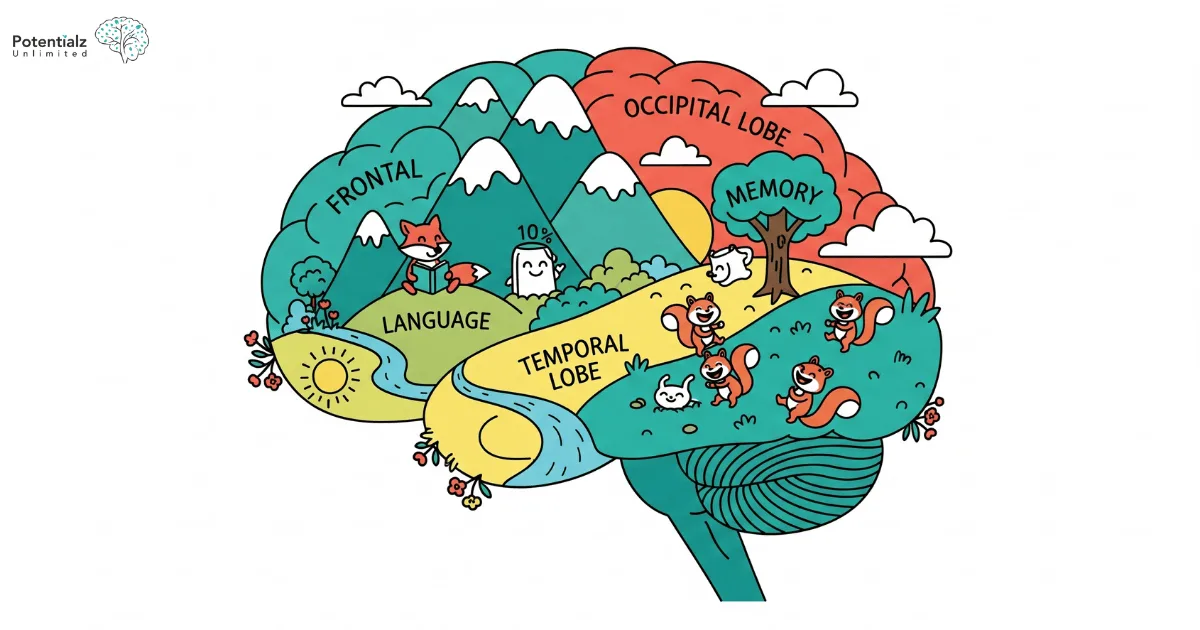 An illustrated brain map for children, featuring colorful landscapes and playful cartoon characters, highlighting cognitive regions like the frontal lobe and memory areas.
What Exactly Does the WISC Measure?
The test is like a cognitive toolbox containing five essential tools that help us understand WISC scores meaning:
- Verbal Comprehension: How your child understands and works with language
- Visual Spatial Skills: Their ability to understand and manipulate what they see
- Fluid Reasoning: How they solve new problems and see patterns
- Working Memory: Their mental sticky note for holding and using information
- Processing Speed: How quickly they can think and work accurately
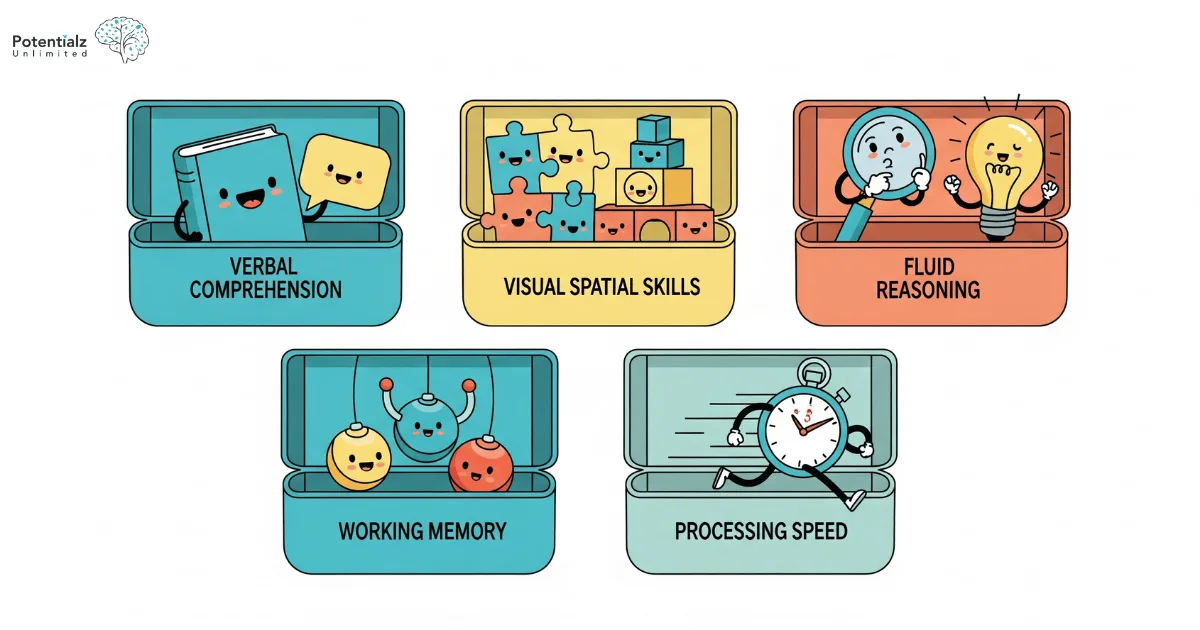 Colorful toolboxes labeled with WISC areas—Verbal Comprehension, Visual Spatial Skills, Fluid Reasoning, Working Memory, and Processing Speed—feature playful cartoon tools to help children and parents understand cognitive skills.
Research from the American Psychological Association demonstrates that these five areas provide a comprehensive view of cognitive functioning, with each contributing uniquely to academic and life success.
Breaking Down the Numbers
Let’s talk about what these scores actually mean. Imagine a large group of children standing in line from shortest to tallest. The middle of that line - that’s our average. In WISC scores meaning terms:
The Full Scale IQ (FSIQ)
- The average score is set at 100
- Most children (about 68%) score between 85 and 115
- Think of this range as the “typical” zone where most children naturally fall
Score Classifications
Here’s how we interpret different ranges:
Score Range
Classification
What It Means
Below 70
Significant challenges present
Extra support strongly recommended
70-79
Some extra support needed
Targeted interventions helpful
80-89
Just below typical expectations
May benefit from additional support
90-109
Right where most children are
Typical cognitive development
110-119
Showing some cognitive strengths
Above average abilities
120-129
Strong cognitive abilities
Superior performance
130+
Exceptional cognitive strengths
Gifted range
Studies confirm that these score ranges remain stable across different cultural groups when properly administered and interpreted.
 Children joyfully climb a colorful mountain, each at their own pace, representing different WISC score ranges in a supportive and motivational setting.
Why WISC Scores Vary: The Real Story Behind the Numbers
Your child’s WISC assessment scores interpretation can be influenced by many factors that parents should understand:
Nature and Nurture Factors
- Genetic foundations: Natural cognitive abilities inherited from parents
- Environmental experiences: Rich learning opportunities shape abilities
- Educational quality: School resources and teaching methods matter
- Family support: Encouragement and involvement make a difference
Testing Day Realities
Research shows that optimal testing conditions can improve performance by 5-10 points, highlighting the importance of proper assessment procedures.
Factors that can affect your child’s performance include:
- How well they slept the night before
- Their comfort level with the examiner
- Anxiety levels about testing
- Time of day (morning vs. afternoon performance)
- Physical well-being and hunger
- Recent life changes or stress
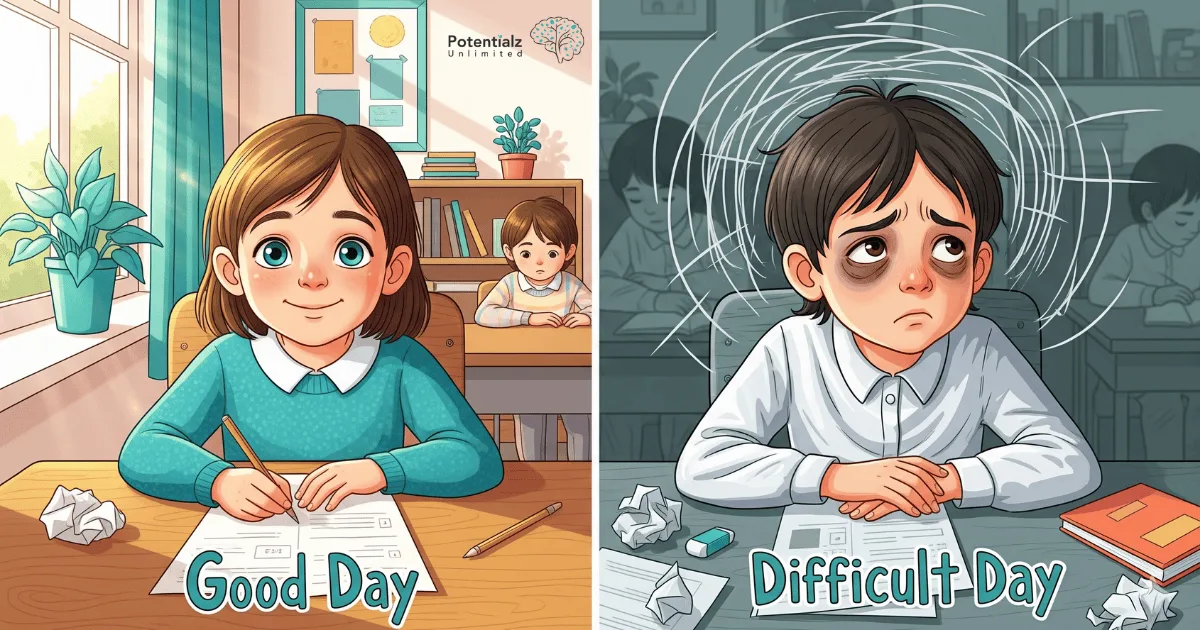 Thriving on the left, struggling on the right: a child’s test day can vary greatly depending on their well-being and mindset.
Beyond the Numbers: What Really Matters in WISC Scores Meaning
Here’s what I always tell parents: These scores are snapshots, not predictions of your child’s future. According to developmental psychology research, cognitive abilities can change significantly with appropriate support, challenging environments, and personal growth.
WISC assessment scores help us understand:
- How your child learns best
- Where they might need extra support
- Their unique cognitive strengths
- Areas where we can build confidence
- Appropriate educational planning strategies
Making the Results Work for Your Child
The real value of WISC assessment scores interpretation lies in how we use the information to support your child’s growth:
Educational Applications
- Customize learning approaches to match strengths
- Identify effective support strategies
- Build confidence through strength-based activities
- Understand and accommodate learning challenges
- Guide educational placement decisions
Practical Steps for Parents
- Focus on strengths: Celebrate what your child does well
- Support growth areas: Provide gentle help where needed
- Communicate with teachers: Share results to improve classroom support
- Consider additional assessments: Sometimes more specific testing is helpful
- Remember the whole child: Scores don’t measure everything important
 Family and teacher collaborate in a joyful learning session, fostering support and understanding around the table.
Special Considerations for WISC Assessment Scores
Remember that understanding WISC scores meaning requires considering the whole child:
Individual Factors
- Cultural and linguistic background may influence performance
- Learning differences like ADHD or dyslexia affect scores
- Environmental factors including school quality and home support
- Individual learning styles and preferences
- Emotional well-being and mental health status
When Additional Assessment May Be Needed
Sometimes WISC assessment scores interpretation suggests further evaluation:
- Significant differences between skill areas
- Concerns about specific learning disabilities
- Questions about attention or behavioral issues
- Consideration for gifted education programs
- Planning for special education services
Research indicates that comprehensive assessment combining WISC results with other measures provides the most accurate picture of a child’s abilities and needs.
Test Your Knowledge
The Bottom Line: WISC Assessment Scores
As a psychologist, I’ve administered countless WISC assessments, and here’s what I know for sure: Every child is unique. While these scores help us understand cognitive abilities, they don’t measure determination, creativity, emotional intelligence, resilience, or many other important qualities that contribute to success in life.
Whether your child’s WISC assessment scores interpretation shows results above, below, or exactly at the average, remember this: The goal isn’t to achieve a certain number. The goal is to understand how your child thinks and learns, so we can provide the support they need to reach their full potential.
Contemporary research in developmental psychology emphasizes that children’s cognitive profiles are dynamic and can be enhanced through appropriate interventions, supportive environments, and recognition of individual learning styles.
Your child is more than a score. They’re a unique individual with their own pattern of strengths and challenges. Understanding their WISC scores meaning helps us support their journey - but it’s just one piece of their beautiful, complex story.
Need Professional Support?
If you're experiencing mental health concerns, our team is here to help.